I Walked 20,000 Steps a Day for a Month—Here’s Why I’ll Neve r Do It Again
Alice strapped on her smartwatch, set a goal of 20,000 steps, and spent the next 30 days regretting nearly every mile.
She had seen the videos. The influencers who wake up at 5 AM, lace up their shoes, and log step counts that look more like phone numbers. Everyone seemed lean, energized, and glowing. Alice wanted that.
So she made a plan. For 30 days, she would walk 20,000 steps every single day. That’s roughly 10 miles. About three to four hours of movement. Every. Single. Day. What she got was not what the videos promised.
Millions of people search for the truth about walking 20,000 steps a day every year. Most of what they find is cheerful. Almost none of it mentions the shin splints, the cortisol spikes, the cancelled plans, or the mounting science that says most of us hit the peak benefit of walking long before we reach that number.
This article covers all of it — what it actually looks, feels, and costs to walk 20,000 steps a day, what the research says about the optimal daily step count, and what Alice does now that her challenge is over.
The 20,000 Step Reality Check
Drag the slider to see the true cost and science of daily step counts.
What Walking 20,000 Steps a Day Actually Looks Like
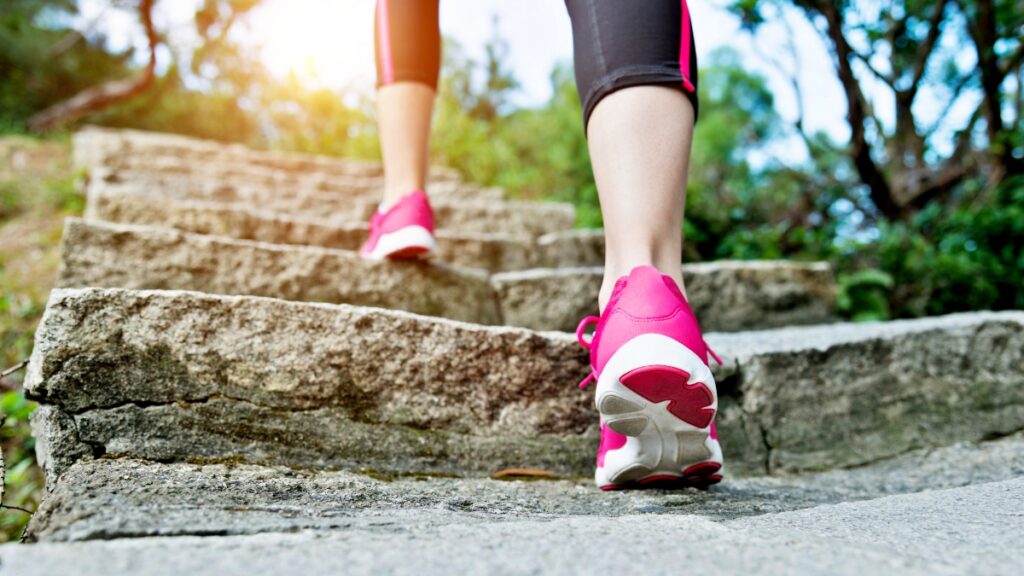
Three to four hours. That's what walking 20,000 steps costs Alice every single day. That's not a complaint — it's just math. At an average pace, 20,000 steps cover around 10 miles. Most people walk about one mile every 20 minutes. You do the math. That's two-thirds of a standard workday, just walking.
For Alice, fitting this into real life meant completely restructuring her schedule. There was no simple "I'll take the stairs today" approach. This was a second job.
Here's how her day actually broke down:
| Time of Day | What Alice Did | Steps Earned |
|---|---|---|
| 6:00–7:00 AM | Morning walk around the neighborhood | ~5,000–6,000 steps |
| 12:00–12:30 PM | Walked during lunch. Ate at her desk. | ~2,500–3,000 steps |
| Afternoon calls | Paced around her home office on work calls | ~1,500–2,000 steps |
| 7:30–9:00 PM | Evening walk. Sometimes in the dark. | ~5,000–7,000 steps |
| Before bed | Paced the hallway to hit her number | ~500–1,000 steps |
Shoes became a real problem. A pair that normally lasts six months started breaking down in three weeks. Alice had to rotate between two pairs just to keep her feet supported. Blisters were a weekly negotiation.
Eating changed too. Walking 20,000 steps burns an extra 500 to 1,000 calories a day depending on your size and pace. If Alice didn't fuel properly, she'd hit a wall by early afternoon. She had to eat like an athlete to sustain what was, honestly, an athletic commitment.
Here's what different step goals actually demand from you:
| Step Goal | Distance | Calories Burned | Time Required |
|---|---|---|---|
| 5,000 steps | ~2.5 miles | ~250–350 cal | ~45 min |
| 7,000 steps | ~3.5 miles | ~350–490 cal | ~60–70 min |
| 10,000 steps | ~5 miles | ~500–700 cal | ~90 min |
| 15,000 steps | ~7.5 miles | ~600–850 cal | ~2–2.5 hrs |
| 20,000 steps | ~10 miles | ~700–1,000 cal | 3–4 hrs |
Calorie estimates vary based on body weight, pace, and terrain. Source: Marathon Handbook, 2026
In the first few days, none of that felt like a problem. Alice was fired up. The challenge was new, the podcast queue was full, and the weather cooperated. That wouldn't last.
The First Week: The High (and the First Warning Signs)

Day one felt almost effortless. Day seven did not. Days one through three were genuinely great. Alice's mood lifted. She slept faster and more deeply than she had in months. Her energy during the day felt clean and steady. She started to think maybe the influencers were onto something.
Then Day 4 arrived.
A dull ache crept into her right heel in the morning. She chalked it up to her body adjusting. By Day 6, both heels were stiff when she got out of bed. Arch pain had moved in. These were the early signs of plantar fasciitis — a condition caused by overloading the tissue along the bottom of the foot.
A new pain showed up too. A steady ache along her shinbone after long sessions. Not sharp. Just persistent and annoying. That's the signature of shin splints — medically called medial tibial stress syndrome. It's caused by repeated stress on the tibia without enough recovery time.
⚠️ Shin Splints Are More Common Than You Think Shin splints account for 10 to 20 percent of all running and walking injuries, and up to 60 percent of all lower-limb overuse injuries. They're your body's way of asking for rest. — NIH/Cureus, 2023
Something else happened in Week 1 that Alice hadn't expected. Walking became an obsession. She refused to sit down. She watched her step count constantly. On one evening, she found herself stepping in place next to her bed at 11 PM, just to hit her number before midnight.
The sleep improvement was real. But Alice started wondering: was it the walking that was helping her sleep — or was it just the exhaustion? She assumed the soreness was just her body adjusting. She was only partially right.
Weeks Two and Three: When Her Body Pushed Back

There was a morning in Week 2 when Alice sat on the edge of her bed and seriously considered quitting.
Her shins hurt. Her arches hurt. The alarm had gone off at 6 AM for her morning walk, and she just... sat there. She didn't quit. But the challenge had stopped feeling like a choice.
The shin splints got worse. Walking through pain is a classic mistake — it risks turning muscle soreness into a stress fracture if you keep pushing without recovery. Alice kept pushing anyway, because stopping felt like failure.
The fatigue was different from what she'd expected. It wasn't the satisfying tired you feel after a good workout. It was a deep, heavy tiredness that followed her into the next day. Her focus at work dropped. Small decisions felt harder.
Here's why: walking three to four hours a day drives cortisol — your stress hormone — higher than most people realize. Moderate exercise lowers cortisol. But sustained, high-volume exercise can spike it. By Week 3, Alice's sleep quality had actually started to decline, even though she'd been sleeping so well in Week 1.
Jennifer Pallian, a registered dietitian, and Dr. Tara Phaff, a doctor of physical therapy, both noted in a 2025 Yahoo Health analysis that chronic elevated cortisol from overtraining can disrupt sleep, cause mood swings, and create a cycle of fatigue that's hard to break without real rest.
Signs You Might Be Walking Too Much:
- Persistent shin or heel pain that doesn't improve with rest
- You feel more tired in the morning than when you went to bed
- Your mood is irritable or flat, even on days off
- You're obsessing over your step count and feel anxious without hitting it
- You've cancelled social plans multiple times because of your walking schedule
- Your sleep was better before the challenge started
There was also a social cost that Alice hadn't budgeted for. Three to four hours of walking a day doesn't leave much room for anything else. Alice missed dinners, skipped family plans, and spent her weekends on footpaths instead of with people she liked.
And it turns out, Alice wasn't alone. A 2025 KURU Footwear survey found that 39 percent of Americans already report arch pain and 35 percent report heel pain. Walking 20,000 steps a day doesn't create those problems from scratch — it just accelerates the ones that were already there.
What the Science Actually Says About 20,000 Steps

One night, while icing her shins, Alice started reading the actual research behind the 20,000-step goal. What she found surprised her.
The 10,000-step target that most fitness trackers default to? It didn't come from a study. It came from a 1960s Japanese marketing campaign for a pedometer called the Manpo-Kei, which translates to "10,000-step meter." There was no clinical evidence behind it. It was a catchy number that stuck.
And 20,000? There's even less science behind that one.
Where the Benefits Actually Stop
In July 2025, researchers at the University of Sydney published the most comprehensive step count analysis to date in Lancet Public Health. They reviewed 57 studies covering nearly 200,000 people. The findings were clear.
"Aiming for 7,000 steps is a realistic goal based on our findings. Beyond 7,000 steps, the extra benefits for most health outcomes were modest." — Prof. Melody Ding, University of Sydney, Lancet Public Health (2025)
The research found that health benefits — things like lower heart disease risk, longer life expectancy, and better brain health — begin to plateau at 5,000 to 7,000 steps per day for most adults. After that, the returns get smaller and smaller.
For adults under 60, the plateau sits around 8,000 to 10,000 steps. For adults over 60, it's closer to 6,000 to 8,000 steps. Walking beyond those numbers isn't dangerous — but it doesn't buy you much more protection either.
| Stat | What It Means | Source |
|---|---|---|
| 8K–10K | Steps where health benefits plateau for adults under 60 | Lancet, 2025 |
| 47% | Lower risk of early death from just 7,000 steps/day vs. 2,000 | Univ. of Sydney / Lancet, 2025 |
| 38% | Drop in dementia risk at 7,000 steps. Only 7% more at 10,000. | Lancet meta-analysis, 2025 |
| 7,500 | Steps that matched the same mortality risk as 10,000 in a 17,000-woman study | Harvard / Dr. I-Min Lee |
| 3–4 hrs | Time required every day to walk 20,000 steps | Multiple sources, 2025–2026 |
| 90+ | Hours Alice spent walking over 30 days | Alice's own experience |
Dr. I-Min Lee at Harvard studied 17,000 women and found that those who took 7,500 steps had the same mortality risk as those who took 10,000. More steps didn't improve outcomes.
Walking 7,000 steps a day cuts your risk of early death by 47 percent compared to walking just 2,000 steps. Going from 7,000 to 20,000 adds only a marginal additional benefit. You're spending three extra hours every day for a small fraction of what you already got in the first 7,000.
The science is unambiguous: the benefits of walking peak well before 20,000 steps — and staying at 20,000 indefinitely costs far more than it gives you back.
Week Four: Crossing the Finish Line (and the Hard Lessons)
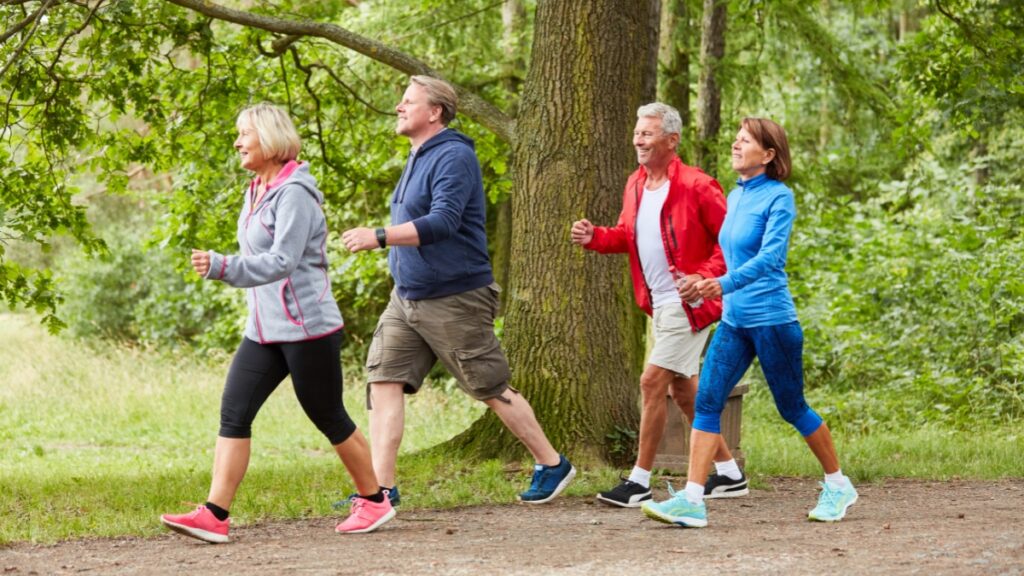
Day 30 arrived not with triumph, but with relief. Alice finished her challenge. She hit 20,000 steps every single day for 30 consecutive days. That's real. It took discipline and stubbornness in equal measure.
But she didn't feel amazing when it was over. She felt relieved. The way you feel when a test is finally done. The milestone felt less like an achievement and more like a prison sentence ending.
Her physical state on Day 30: persistent shin tenderness, arch pain in both feet, and a left knee that clicked when she went up stairs. Not the glowing transformation she had seen in the content she'd been inspired by.
The early endorphin highs of Week 1 had long since gone. Walking had shifted from something Alice wanted to do into something she had to do. She resented her smartwatch by the end.
⚠️ The Real Cost of 30 Days at 20,000 Steps 90+ hours of walking. Two pairs of worn-out shoes. Persistent shin and arch pain. A left knee that still complains on stairs. And the slow erosion of something Alice had always enjoyed: going for a walk.
Here's what Alice gained: a lower resting heart rate, a slightly better sleep baseline, a real understanding of her body's limits, and a deep respect for incremental progress.
Here's what she lost: more than 90 hours of her month, two pairs of shoes, social plans she can't get back, and — for a while — her enjoyment of walking. Alice still walks. She just doesn't walk until her knees beg for mercy.
The Smarter Way to Walk: What Alice Does Now

Alice still walks every day. The difference is she doesn't walk like it's a punishment anymore.
Her current routine: 8,000 to 10,000 steps on weekdays. On weekends, she'll walk 12,000 to 15,000 — but only because she's going somewhere she likes, not because an app told her to.
She also added two strength training sessions per week. That matters more than extra steps for long-term health and injury prevention. Strong legs, hips, and core reduce the load on your joints when you walk. It's one of the most overlooked parts of any walking program.
"Most people will thrive with 7,000 to 12,000 steps a day, paired with rest, good nutrition, and strength training." — Sam Quinn, Personal Trainer (Marie Claire, 2025)
In October 2025, researchers also found something useful about how you walk, not just how much. Walking in uninterrupted bouts of 10 to 15 minutes cut cardiovascular disease risk by up to two-thirds compared to shorter, scattered strolls. Quality and consistency beat raw step totals.
The American Heart Association recommends 150 minutes per week of moderate activity. A consistent 8,000 to 10,000 brisk steps per day gets you there with energy left over. You don't need 20,000 to be healthy. You never did.
| Your Current Average | Recommended Target | Why It Works |
|---|---|---|
| Under 3,000 steps | Aim for 5,000 first | Small jumps stick better |
| 3,000–5,000 steps | Push to 7,000 | This is where big health gains begin |
| 5,000–7,000 steps | Work toward 8,000–10,000 | You're entering the sweet spot |
| 10,000+ steps | Maintain with rest days | Add strength training, not more steps |
Add 1,000 steps per week until you reach your target. Small, steady increases prevent overuse injuries.
Alice's Non-Negotiable Walking Rules Now:
- Rotate between two pairs of shoes — never wear the same pair two days in a row
- Walk in 10–15 minute uninterrupted bouts for maximum heart health benefit
- Take one full rest day per week. No step goal. No counting.
- Add strength training twice a week — it protects your joints more than extra steps
- Stop checking your step count every hour. Look once at the end of the day.
- Walk somewhere you actually want to go. Enjoyment is not optional.
The Bottom Line
Walking 20,000 steps a day is not going to hurt you. But for most people, it is unsustainable, time-consuming, and largely unnecessary.
The science is settled. Seven thousand to 10,000 steps delivers the vast majority of walking's health benefits. Beyond that range, gains are real — but small. You're paying three extra hours a day for a fraction of what you already earned in the first hour.
Alice's month taught her something no smartwatch dashboard could: more is not always better. The goal is not a number. The goal is a habit you can actually keep for decades. One that makes your life better — not one that consumes it.
Your action plan: Find your current daily average — most phones track this automatically. Then add 1,000 steps per week until you reach a consistent 7,000 to 10,000. That's the zone where the science says the benefits happen.
And more importantly, it's where walking 20,000 steps a day stops looking appealing — because you already have everything you need at half the distance.
Sources: Lancet Public Health (2025) • University of Sydney • Harvard T.H. Chan School of Public Health • UCLA Health • NIH/PMC • KURU Footwear 2025 Report • Marie Claire • Marathon Handbook 2026 • All data verified for 2025–2026