
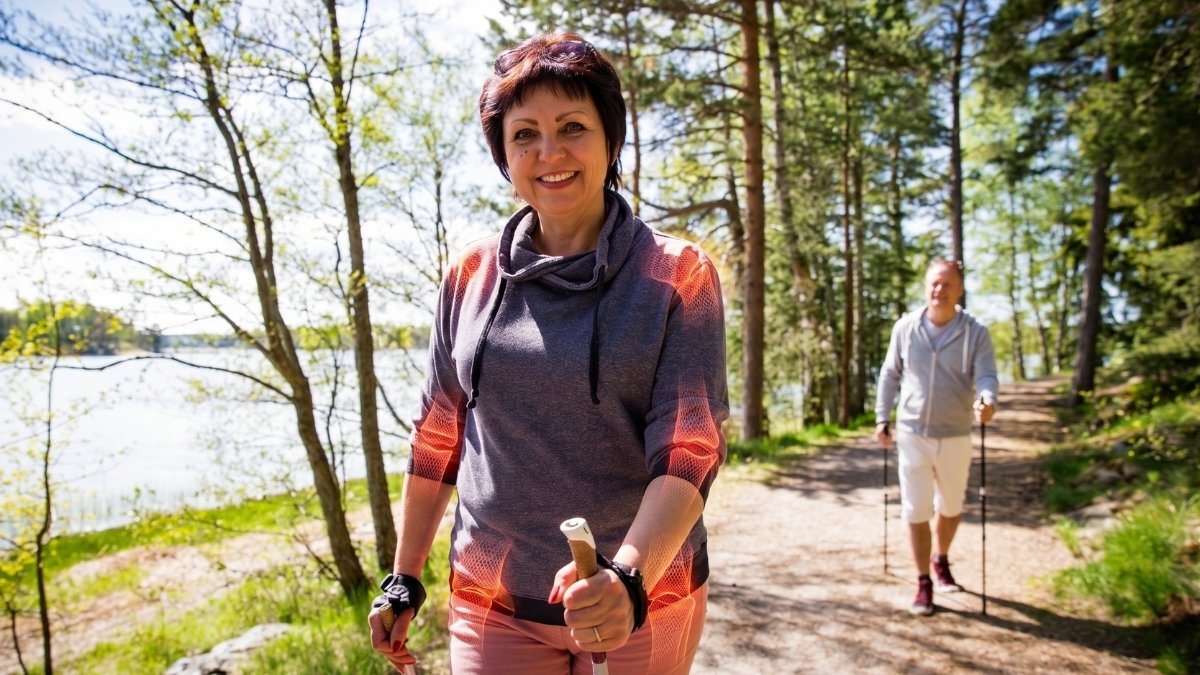
You lace up your shoes every morning, hit the pavement, and check the box. But your knees still ache, your hips still complain, and nobody can explain why. You do everything right. You walk. You show up.
Yet your walking routine and joint health don’t seem to be on the same side anymore. The problem isn’t your effort.
It’s what nobody told you about walking and knee pain, and why does walking protect joints the way we actually think it does. By the end of this, you will know exactly what is quietly loading your joints wrong and how to fix it.
Joint Impact Analyzer
Discover the hidden forces wearing down your joints during your daily routine.
1. Your Primary Walking Surface
2. Your Footwear Situation
3. Your Walking Posture
The Walking Myth That’s Quietly Costing You

Nobody told you that walking was enough. You just assumed it. And that assumption is costing your joints.
This isn’t about telling you walking is bad. It isn’t. Walking is genuinely good for your body. Every time you take a step, your joint cartilage gets squeezed and released — like a sponge soaking up synovial fluid. That process keeps the cartilage nourished and your joints moving without stiffness. Walking also keeps your blood circulating and your legs from locking up when you sit for too long.
So yes — walking helps. But here’s what people get wrong: they believe it helps enough. And that belief creates a real gap between what the body needs and what it’s actually getting.
Did you know? Nearly 1 in 4 adults over 40 live with osteoarthritis. Walking alone does not reverse it — and done incorrectly, it can make things worse. (Stanford / University of Utah, The Lancet Rheumatology, August 2025)
The “10,000 steps” goal is everywhere. You’ve seen it on fitness apps. You’ve heard it from coworkers. But here’s something most people don’t know: that number didn’t come from a medical study.
It came from a 1960s Japanese pedometer marketing campaign. A company needed a catchy number to sell a product. They picked 10,000. Doctors didn’t set that goal — advertisers did.
The problem is that 10,000 steps became a health benchmark without anyone asking what those steps are actually doing for your joints. Walking trains your heart and lungs. I
t gets your blood moving. But what it does not do — on its own — is build muscular strength, improve joint mobility, develop balance, or build real power in the muscles that protect your joints when they’re under load.
People with joint pain often think they need to walk more. Or rest more. The answer is almost always neither. The real fix is to walk differently — and to support that walk with habits that build the protection your joints need.
You’re Probably Walking Wrong — And Your Joints Know It
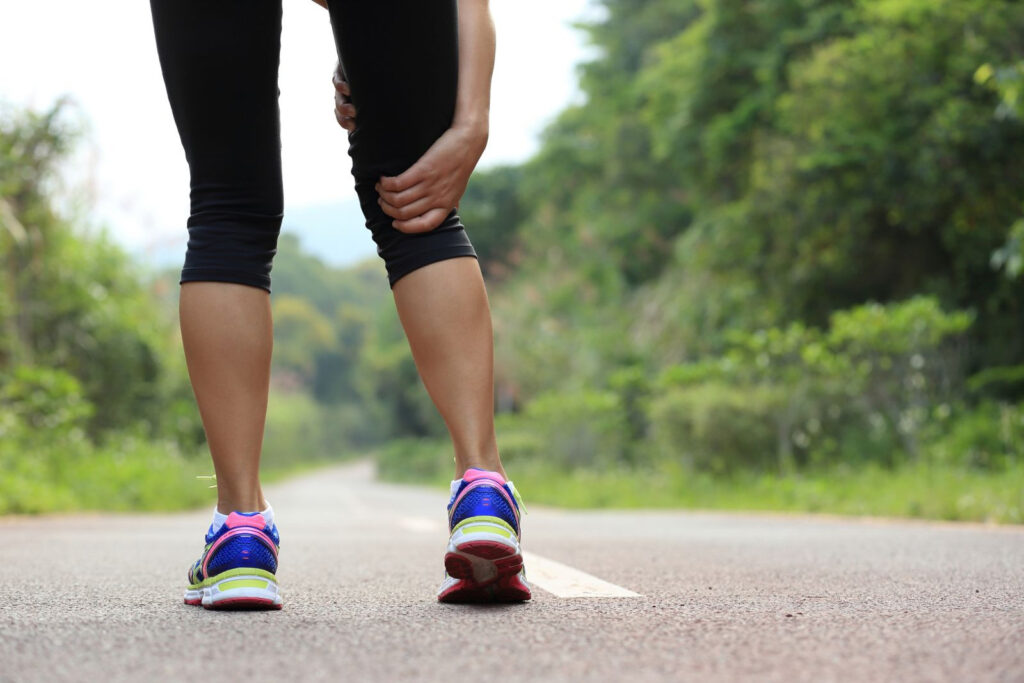
Right now, if someone filmed you walking from behind, there’s a reasonable chance your physio would wince. Not because you’re doing anything dramatic — but because small mechanical errors, repeated thousands of times a day, compound silently.
You don’t feel the damage in the moment. That’s what makes it dangerous. By the time your knee hurts on the stairs or your hip aches on a long walk, those errors have been at work for years. Here are the five most common gait mistakes — and what each one is doing to your joints.
1 Heel Striking When your heel crashes down first — especially on hard pavement — the impact travels like a shockwave up through your skeleton. Your knee absorbs the majority of that force. Over thousands of steps, the repeated shock degrades the cartilage cushioning your knee joint. It gets significantly worse on concrete, which offers almost zero natural shock absorption.
2 Duck Feet (Toe-Out Walking) If your feet point outward when you walk, you’re creating rotational stress on the inner knee with every step. Research directly links this pattern to medial compartment knee osteoarthritis — the most common kind. The tricky part? Most people have no idea they walk this way. It feels normal because it’s been their normal for decades.
3 Overstriding Taking steps that are too long puts your foot far in front of your body’s center of gravity. That increases the impact force at landing. Shorter, more deliberate steps dramatically reduce the load your knee has to absorb. Fewer inches per step, less punishment per mile.
4 Smartphone Slouch Posture Head dropped forward. Shoulders rounded. Core switched off. This posture shifts your center of gravity and causes a shuffling gait — which increases shearing forces on the knee and shuts off the hip and core muscles that would otherwise be doing the work of absorbing impact. Your phone habit is changing your biomechanics.
5 Overpronation Flat feet or weak arches cause the foot to roll inward with each step, pulling the knee into a knocked position. This creates uneven pressure across the knee joint surface. It’s not always painful at first. But over time, it’s a significant contributor to cartilage breakdown.
Clinical Physio Research · Next Step Physiotherapy, January 2026
Gait issues — heel striking, overpronation, and hip misalignment — are among the most common and most overlooked sources of progressive knee joint damage. Most people have at least one of these patterns and don’t know it.
Fixing your form is only half the battle. The surface under your feet and the shoes on them matter just as much — and most people never think about either.
The Ground Beneath Your Feet Is Working Against You
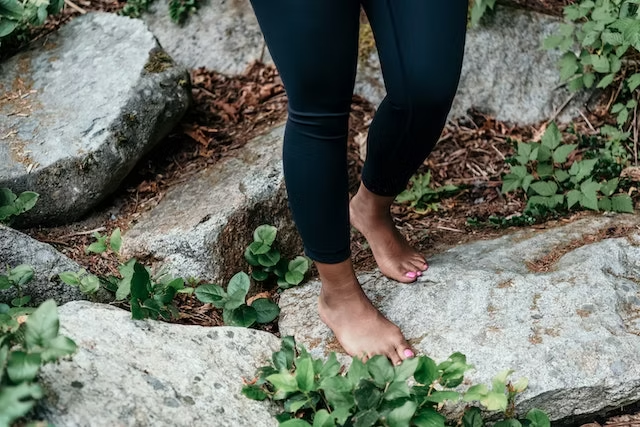
You can fix your posture, shorten your stride, and soften your foot strike — and still be loading your joints more than necessary if you’re pounding the same stretch of concrete every single day.
Concrete and asphalt are among the hardest surfaces available. They provide almost no shock absorption at all. When your foot hits concrete, every gram of impact force comes straight back up through your ankle, knee, and hip. The ground gives nothing. Your body absorbs everything.
“Minimalist footwear on hard surfaces measurably increases mechanical loading on the medial and lateral knee cartilage zones.”Orthopedic Journal of Sports Medicine · University of Ostrava, 2025
That study makes something very clear: your shoe type fundamentally changes how much stress reaches your joint. The shoe isn’t just a comfort choice. It’s a load management decision.
Grass, dirt trails, and synthetic running tracks are measurably softer underfoot. They reduce joint load during walking. The tradeoff is real — uneven surfaces like sand or trail dirt can increase ankle instability risk, especially for older walkers. But for the knee cartilage specifically, softer ground is better ground.
There’s another culprit nobody talks about enough: worn-out shoes. The cushioning inside a walking shoe typically degrades significantly after 300–500 miles of use. The outside of the shoe can still look perfectly fine. The midsole — the part doing the actual shock absorption — has quietly failed. You’re walking on a shell.
Practical Tip for 2026
If you live in a city and concrete is unavoidable, your shoe matters enormously. Look for adequate midsole cushioning and proper arch support — and replace shoes on a mileage schedule, not a visual inspection. If you can walk on a park path instead of the sidewalk just three days a week, you’ll meaningfully reduce cumulative joint load over months. Small swaps, real results.
But even perfect form on perfect surfaces isn’t enough if the muscles meant to protect your joints aren’t doing their job. And for most walkers, they aren’t.
Walking Without Strength Work Leaves Your Joints Exposed
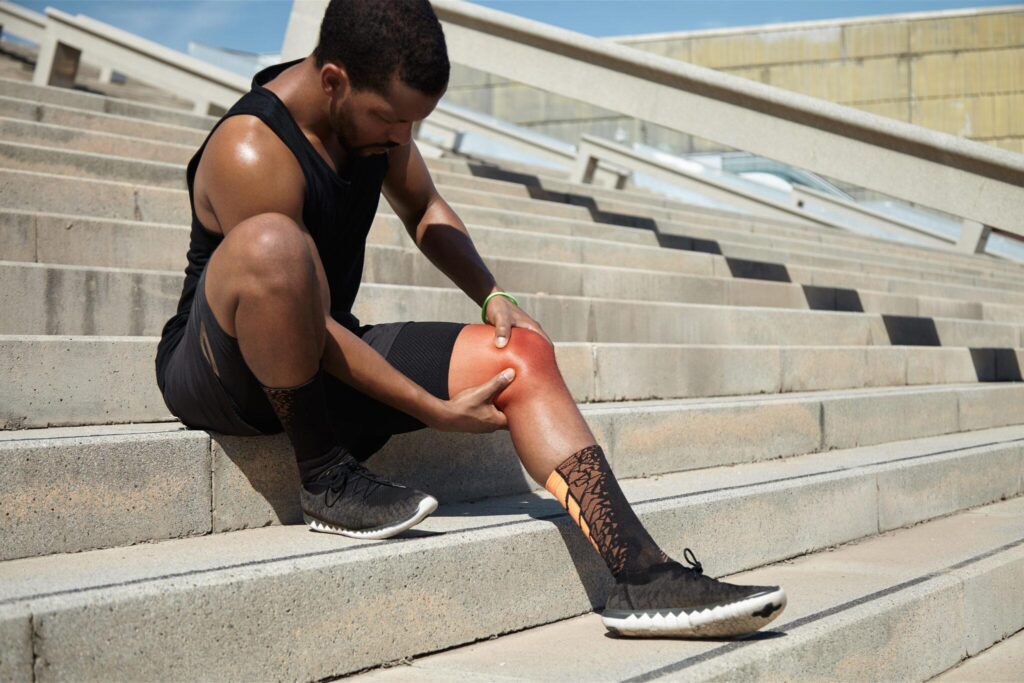
Think of your knee joint as a car axle. Walking is the highway it drives on. But without adequate suspension — the surrounding muscles — every pothole hits the axle directly. Strength work builds the suspension.
Here’s something most people don’t realize about joint cartilage: it has no direct blood supply. It relies on movement to draw in synovial fluid and receive the nutrients it needs to survive. Walking helps with that process. Good.
But cartilage also depends on the surrounding muscles to regulate how much force actually reaches it. When those muscles are weak, the joint absorbs everything. The cartilage takes the full hit. Walking in that condition isn’t maintenance — it’s wear.
The Quadriceps Factor Strong quadriceps can reduce knee joint loading by up to 30%. When they’re weak, the knee compensates by increasing internal joint pressure — a slow process that adds up over years of daily walking.
Your quadriceps, hamstrings, and glutes are the primary shock absorbers for the knee. Research consistently shows that targeted strength training significantly reduces osteoarthritis pain and improves function — outcomes that walking alone simply cannot replicate. Walking builds endurance. It does not build muscular armor.
There’s another gap that walking doesn’t fill: bone density. This becomes a critical concern from age 40 onward. Resistance training applies the mechanical load necessary to stimulate bone remodeling. Walking doesn’t meet that threshold for most adults. The bones need to feel real resistance to respond and strengthen. Pavement walking at a comfortable pace isn’t enough stimulus.
And then there’s the muscle loss problem. After 40, age-related muscle loss — called sarcopenia — accelerates. Walking does not slow it. As Dr. James Pang, DPT (mobile physical therapist, San Diego), noted in November 2025: “Many people are leaving a lot on the table by relying on walking alone.”
You don’t need a gym. Experts recommend at least two strength sessions per week that target these movements: glute bridges, step-ups, lateral band walks, seated knee extensions, and squats or sit-to-stands for beginners. Bodyweight alone works fine to start.
Add single-leg stands and tandem walking for balance — these help the nervous system coordinate muscle activation around the joint, reducing pain flares and irregular loading. Physical therapists use exactly these exercises in rehab precisely because walking doesn’t train this system.
Science is even showing that personalized gait retraining — literally changing the angle of your foot — can slow cartilage degradation. The message is consistent: the way you move matters more than the mileage.
What a Joint-Smart Walking Routine Actually Looks Like
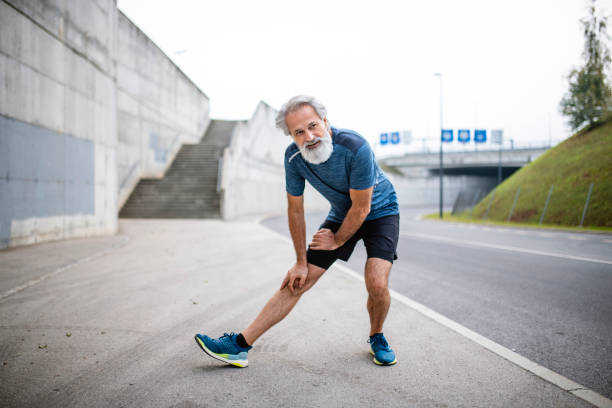
Here’s the good news — none of this requires you to overhaul your life. The fixes are small. The impact is not.
Fix Your Foot Strike Aim for a midfoot landing — your foot should contact the ground underneath your hip, not stretched out in front of you. Practice by slightly shortening your stride and thinking “soft landing” with each step. It feels strange for a few days. Then it becomes automatic.
Check Your Posture Shoulders back and relaxed. Chin parallel to the ground. Core lightly engaged — not braced, just switched on. Imagine a gentle upward pull from the crown of your head. This single change redistributes load away from the knee and activates the hip stabilizers that were going to sleep.
Rotate Your Surfaces If your daily walk is on concrete, swap two or three sessions per week for grass, a dirt trail, or a synthetic track. If that’s not possible where you live, prioritize a walking shoe with proper midsole cushioning — and replace it every 300–500 miles, not when it looks worn.
Use the 10% Rule Don’t increase your daily walking distance or duration by more than 10% per week. Too much, too soon is the leading cause of overuse joint pain in walkers. Progress slowly. Your cartilage is asking you to.
Add Strength Twice a Week Three sets of glute bridges, step-ups, and lateral band walks — done at home, twice a week — can meaningfully reduce knee joint load within six to eight weeks. Start with bodyweight. You don’t need a single piece of equipment to begin.
Consider a Gait Check Many physiotherapy clinics now offer gait analysis with pressure mapping and motion capture. A single session can identify the mechanical errors causing your discomfort. In 2026, some clinics are also using smartphone video tools to analyze gait remotely — you may not even need to leave home.
Don’t Skip Recovery Joints need recovery just like muscles. If you walk seven days a week with no rest or mobility work, you’re not giving the cartilage time to re-absorb synovial fluid. One or two active recovery days with gentle stretching or swimming per week makes a real difference — and most people skip this entirely.
None of these changes asks much of you. One better foot strike. One surface swap. One ten-minute strength session this week. Done consistently, these small pivots are exactly what cartilage responds to.
The Bottom Line
Your walk isn’t the enemy. But walking on autopilot — wrong form, hard surfaces, no strength support, no variation — quietly loads your joints in ways that accumulate over years. T
he research from Stanford, The Lancet Rheumatology, and clinical physio practices in 2025–2026 all point to the same conclusion: it’s not about how many steps you take. It’s about how you take them.
Pick one change from this article and apply it to your next walk. Just one. Better foot strike. A different surface. A ten-minute strength session this week. Small pivots, done consistently, are what cartilage responds to.
Your walking routine is worth keeping. It just needs a smarter foundation to actually protect the joints carrying you through life.
