

Your reflection catches you off guard in a store window. Shoulders rounded, chin poking forward, you barely recognize the outline. Most people blame the ache that follows on getting older.
But surgeons who treat spines every day see something else entirely. Small habits, repeated for years, quietly reshape how your body holds itself up.
Standing in line, reaching for the remote, scrolling your phone, each moment adds a little more strain. Nine of these habits show up again and again in adults over 50. Each one has a clear, simple fix.
Small Habits.
Big Impact.
Everyday posture choices may seem harmless, but repeated over time they change how your muscles, spine, and joints manage stress.
Small Habits Add Up
Locked knees, slumping, and leaning on one leg may feel harmless. Repeating them every day can gradually change how your spine and joints carry pressure.
Gravity Magnifies Poor Posture
A forward head or rounded upper back forces muscles and joints to work harder just to hold you upright. Over time, that extra workload can add to normal age-related wear.
Fix One Habit at a Time
Lasting change does not require correcting everything today. Choose one posture habit, practice it consistently, and give your body time to adapt before adding another.
1. Why Looking Down at Your Phone Is Hurting Your Neck

Think about how you check your phone. Your chin drops. Your neck bends forward. You do this dozens of times a day without noticing.
This is forward head posture, and it comes with real costs. A neutral head weighs about 10 to 12 pounds. But tilt it forward, and the load on your neck climbs fast.
A widely cited 2014 spine study found that head-forward flexion increases load sharply as the angle grows, from roughly 27 pounds at 15 degrees to about 60 pounds at 60 degrees. That’s the weight of a second head hanging off your neck.
After 50, this matters more. Your spinal discs hold less water than they used to, so they cushion less. Your neck also loses some of its natural flexibility, so it has less give to absorb that extra force.
Try this: Tuck your chin straight back, like you’re making a double chin on purpose. Hold for a few seconds. Do this often through the day, especially when you notice yourself looking down.
2. Locking Your Knees While Standing Still
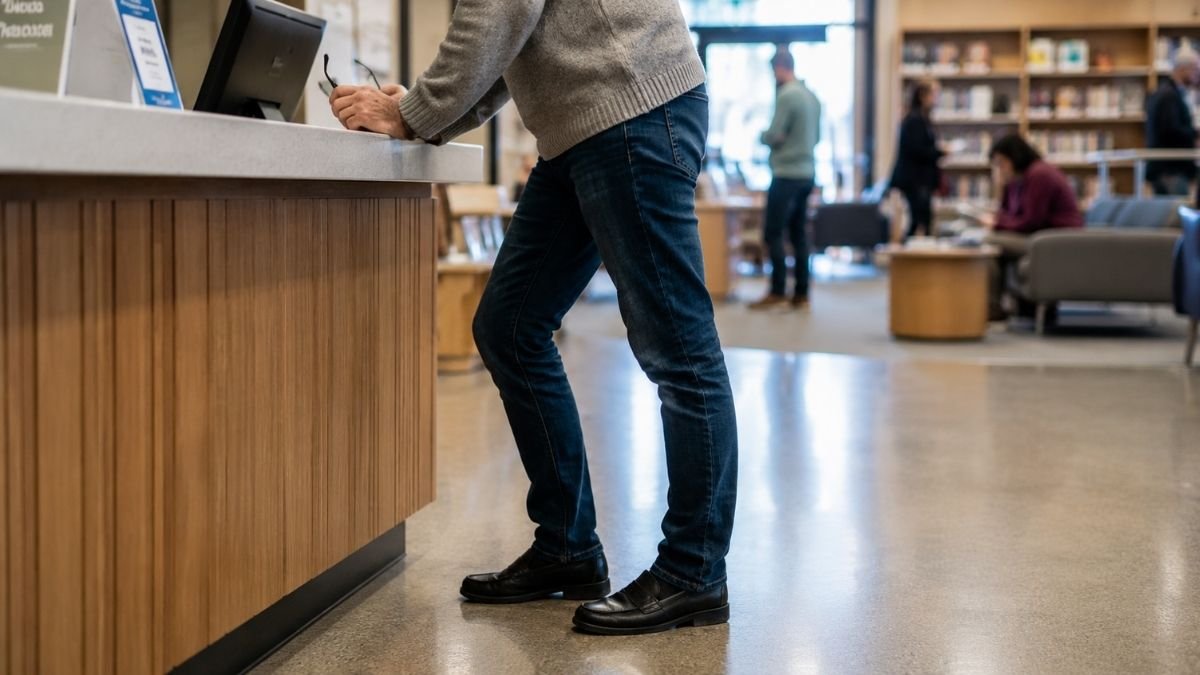
Stand in a grocery line. Notice your knees. Many people lock them straight without thinking, especially while waiting.
Locked knees push more of your body’s load onto your lower back. Your knee joints also have less cartilage to spare as you age, so that extra strain adds up faster than it did at 30.
There’s a hidden fall risk here too. A locked, rigid stance limits your body’s ability to make small adjustments. Those tiny adjustments are often what catch you before a stumble turns into a fall.
Try this: Keep a soft bend in your knees when you stand for more than a minute or two. This one habit is a simple part of good posture exercises for seniors.
3. The Upper Back Slump That Sneaks Up on You

Years of sitting at a desk or driving a car round your shoulders forward. Over time, the muscles that hold your upper back straight get weaker from disuse. Your posture starts to follow the shape of your habits.
Left unchecked, this can turn into a visible rounding of the upper spine, sometimes called dowager’s hump. Hyperkyphosis, the medical term for this excess curve, affects roughly 20 to 40 percent of older adults.
This isn’t just about how you look. In older women, low bone mineral density is one of the strongest predictors of kyphosis getting worse over time.
Global osteoporosis rates run around 21.7 percent in older adults, and they climb to about 35.3 percent in elderly women specifically. Weak bones and a slumped spine feed each other.
Try this: Squeeze your shoulder blades together several times a day. Strengthening your upper back is one of the simplest posture mistakes over 50 to fix, and it directly protects your spine.
4. The Lopsided Habits Wrecking Your Balance

Do you always carry your bag on the same shoulder? Do you shift your weight onto one leg while standing at the counter? Small habits like these build muscle imbalance over years.
Picture a mail carrier who’s worked the same route for 20 years. One shoulder sits lower than the other. One hip carries more of the load. This kind of asymmetry doesn’t happen overnight, but it adds up quietly.
Over time, this uneven pull tilts your pelvis. And a tilted pelvis changes how your whole spine lines up above it.
Try this: Switch your bag to the other shoulder regularly. Pay attention to which leg you lean on, and consciously balance your weight between both feet.
5. The Sway in Your Lower Back You Might Be Missing

Stand sideways in front of a mirror. If your lower back curves in sharply and your belly pushes forward, you might have what’s called swayback, or anterior pelvic tilt.
This happens when your pelvis tips forward and your lower spine curves more than it should. Doctors call the extra curve lumbar hyperlordosis. The problem is that this shape compresses your lower back with every step you take.
There isn’t strong recent research that isolates swayback in over-50s as its own separate risk category, so it’s honest to say this section stays explanatory rather than stat-heavy. What matters most is the goal: a neutral spine, where your pelvis sits level instead of tipped.
Try this: Gently tighten your lower belly muscles when you stand. This helps pull your pelvis back toward neutral and takes pressure off your lower back. That’s the core idea behind learning how to fix bad posture as you age.
6. Why Your Steps Are Getting Shorter (And Why That’s Risky)
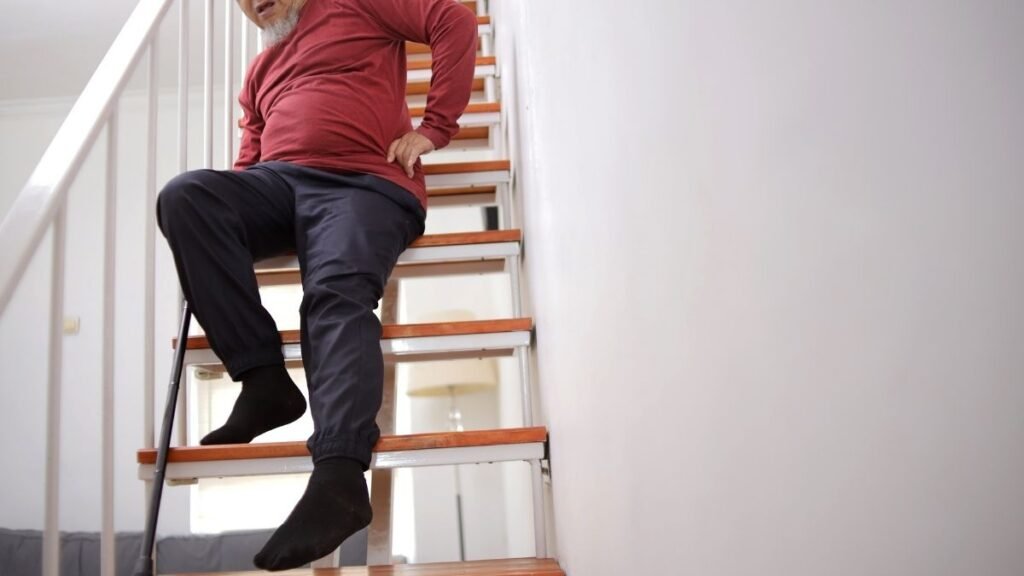
Watch how you walk compared to 10 years ago. Many people develop a shuffling gait as they age. Steps get shorter. They also get more rigid. Your arms swing less than they used to.
This shift moves your center of gravity forward, ahead of your feet. That’s a dangerous place for it to sit.
The numbers back this up. CDC data shows more than one in four adults 65 and older falls each year. That adds up to over 14 million falls annually, and falls are the leading cause of injury in this age group. The good news is that exercise focused on gait and balance, done consistently for 12 weeks or more, has been shown to meaningfully cut fall risk.
Try this: Practice walking with longer, more deliberate steps. Let your arms swing naturally instead of holding them still. This is one of the most fixable posture mistakes over 50, and it pays off fast.
7. Stop Bending at the Waist to Pick Things Up
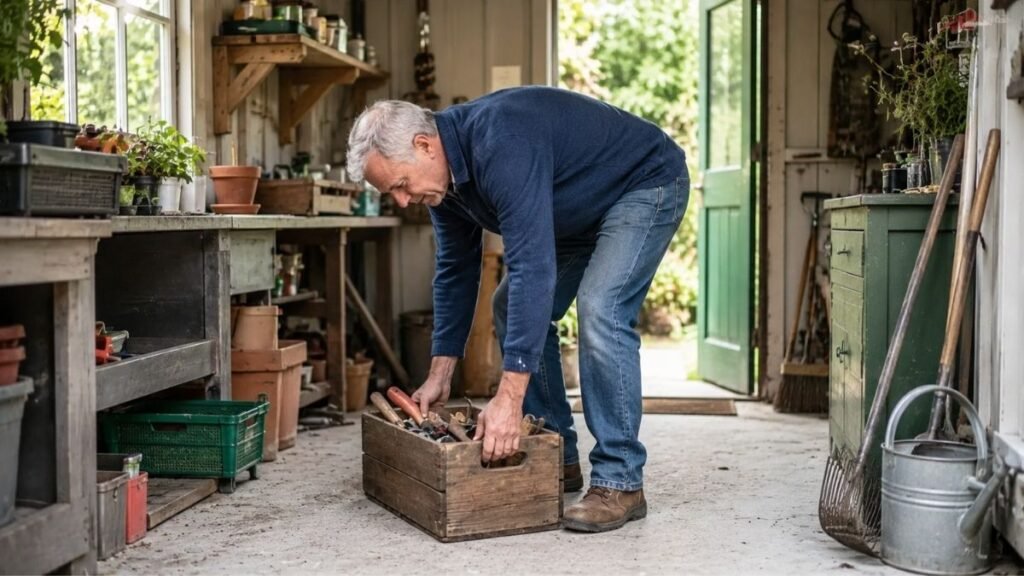
Reach down to grab something off the floor. Do you bend at the waist, letting your lower back do all the work? Most people do this without thinking twice.
Your spine wasn’t built to work like a hinge under load. Your discs also carry less water content and less resilience after 50, so they have a smaller margin for error. Basic biomechanics tells us that load on your spine multiplies the farther an object sits from your body, and it multiplies again when your spine is flexed forward.
Try this: Bend at your hips and knees instead, keeping your back straight. This is called a hip hinge, and it’s one of the fastest ways to fix bad posture during everyday lifting.
8. What Sitting in a Recliner Does to Your Spine

That soft recliner feels good in the moment. But sinking into it for hours lets your spine curve into a slouched shape it doesn’t naturally want to hold.
Here’s the part people miss. Even under light load, sustained slouching causes something called creep in your spinal ligaments.
Over time, that means they stretch and hold their new, curved shape more easily. Slouching also compresses your chest, which can affect how deeply you breathe, and it puts pressure on your digestive organs.
Try this: Add a small pillow or rolled towel behind your lower back when you sit. It’s a simple fix that keeps your spine in a better position without demanding you sit rigidly upright all day. Think of it as one of the easier posture exercises for seniors, since it takes no effort once it’s set up.
Your Core Does More Than You Think

People hear “core strength” and picture six-pack abs. But your core is really the structural support system for your entire spine. It’s not about how it looks.
When your core is weak, your spine has to pick up work it wasn’t built to handle alone. That shows up most clearly in your balance.
A 2025 systematic review and meta-analysis found that core training meaningfully improves balance in older adults, and longer sessions of 45 minutes or more produced more noticeable benefits than shorter ones.
This connects to a bigger picture. Broader research on fall prevention shows that multimodal strength and balance training cuts fall risk by roughly 20 to 45 percent.
Try this: Add simple core exercises to your week, like seated marches or standing balance holds. Building this strength is one of the most useful posture exercises for seniors, and it directly ties back to fixing posture mistakes over 50.
One Small Change This Week
These nine habits build up slowly and quietly. You don’t notice them happening. But each one has a specific, learnable fix behind it.
You don’t need to fix all nine at once. Pick one habit from this list and work on it this week. That’s the real, honest way to fix bad posture that actually sticks.
