
Stress can make your breathing shallow, your heart race, and your mind feel impossible to control. Box breathing offers a fast way to interrupt that reaction using four equal steps: inhale, hold, exhale, and hold again.
The method is widely associated with Navy SEAL training because it helps people stay focused during intense pressure, but its value reaches far beyond extreme situations.
In just two minutes, slow controlled breathing may calm the nervous system, steady your pulse, and sharpen attention. Here is how to practice the pattern safely, why it works, and what the evidence says about improved oxygen flow.
Box Breathing
A “panic button” for your nervous system. Tracing a square with your breath (4-4-4-4) shifts you from fight-or-flight to calm in 2 minutes.
What Is Box Breathing? (The Navy SEAL Secret)
Picture this: A Navy SEAL trainee is chest-deep in freezing ocean water at 3 AM. Instructors are yelling. His body is shaking. Most recruits quit at this exact moment.
But not this one. He's breathing in a pattern: 4 counts in, 4 counts hold, 4 counts out, 4 counts hold. Like tracing a square. Over and over.
That's box breathing. Some people call it square breathing or tactical breathing. Same thing.
Here's the wild part: This technique is ancient. Yogis have been doing it for thousands of years. They called it pranayama. But the U.S. Navy SEALs adopted it because it works under the worst possible conditions.
Mark Divine, a former Navy SEAL commander, says it straight: "I used it every day in SEAL training. It helped me graduate as the honor man, the No. 1 graduate."
Now it's everywhere. Paramedics use it before entering accident scenes. Athletes use it before competition. Your neighbor probably uses it before difficult phone calls.
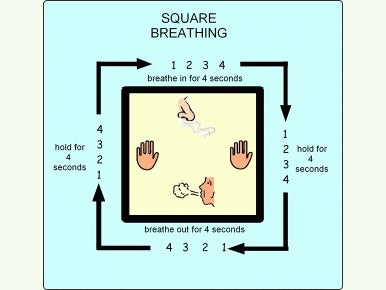
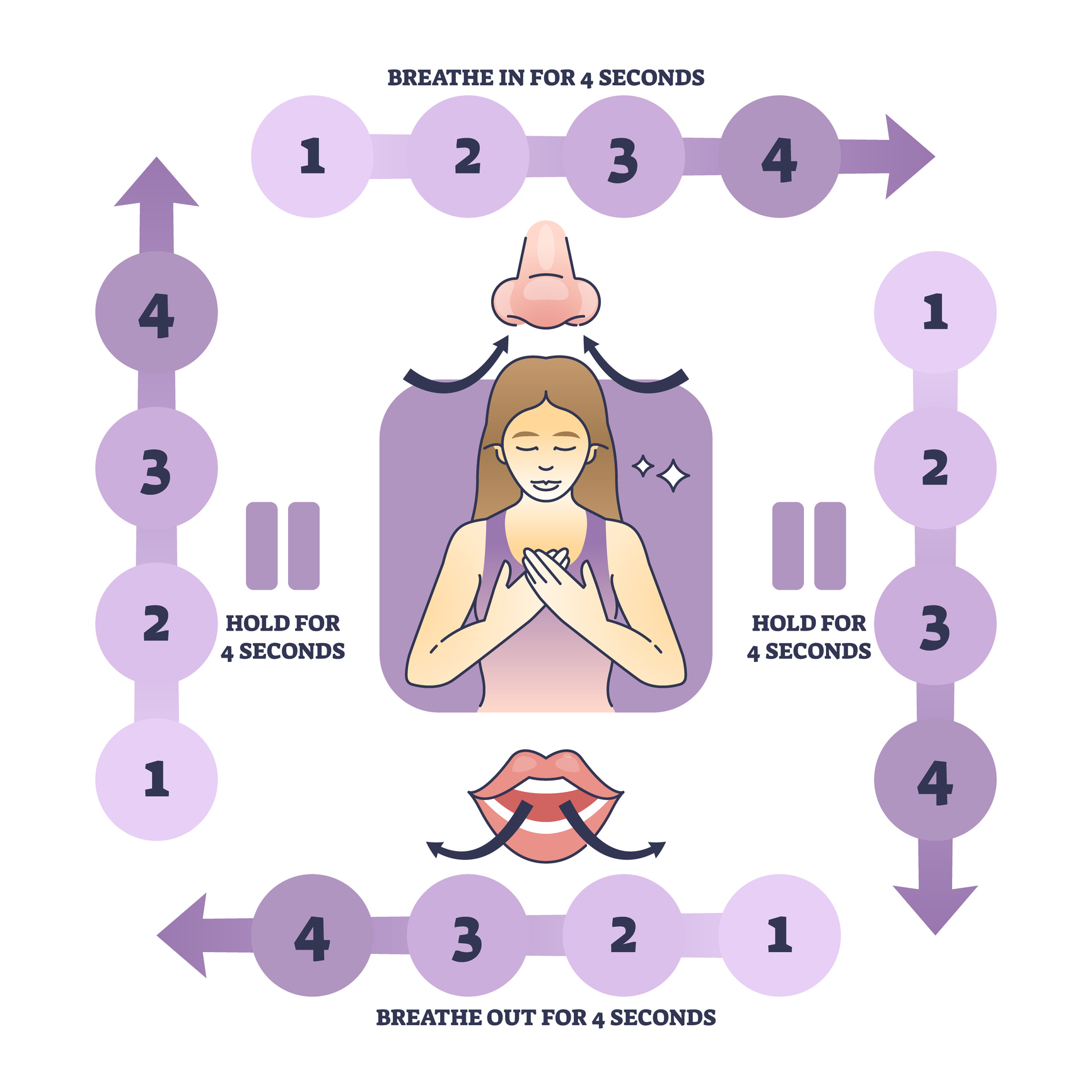
The pattern is simple: Breathe in for 4 seconds. Hold for 4 seconds. Breathe out for 4 seconds. Hold for 4 seconds. That's one cycle.
Do it for 2 minutes, and your body shifts gears. From panic mode to calm mode. Why does something this simple work so well? That's next.
The Science: Why Box Breathing Works So Fast

Your body has two modes.
Fight-or-flight mode: Heart racing, muscles tense, mind spinning. This is stress.
Rest-and-digest mode: Heart steady, muscles relaxed, mind clear. This is calm.
Think of it like shifting gears in a car. Most of us get stuck in high gear. Box breathing drops you into low gear.
Here's what happens inside your body:
When you breathe in this pattern, you activate something called your parasympathetic nervous system. That's the fancy term for your body's "calm down" system. It slows your heart. It relaxes your muscles. It tells your brain the danger is over.
But there's more. Scientists measure something called Heart Rate Variability (HRV). It's the space between your heartbeats. When you're stressed, that space gets rigid and fixed. When you're calm, it varies naturally.
Box breathing increases your HRV by up to 40% while you practice. That's huge. Higher HRV means your body bounces back from stress faster.
The International Journal of Psychophysiology published a study showing a 35% reduction in pre-performance anxiety. People did box breathing before stressful tasks. They felt 35% calmer. That's measurable.
Another study from 2017 found that doing this for one month decreased cortisol levels by 23%. Cortisol is your stress hormone. Less cortisol means less chronic stress.
Here's the key: The holds matter most. When you hold your breath after inhaling, CO2 builds up in your blood. Your body thinks, "Okay, we're not running from danger anymore." It triggers a calming response.
The equal timing matters too. Four seconds for everything. This synchronizes your heart rate with your breathing. Research shows that breathing at about 6 breaths per minute optimizes everything. Box breathing gets you right there.
Your oxygen saturation improves. Your baroreflex sensitivity improves. Those are fancy ways of saying: Your body gets better at regulating itself.
Here's exactly how to do it.
How to Do Box Breathing: Step-by-Step (The Exact Method)

You can do this sitting, standing, or lying down. Get comfortable. You don't need anything special.
Step 1 - Inhale (4 Seconds)
Breathe in through your nose. Count slowly: "One... two... three... four."
Feel your lungs fill with air. Don't rush. Four seconds is slower than you think. Count "one-Mississippi, two-Mississippi" if it helps.
Step 2 - Hold Full (4 Seconds)
Hold the air in your lungs. Keep your throat relaxed. No tension.
Count again: "One... two... three... four."
This is where CO2 starts building. Don't panic. You won't suffocate. This is the part that works.
Step 3 - Exhale (4 Seconds)
Breathe out through your mouth. Slow and controlled.
Count: "One... two... three... four."
Let all the air out. But don't force it. Natural and easy.
Step 4 - Hold Empty (4 Seconds)
Pause before the next breath. Your lungs are empty.
Count one more time: "One... two... three... four."
This hold is just as important as the first one. It completes the pattern.
Repeat
Do 4 to 5 complete cycles. That's about 2 minutes total.
Visualization Tip: Picture drawing a square. Move up the left side as you inhale. Across the top as you hold. Down the right side as you exhale. Across the bottom as you hold empty. This helps keep the timing even.
Navy SEAL Tip: Start with just 30 seconds if 2 minutes feels too long. Do two cycles. Get used to the holds. Build up from there.
What You Should Feel: After the first cycle, your shoulders might drop. By the third cycle, your mind should feel clearer. By the fifth cycle, you should feel noticeably calmer.
The holds are what make this work. Don't skip them. That's the difference between regular breathing and box breathing.
When to Use Box Breathing (7 Real-World Situations)

1. Before Presentations or Meetings
You're about to present to 50 people. Your hands are shaking. Do 2 minutes of box breathing in the bathroom beforehand.
That 35% anxiety reduction from the research? This is where it shows up. Sarah, a marketing director, does this before every client pitch. "It's the difference between fumbling my words and being sharp," she says.
2. During Panic Attacks
A panic attack feels like you're dying. Your chest tightens. You can't catch your breath.
Box breathing interrupts the spiral within 60 seconds. The pattern forces your attention away from the panic. The holds reset your nervous system. Do just two cycles and you'll feel the grip loosen.
3. Before Sleep

Your brain won't shut off. You're replaying conversations from the day. You're making tomorrow's to-do list.
Do box breathing lying in bed. It prepares your body for rest. The parasympathetic activation tells your body it's safe to sleep. Many people fall asleep during cycle 4 or 5.
4. After Stressful Emails
You just read an email that made your blood boil. Your body is flooded with stress hormones.
Before you respond, do 2 minutes of box breathing. It creates space between the trigger and your reaction. Better decisions come from a calm nervous system.
5. In Traffic or Waiting Rooms
You're stuck in traffic. Or waiting for the doctor. Dead time that usually just builds frustration.
Turn it into reset time. Keep one hand on your belly to feel your breath. Count the cycles on your fingers. Emergency room nurses do this between trauma cases. You can do it between traffic lights.
6. Before Important Decisions
Big decisions need a clear mind. Stress clouds judgment.
Mark Divine, the Navy SEAL, says he uses it "before a workout, while standing in line, stuck in traffic." Anywhere you need mental clarity.
Athletes do it before competitions. Not to hype themselves up. To clear their minds so they can perform.
7. After Conflict

You just argued. Your heart is pounding. You want to text something you'll regret.
Box breathing de-escalates your nervous system. Parents use this after dealing with child meltdowns. It stops the stress from one moment from ruining the next hour.
The 2-Minute Rule: If you can spare 2 minutes, you can do this. That's shorter than scrolling social media. Shorter than making coffee. But the return is massive.
But only if you avoid these common mistakes.
5 Common Mistakes That Ruin Box Breathing (And How to Fix Them)
Mistake #1: Breathing Too Fast

Most beginners rush through the counts. They count to four in 2 seconds. That's not 4 seconds. That's 2 seconds.
The Fix: Count "one-Mississippi, two-Mississippi, three-Mississippi, four-Mississippi." Say the whole word in your head. It forces you to slow down. The slower pace is what triggers the calming response.
Mistake #2: Shallow Chest Breathing
You're only using the top part of your lungs. Your shoulders rise. Your chest puffs. But your belly stays flat.
The Fix: Put your hand on your belly. Make sure it rises when you breathe in. Falls when you breathe out. This is diaphragmatic breathing. It's deeper. It works better.
Mistake #3: Skipping the Holds
Some people just do inhale-exhale-inhale-exhale. That's just regular deep breathing. It helps a little. But it's not box breathing.
The Fix: The holds are where the CO2 builds. That's where the magic happens. Don't skip them. If 4 seconds feels too long, try 3. But keep the holds.
Mistake #4: Tensing Up
You're forcing the breath. Holding tension in your chest or throat. Squeezing your eyes shut. Clenching your jaw.
The Fix: Stay relaxed. Your breath should be natural and easy. Not forced. Soften your face. Drop your shoulders. Think "allow" not "force."
Warning sign: If you feel dizzy, you're counting too slowly or holding too hard. Back off a little.
If it feels like you're suffocating, try 3 seconds instead of 4. Work your way up.
Mistake #5: Only Practicing When Stressed

You wait until you're in full panic mode to try this. But your body doesn't know what you're asking it to do. It's like trying to learn to swim while drowning.
The Fix: Practice daily when you're calm. Your body learns the pattern. Then when stress hits, it remembers. Research shows regular practice makes it 62% more effective in actual stress situations.
Think of it like a fire drill. You practice when there's no fire so you know what to do when there is.
Your 7-Day Box Breathing Challenge (Build the Habit)
Here's how to make this stick.
Days 1-2: Morning Practice

Set your phone alarm 5 minutes earlier than usual. When you wake up, before you check your phone, do 2 minutes of box breathing. Five cycles. That's it.
You're teaching your body the pattern when it's calm. No pressure. Just practice.
Days 3-4: Add Evening Practice
Keep the morning practice. Now add 2 minutes before bed. Do it lying down. Put one hand on your belly to feel your breath.
By day 3, you should notice: You fall asleep faster. Your mind is quieter.
Days 5-6: Use During One Stressful Moment
Now put it to work. Pick one stressful moment during your day. Before checking difficult emails. Before a tough conversation. During your commute.
Do 2 minutes of box breathing. Notice how it changes what happens next.
Day 7: Practice 3 Times
Morning, stress moment, evening. Three times today.
Track it in a simple journal or notes app. Just checkmarks. "Morning - done. Stress - done. Evening - done."
What You'll Notice:
By day 3: Falling asleep is easier.
By day 5: You catch yourself using it automatically.
By day 7: Stress doesn't hit as hard as it used to.
The research shows effects compound over time. Week 1 is good. Week 4 is better. Week 12 is when people say, "I can't believe I lived without this."
Start small. Build momentum. Two minutes is nothing. But it adds up to everything.
Box Breathing vs. Other Techniques: Which Is Best?
Box breathing isn't the only breathing technique. Here's how it compares.
4-7-8 Breathing
Pattern: Inhale for 4, hold for 7, exhale for 8.
Best for: Sleep. The long exhale triggers deep relaxation. Use this when you want to knock yourself out at night.
Speed: Slower than box breathing. Takes longer to kick in.
Diaphragmatic Breathing
Pattern: Deep belly breathing. No specific counts.
Best for: Physical performance and lung capacity. Athletes use this for endurance.
Speed: Moderate. Good for general stress but not emergency situations.
Box Breathing
Pattern: 4-4-4-4. Equal counts.
Best for: Immediate stress and focus. Fast-acting. Versatile.
Speed: Works within 60-90 seconds.
The Comparison:
- Speed of effect: Box breathing wins. Fastest results.
- Ease for beginners: Box breathing wins. Easiest to remember.
- Best for sleep: 4-7-8 breathing wins.
- Best for athletes: Diaphragmatic breathing wins.
- Best for daily stress: Box breathing wins.
No technique is "best" for everyone. But box breathing wins for versatility and speed. It's the Swiss Army knife of breathing techniques.
Try all three. Pick your favorite. Or use different techniques for different situations. That's what the pros do.
FAQs: Your Box Breathing Questions Answered
How long before I see results?
Immediate results for acute stress. Within 60-90 seconds of starting, you'll feel calmer. For long-term benefits like better sleep and lower baseline stress, give it 2-4 weeks of daily practice.
Can I do it too much?
No. You can't overdose on good breathing. But 3-5 times daily is the sweet spot. More than that, and you're spending time you could use for other things.
What if 4 seconds is too long or too short?
Adjust to 3 or 5 seconds. The key is keeping all four parts equal. If you do 3 seconds, do 3 for everything. If you do 5, do 5 for everything. The equal timing is what matters.
Should I breathe through my nose or mouth?
Inhale through your nose. Exhale through either. Most people prefer exhaling through their mouth because it feels more natural. But nose-exhaling works too. Do what feels right.
Can it help with panic attacks?
Yes. Studies show a 35% reduction in anxiety. During a panic attack, box breathing interrupts the cycle. It forces your attention onto counting instead of panic. It regulates your CO2 levels, which are often off during panic.
Is there anyone who shouldn't do this?
Check with your doctor if you're pregnant or have high blood pressure. Some people with COPD or asthma might need to adjust the timing. When in doubt, ask a medical professional first. Start slow and listen to your body.
Take Your Next Breath Differently
Box breathing is a 2-minute technique proven to reduce stress by 35%. Navy SEALs use it in extreme situations. It works by activating your parasympathetic nervous system. The pattern is simple: 4-4-4-4. Anyone can learn it.
But knowledge doesn't change anything. Practice does.
Right now, wherever you are, try one cycle. Inhale for 4, hold for 4, exhale for 4, hold for 4.
Notice the difference? That's your nervous system shifting gears.
Do it again tomorrow morning. Then the next day. By next week, you'll have a superpower in your pocket. The same one that gets Navy SEALs through hell week.
And it'll always be there when you need it most.
Start your box breathing practice today and join thousands who've discovered this life-changing Navy SEAL technique. Your next stressful moment is coming. You'll be ready.
