

Brain fog after 60 can feel unsettling, especially when names, appointments, or simple tasks suddenly take more effort. Aging itself can affect memory and processing speed, but diet may also play a role in long-term brain health.
Research has linked higher intake of ultra-processed foods with a greater risk of cognitive impairment, while less-processed eating patterns are associated with better brain outcomes.
That does not mean one ingredient causes memory loss overnight. The bigger concern is repeated exposure to highly processed foods that crowd out nutritious choices. Here are five common ingredients worth watching and smarter ways to replace them.
Memory Thieves: 4 Processed Ingredients Behind Brain Fog
Some everyday processed foods can create blood sugar swings, inflammation, and metabolic stress that may make clear thinking harder as you age.
High-Fructose Corn Syrup
Common in soda, sauces, breads, and flavored foods. It can contribute to rapid blood sugar swings and dietary patterns associated with inflammation.
Artificial Sweeteners
Often hiding in “diet” and “zero sugar” foods. Some research has linked high intake with poorer cognitive trajectories and changes in the gut microbiome.
Sodium Nitrites
Found in many processed meats such as bacon, sausage, pepperoni, and deli meats. Higher processed-meat intake has been associated with greater dementia risk.
Refined Carbohydrates
White bread, refined cereals, crackers, and similar foods digest quickly, creating spike-and-crash blood sugar patterns that can leave you feeling tired and foggy.
Why Your Brain Becomes More Vulnerable After 60

Think of your brain at 30 as a car with a fresh engine and a clean filter. It can handle a lot of stress and still recover. At 65, that same engine is still running. But the filter has seen a lot more miles. What you put in it matters more than ever.
First, your brain produces fewer natural antioxidants as you get older. Antioxidants are the compounds that fight off oxidative stress, which is basically the cellular rust that builds up when you are exposed to poor diet, pollution, and stress. With fewer of them on defense, processed foods cause more damage.
Second, the blood-brain barrier weakens with age. This barrier is like a security gate that keeps harmful substances out of your brain tissue. When it becomes more permeable, more of what you eat actually reaches your brain.
Third, older adults metabolize glucose less efficiently. Blood sugar spikes from processed foods hit harder and last longer. The brain pays a price every time that happens.
Fourth, the gut-brain connection becomes less stable. Processed foods disrupt the bacteria living in your gut. Since your gut communicates directly with your brain through the vagus nerve, a disrupted gut leads to disrupted thinking. This is the gut-brain connection, and it is very real.
Fifth, the brain’s ability to compensate for damage naturally decreases with age. Scientists call this cognitive reserve. The same processed diet that a 35-year-old bounces back from can cause noticeable decline in a 65-year-old, simply because there is less buffer left.
A separate study published in February 2025 in the Journal of Prevention of Alzheimer’s Disease found that each additional daily serving of ultra-processed food raised Alzheimer’s risk by 13% in middle-aged adults.
Ingredient 1: High-Fructose Corn Syrup (The Sugar That Is Hijacking Your Brain)

Most people know high-fructose corn syrup is in soda. What they do not know is that it is also hiding in ketchup, salad dressing, packaged bread, flavored yogurt, breakfast cereal, and hundreds of products marketed as everyday staples.
Read the label on a standard bottle of ketchup. High-fructose corn syrup is often listed in the top three ingredients. Check a container of low-fat flavored yogurt. It frequently contains more sugar than a candy bar. That “heart-healthy” packaged white bread? Flip it over. HFCS is often right there in the ingredient list.
Unlike regular glucose, fructose is processed almost entirely in your liver. When the liver gets overwhelmed, it produces inflammatory compounds that travel through your bloodstream and reach your brain. This triggers a low-grade inflammation in brain tissue that interferes with clear thinking.
Then there is the blood sugar problem. HFCS causes a rapid spike in blood sugar followed by a steep crash. During that crash, your brain is effectively starved of its primary fuel. Repeated cycles of this impair memory consolidation and focus. This is the physical experience of brain fog, and it can happen after a single meal.
Additional research published in PLoS found that long-term HFCS intake caused structural changes in the part of the brain responsible for memory, emotion, and nervous system function.
The good news is that swapping it out is simple. Choose plain Greek yogurt and add your own berries. Pick whole grain bread that contains no added sweeteners. Make your own salad dressing with olive oil and vinegar. These small changes cut your HFCS exposure dramatically without requiring you to overhaul your entire kitchen.
Ingredient 2: Artificial Sweeteners (The “Healthy” Swap That Is Not What You Think)
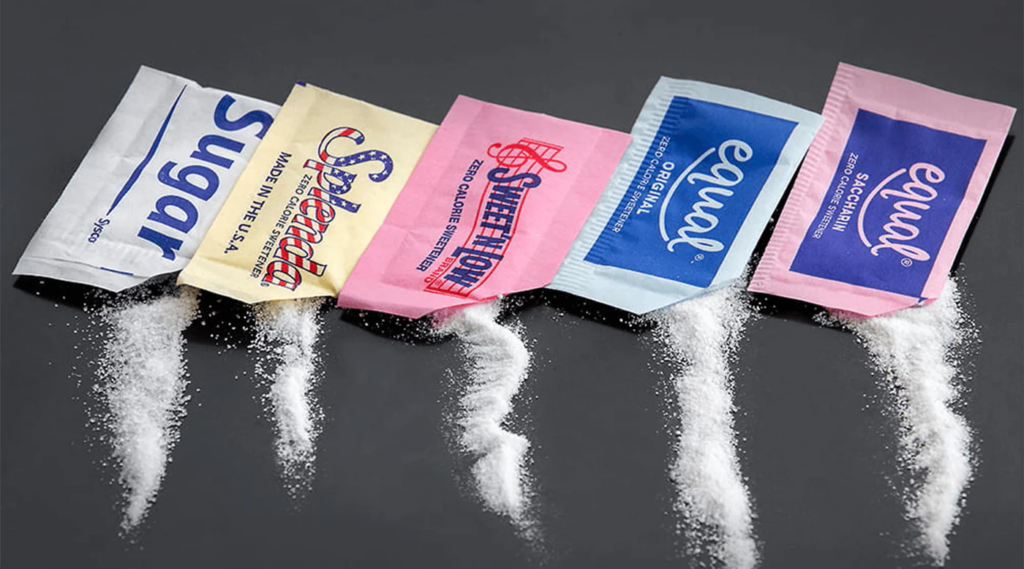
A lot of people switched from sugar to artificial sweeteners thinking they were making a smart choice. Diet soda instead of regular. Sugar-free yogurt instead of the full-sugar version. Zero-calorie flavored water instead of juice.
The specific sweeteners studied were aspartame, saccharin, acesulfame-K, erythritol, sorbitol, and xylitol. These are not obscure ingredients. They are in diet sodas, flavored sparkling water, sugar-free yogurt, energy drinks, protein bars, and low-calorie desserts.
The amount that caused the fastest decline? Roughly 191 milligrams per day. That is about what you get from one can of diet soda.
How does this happen? Researchers believe these sweeteners disrupt the gut microbiome. When your gut bacteria are thrown off balance, neurotransmitter production suffers, and the signals that regulate mood and memory become less reliable.
The link was especially strong in people with diabetes, since the brain is already more vulnerable to metabolic disruption in those individuals.
Lead study author Dr. Claudia Kimie Suemoto of the University of Sao Paulo put it plainly: “We do know that these sweeteners are associated with worse cognitive trajectories.”
When you are reading ingredient labels, look for: aspartame, sucralose, acesulfame potassium, erythritol, sorbitol, xylitol, and saccharin. They appear in products labeled “diet,” “zero sugar,” “light,” and “sugar-free.” Many protein bars and “healthy” snacks carry them too.
Better options exist. Try sparkling water with a squeeze of fresh lemon or lime. Use plain Greek yogurt with a drizzle of raw honey or a sprinkle of cinnamon. Snack on energy bites sweetened with dates or banana. Your brain will thank you.
Ingredient 3: Sodium Nitrites (The Preservative Hiding in Your Breakfast)

Many people over 60 start their morning with bacon or sausage. They add deli turkey to their lunch. They snack on pepperoni. These are common, familiar foods. They are also directly linked to dementia.
In January 2025, a major study published in Neurology analyzed data from more than 130,000 health professionals over more than four decades. The result: people who ate more processed red meat had a 14% higher risk of developing dementia than those who ate minimal amounts.
And the risk shows up at surprisingly small portions. Research presented at the Alzheimer’s Association International Conference in July 2024 confirmed that eating just a quarter serving of bacon, bologna, or similar processed meat daily, which works out to roughly two servings per week, significantly raises dementia risk compared to those who eat it less than three times a month.
The culprit is sodium nitrite. This is the preservative used in most cured and processed meats to extend shelf life and maintain color. The problem is what happens when it enters your body.
Sodium nitrite converts into compounds called N-nitroso compounds during digestion. In laboratory settings, these compounds have been shown to trigger the clumping of amyloid protein, which is one of the key biological markers of Alzheimer’s disease.
Study co-author Yuhan Li, a researcher at Brigham and Women’s Hospital, explained that processed red meat “may affect the brain because it has high levels of harmful substances such as nitrites (preservatives) and sodium.”
This applies to a long list of common foods: bacon, hot dogs, bologna, pepperoni, salami, ham, deli turkey, and sausage. Even organic or “natural” versions often use celery powder as a substitute, which is naturally high in nitrates and creates the same compounds in your body.
One important note from the same research: replacing one daily serving of processed red meat with nuts and legumes was linked to a 19% lower risk of dementia. Replacing it with fish was linked to a 28% lower risk.
For label reading, watch for: sodium nitrite (E250), sodium nitrate (E251), and potassium nitrite (E249). Practical swaps include fresh roasted chicken or turkey sliced at home, canned wild salmon, sardines, eggs, hummus with raw vegetables, and nuts and legumes as a protein source. These are simple, affordable, and effective.
Ingredient 4: Refined Carbohydrates (Why White Flour Creates a Fog in Your Head)

White bread. White pasta. White rice. Packaged crackers. Store-bought wraps. Most breakfast cereals. These foods feel basic. They are in almost every pantry in America. And they may be one of the biggest contributors to afternoon brain fog that most people never think to question.
Here is what happens in your body. Refined carbs have been stripped of their fiber, vitamins, and minerals during processing. What is left digests almost instantly and floods your bloodstream with glucose.
This creates the same spike-and-crash cycle as high-fructose corn syrup, but it happens with foods that most people think of as perfectly normal. By the time you feel sluggish and foggy after lunch, your blood sugar has already crashed and your brain is running on empty.
The National Institute on Aging has found that problems with glucose metabolism lead to elevated brain glucose levels in people with Alzheimer’s. Refined carbs are one of the primary dietary drivers of that metabolic disruption.
Repeated exposure also reduces levels of a protein called BDNF, which stands for brain-derived neurotrophic factor. BDNF supports the growth of new brain cells and the maintenance of existing neural connections. Lower BDNF levels are consistently associated with depression and cognitive decline.
The hidden sources are the ones that surprise people most. “Whole wheat” bread that still lists enriched or bleached flour as its first ingredient is just dressed-up white bread.
Most commercial breakfast cereals, even those marketed as healthy options, are made almost entirely from refined starch. Rice cakes, pretzels, most store-bought wraps, and standard packaged oatmeal with added flavoring all belong in the same category.
Reading the label is simple once you know what to look for. The first ingredient should say “100% whole grain” or “100% whole wheat.” If it says “enriched flour,” “bleached flour,” or just “wheat flour” without the word “whole,” it is refined.
Better swaps include genuine whole grain bread, steel-cut or rolled oats with no added sugar, brown rice, lentils, quinoa, and sweet potatoes. These digest more slowly, keep your blood sugar stable, and give your brain a much steadier fuel supply.
Ingredient 5: Trans Fats and Heavily Processed Oils (How Slow Erosion Happens)

Artificial trans fats, created through a process called partial hydrogenation, were for decades a standard ingredient in packaged snacks, margarines, baked goods, and fast food. The FDA banned partially hydrogenated oils from the U.S. food supply in 2018. But many people are still consuming residual amounts through products formulated before the ban. And global food markets still use them widely.
What do trans fats do? They raise LDL cholesterol, promote system-wide inflammation, and damage the blood vessels that carry oxygen and nutrients to your brain.
Disrupted blood flow to the brain directly impairs memory, attention, and processing speed. A 2025 report drawing on multiple studies confirmed that diets high in processed fats remain linked to poorer memory and neurological outcomes even now.
The more pressing concern today is the balance between omega-6 and omega-3 fats. A systematic review linked high omega-6 to omega-3 ratios with a greater risk of cognitive decline.
The modern American diet has pushed this ratio to somewhere between 10:1 and 20:1 in favor of omega-6. Traditional diets maintained a ratio closer to 1:1 to 4:1. The gap between those two numbers represents decades of daily processed food consumption.
One tablespoon of canola oil is not going to damage your brain. That is not the point. The issue is cumulative, daily exposure through dozens of ultra-processed products, combined with very little omega-3 intake, that creates a pro-inflammatory environment in the brain over time.
The science on seed oils alone causing dementia is mixed. The science on chronic imbalance causing harm is much clearer.
These oils are hidden in packaged cookies, crackers, microwave popcorn, frozen meals, store-bought salad dressings, boxed cake mixes, non-dairy creamers, and most restaurant cooking.
Practical swaps: use extra virgin olive oil for cooking and dressings, eat fatty fish like salmon, sardines, or mackerel two to three times a week, and snack on walnuts and flaxseed as daily omega-3 sources. Small, consistent changes shift that ratio over time.
Your Action Plan: Simple Swaps That Start Working Right Away
You do not need to overhaul your entire diet this week. Research on the MIND Diet and the Mediterranean Diet shows that even moderate improvements in what you eat can meaningfully reduce cognitive decline risk. Progress beats perfection every single time.
Start with one thing. Pick the ingredient from this list that appears most often in your current meals and find one replacement. Just one. That is enough to start.
Then spend two minutes reading ingredient labels the next time you go grocery shopping. You are looking for five red flags: high-fructose corn syrup, artificial sweeteners (aspartame, acesulfame-K, erythritol, saccharin, sorbitol, or xylitol), sodium nitrite or nitrate, enriched or bleached flour listed as the first ingredient, and partially hydrogenated oils.
You will start seeing them everywhere. And that awareness is the beginning of real change.
Stock your kitchen with a short list of brain-supportive staples. Wild salmon, blueberries, walnuts, extra virgin olive oil, leafy greens, eggs, and legumes. These foods are well-supported by research on the MIND Diet, which has shown up to a 53% reduction in Alzheimer’s risk with consistent adherence.
One more thing that often gets overlooked: drink more water. Mild dehydration significantly worsens brain fog in adults over 60 because the brain is about 75% water and your sense of thirst weakens with age. By the time you feel thirsty, you are already mildly dehydrated. Keep a glass of water nearby throughout the day.
None of this requires expensive products or complicated meal plans. It requires awareness. And now you have it.
The Bottom Line
Five ingredients. They are in your grocery store right now. They are probably in your kitchen right now.
High-fructose corn syrup disrupts your blood sugar and fuels brain inflammation. Artificial sweeteners, despite their “healthy” image, are linked to accelerated cognitive aging. Sodium nitrites in processed meats raise dementia risk at surprisingly small amounts.
Refined carbohydrates create the blood sugar instability that starves your brain of steady fuel. And a daily diet heavy in processed oils quietly tips your fat balance in a direction that promotes inflammation over time.
This is not about being perfect. It is about being aware. Because you cannot make better choices until you know what you are dealing with.
Here is your challenge right now. Go to your kitchen and pick up one item. Flip it over. Read the ingredient list. See if any of these five are hiding there.
That single moment of awareness is where better brain health begins. The ingredients driving brain fog after 60 are real, well-documented, and avoidable. Your next grocery trip is a real chance to make your brain feel it.
