
Sarcopenia Is Coming: The 3 Amino Acids You Need To Keep Your Muscles Past 60
By age 60, you’ve likely lost 10-16% of your muscle mass—and you didn’t even notice it happening. Now those everyday tasks—opening jars, climbing stairs, carrying groceries—feel harder.
You fear falling and losing your independence, yet you’re confused why exercise alone isn’t fixing the problem or which supplements actually work. This is sarcopenia, age-related muscle loss that disrupts muscle protein synthesis.
But here’s the solution: three specific essential amino acids proven by 2024-2025 research to rebuild muscle past 60. You’ll discover the exact doses needed, which foods deliver optimal amounts, why standard protein intake fails after 60, and how to combine amino acids with exercise for maximum results.
The Muscle Thief
THE PROBLEM
By age 60, you lose 16% of muscle mass. It’s not just “aging”—it’s a condition called Sarcopenia that steals independence.
What Is Sarcopenia and Why Should You Care?
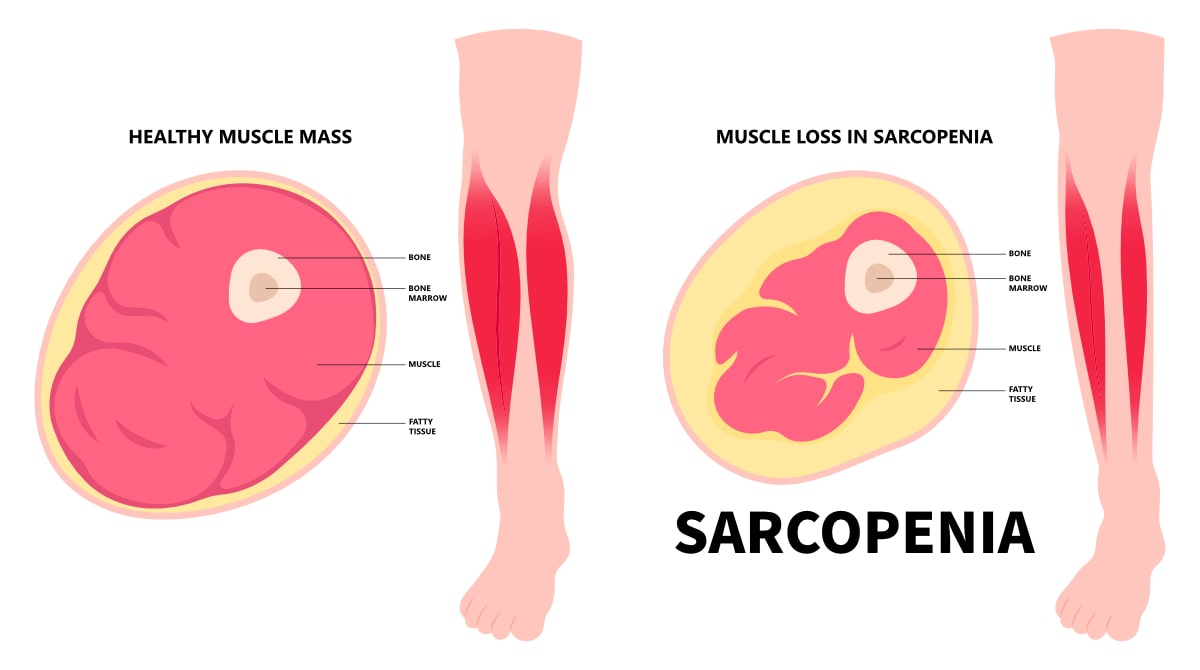
Sarcopenia is the medical term for age-related muscle loss. It's not just about getting weaker. It's about losing your independence. The sarcopenia definition includes reduced muscle size, strength, and activity. This leads to trouble moving around, more falls, and needing help with basic tasks.
Here's what happens. Starting at age 50, you lose between 0.5% and 1% of your skeletal muscle mass every year. Your muscle strength drops even faster. You can lose 1.5% to 5% of your strength each year.
The numbers are scary. Between 10% and 16% of adults over 60 worldwide have sarcopenia. In the U.S., the situation is worse. About 25% to 45% of seniors deal with this muscle strength decline.
Age makes it worse fast. Only 8.85% of people between 40 and 64 have sarcopenia. But that jumps to 15.51% once you hit 65 and older. Nearly double.
The hidden costs hurt most. You're more likely to fall. You lose independence. You can't open jars or carry groceries. Getting up from a chair becomes hard. Healthcare costs pile up because you need more help and treatment.
But here's the good news about age-related muscle loss. You can reverse it. Your body can still build muscle after 60, 70, even 80. You just need the right approach. The right nutrition. The right exercise. And most importantly, you need to understand what your muscles actually need to grow.
Most people think muscle loss is just part of getting old. They're wrong. Sarcopenia is a condition you can fight. And win.
Why Your Muscles Stop Responding After 60 (The Anabolic Resistance Problem)

Remember when you could eat a steak and feel your muscles respond? That doesn't work anymore. And it's not your imagination.
Your muscles have developed something called anabolic resistance. Think of it like this. When you were younger, your muscles were like eager students. They listened to every signal telling them to grow. Now? They're like teenagers who ignore you.
Here's what's happening inside your body. When you eat protein, your body breaks it down into amino acids. These amino acids travel through your blood to your muscles. They knock on the door and say "time to grow." But your aging muscles don't answer the door as easily.
The problem gets worse because of insulin resistance in your muscles. This isn't just about blood sugar. Your muscles need insulin to grab onto amino acids and pull them inside. When your muscles resist insulin, they can't grab those amino acids effectively. The building blocks for muscle protein synthesis just float past.
Your digestive system steals amino acids before your muscles even get a chance. Scientists call this splanchic first-pass extraction. Your gut, liver, and other organs grab amino acids from your food first. By the time the amino acids reach your muscles, there's less left over.
This is why eating the same amount of protein that worked at 40 doesn't work at 65. You need more protein just to overcome these barriers. A regular meal that would have built muscle at 40 barely maintains muscle at 65.
Leucine functions as a stimulatory signal. It's like a wake-up call your muscles can't ignore. When researchers give elderly people leucine-enriched essential amino acids, their muscles start responding again. The anabolic resistance breaks down.
The 3 Amino Acids That Actually Work (And the Science Behind Them)
Three amino acids stand between you and muscle loss. Not ten. Not twenty. Three.
They're called branched-chain amino acids, or BCAAs for muscle building. These essential amino acids for aging work together, but each has its own job.
Leucine: The Trigger

Leucine is the boss. It acts as the ignition switch for muscle protein synthesis. Without enough leucine, your muscles won't start building. Period.
When leucine enters your muscle cells, it activates something called the mTOR pathway. Think of mTOR as the construction manager inside your muscles. It tells your cells to start building new muscle protein. No leucine? The construction manager stays asleep.
International guidelines are specific. You need 3 grams of leucine at three main meals. That's 9 grams total per day. And you need it along with 25 to 30 grams of protein at each meal.
But here's where leucine benefits get interesting. Higher doses work even better. Studies show that leucine supplementation of 5 grams or more creates a significant improvement in gait speed. That means you walk faster and steadier. Taking leucine at least twice daily at doses between 2.8 and 3 grams helps too.
Isoleucine: The Support

Isoleucine doesn't get the same attention as leucine. But it matters just as much.
Isoleucine works with leucine to make the magic happen. It helps your muscles take in glucose for energy. It supports your metabolism. Research shows that men with sarcopenia have lower isoleucine levels. That's not a coincidence.
Think of leucine as the spark plug and isoleucine as the fuel pump. You need both for the engine to run.
Valine: The Completer

Valine rounds out the trio. Studies found that men with sarcopenia also have lower valine concentrations in their blood. Again, not random.
Valine completes the BCAA combination for optimal protein synthesis. It also helps prevent muscle breakdown when your body is under stress. When you're sick, not eating enough, or recovering from surgery, valine helps protect your existing muscle.
All three BCAAs for muscle work together. Leucine triggers the growth signal. Isoleucine supports the metabolic processes. Valine protects what you already have and helps build more.
You can't just take one and expect results. Your body needs all three in the right amounts.
One more thing matters. Moderately increasing your intake of arginine and animal protein may help reduce your risk of sarcopenia. Animal protein contains more leucine than plant protein. That's just biology. Plants have amino acids, but they don't pack the same leucine punch per serving.
These three amino acids are your weapons against muscle loss. Use them right, and your muscles will respond. Use them wrong or not at all, and you'll keep losing strength every year.
How Much Do You Actually Need? (Evidence-Based Dosing)
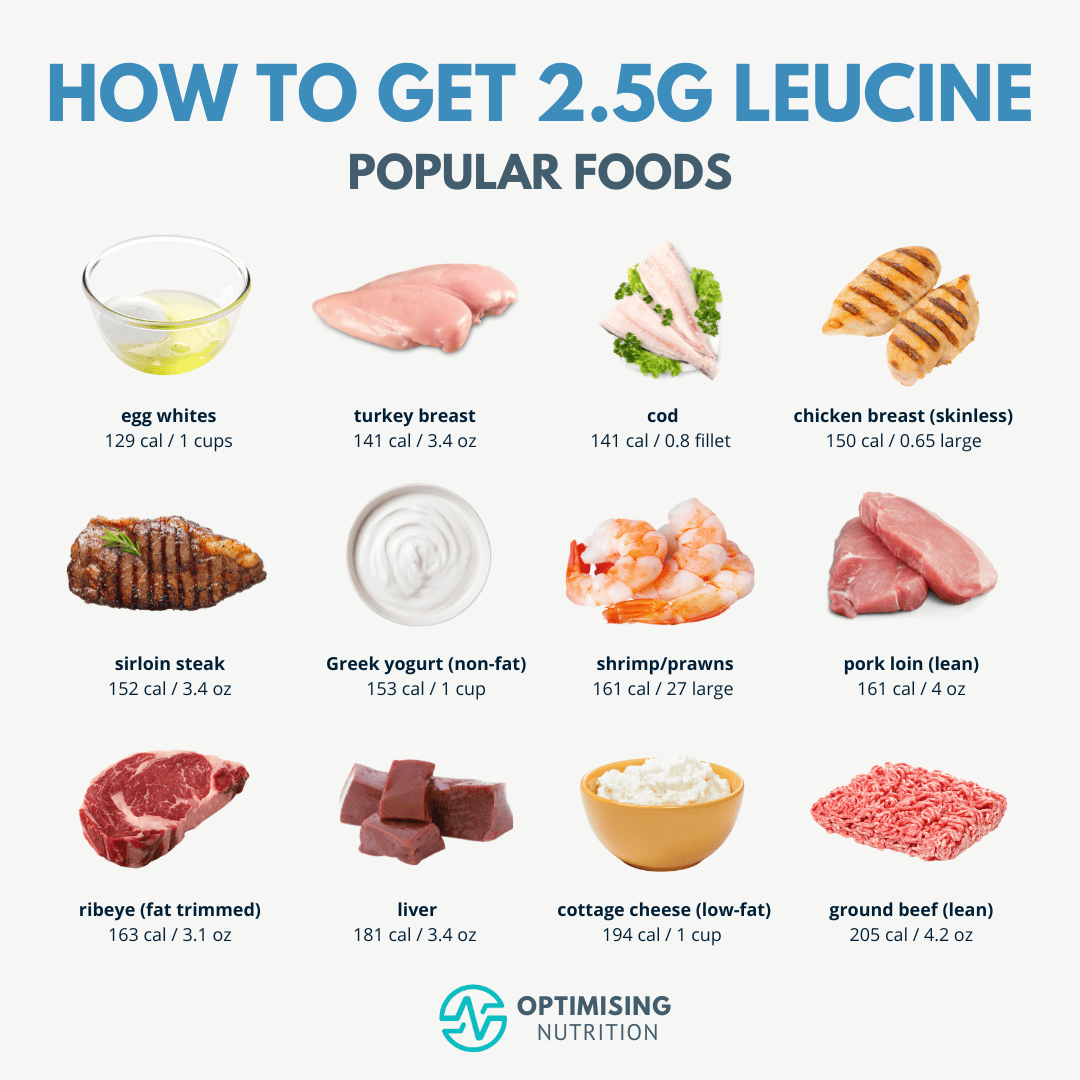
International guidelines are clear. You need 3 grams of leucine at three main meals. Plus 25 to 30 grams of protein at those same meals. This leucine dosage helps counteract lean mass loss in elderly individuals.
Your daily total protein needs are higher than you think. Aim for 1.0 to 1.2 grams of protein per kilogram of body weight every day. That's for all elderly individuals, not just active ones.
Let's make this real. Say you weigh 150 pounds. That's about 68 kilograms. You need a minimum of 68 grams of protein daily. But spread it out. Don't eat it all at once.
Here's what a day looks like:
Breakfast: 25 to 30 grams of protein plus 3 grams of leucine
Lunch: 25 to 30 grams of protein plus 3 grams of leucine
Dinner: 25 to 30 grams of protein plus 3 grams of leucine
That's 75 to 90 grams of protein and 9 grams of leucine total. You hit your minimum and give your muscles three chances to grow during the day.
Why timing matters? Your muscles don't store amino acids like your liver stores sugar. When amino acids show up, your muscles either use them or lose them. Eating all your protein at dinner means your muscles only get one growth signal. Spreading it across three meals gives three growth signals.
Scientists call this the leucine threshold concept. Your muscles need a certain amount of leucine before they start building. Below that threshold? Nothing happens. Above it? Growth begins. Higher dosages of leucine showed significant differences in muscle mass and gait speed.
Most people can't get enough leucine from food alone. Not because the food doesn't contain it. But because older adults eat less. Your appetite drops. Your stomach gets fuller faster. You might only eat small meals. That's when amino acid supplementation becomes necessary.
Top Food Sources: Where to Find These 3 Amino Acids
Food first. Always. But you need to know which foods actually deliver.
Leucine is more abundant in animal protein than in plant protein. That's not opinion. That's chemistry. Animal proteins are complete proteins with all essential amino acids in high amounts.
The Leucine Champions
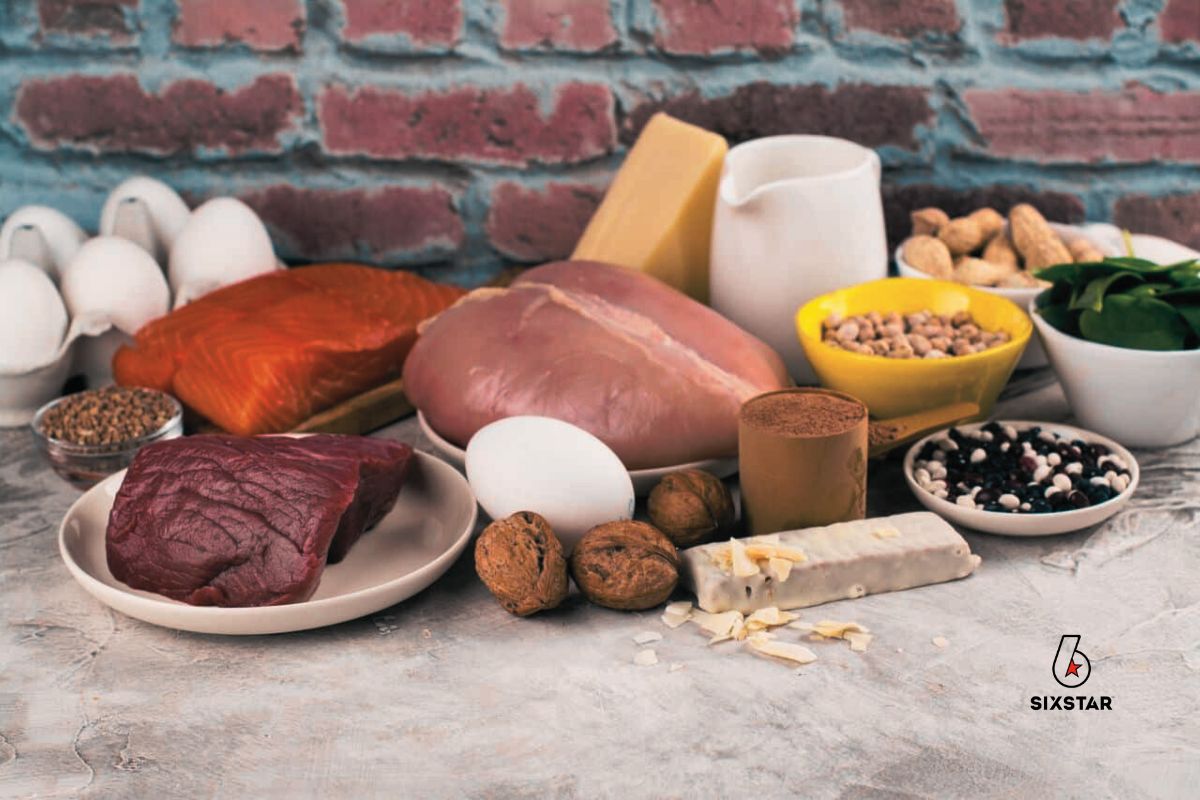
Chicken breast gives you about 2.5 grams of leucine in a 3.5-ounce serving. That's roughly the size of a deck of cards. Cook it however you like. Grilled, baked, or pan-seared. The leucine stays.
Greek yogurt packs 2.1 grams of leucine in one cup. The thick, strained kind. Regular yogurt has less. Greek yogurt also gives you protein and probiotics.
Two large eggs contain about 1.1 grams of leucine. Scrambled, fried, or hard-boiled. Easy breakfast option. You'd need about six eggs to hit 3 grams of leucine, though.
Whey protein powder delivers 2.5 to 3 grams of leucine in one scoop. This is why athletes love it. One scoop in milk or water gives you almost your full leucine needs for that meal.
Cottage cheese is a secret weapon. One cup has 2.8 grams of leucine. Add some fruit and you have a complete meal. The BCAA food sources don't get much better than cottage cheese.
Complete BCAA-Rich Food Combinations

Beef and fish give you solid amounts of all three BCAAs. A 4-ounce steak or salmon fillet covers your bases.
Dairy products are particularly effective. Milk, cheese, and yogurt contain complete proteins with strong BCAA profiles. Plus, they're easy to eat. A glass of milk takes 30 seconds to drink.
Whey protein isolate is basically concentrated dairy protein. It has the highest leucine concentration of any supplement. One scoop equals eating several cups of Greek yogurt.
Plant-Based Options (And Why They're Less Efficient)

Plants have amino acids. But not as many per serving. You need to eat more volume to get the same amounts.
Soybeans and tofu are your best plant options. They're complete proteins. But you need bigger portions.
Lentils, chickpeas, and beans have some BCAAs. But you'd need to eat cups of them to match one chicken breast.
Nuts and seeds have leucine, but also lots of calories from fat. You can't eat enough almonds to hit 3 grams of leucine without gaining weight.
This doesn't mean plant proteins are bad. They're just less efficient for leucine. If you eat plant-based foods, you'll probably need amino acid powder supplements to hit your targets.
Meal Planning Tips

Hit 3 grams of leucine per meal by combining high-protein foods for seniors:
Breakfast: Greek yogurt with a scoop of whey protein powder stirred in. Add berries.
Lunch: Chicken breast on a salad with cottage cheese on the side.
Dinner: Salmon or beef with vegetables.
Snacks: Hard-boiled eggs, cheese sticks, or a protein shake.
Track your intake for three days. Write down everything you eat. Add up the protein and leucine. Most people are shocked by how little they're actually eating.
Food can do the job. But only if you eat enough of the right foods at the right times.
Should You Take Supplements? (When Food Isn't Enough)

Your appetite drops as you age. You fill up faster. You might have dental problems that make chewing hard. Or digestive issues that make eating large meals uncomfortable. Maybe you just don't feel like cooking three protein-rich meals every single day.
When You Need Supplements
You need amino acid powder if you can't eat 25 to 30 grams of protein three times daily. Or if you can't stomach that much meat and dairy. Or if you have dietary restrictions that limit your protein sources.
The research backs this up. Administration of leucine at 6 grams per day for 13 weeks significantly improved walking time and lean mass index in elderly people. That's real improvement in real people.
But here's the key point. Leucine combined supplementation including vitamin D exhibited significant benefit for muscle strength and performance. The combination works better than leucine alone.
Essential Amino Acid Blends vs. Isolated Leucine

You can buy isolated leucine powder. Or you can buy BCAA supplements with all three amino acids. Which one works better?
BCAA supplements follow a standard ratio. Usually 2:1:1. That means two parts leucine, one part isoleucine, one part valine. This ratio mimics what you find in protein-rich foods.
Essential amino acid blends give you all nine essential amino acids, not just the three BCAAs. Some research suggests these complete blends work better because they provide everything your muscles need to build protein.
The truth? Both work if they contain enough leucine. The minimum effective dose is about 2.8 to 3 grams of leucine per serving.
What to Look For
Quality matters. Look for supplements that:
List exactly how many grams of each amino acid are in each serving. No "proprietary blends" that hide the amounts.
Contain at least 2.5 to 3 grams of leucine per serving.
Have third-party testing. Look for NSF Certified for Sport or Informed Choice labels. These mean the product was tested for purity and accuracy.
Dissolve easily in water. You'll use it more if it's convenient.
Safety and Timing

Take BCAA supplements around meals. Not instead of meals. With meals.
The amino acids work best when combined with food protein. Studies show that amino acid supplementation boosts the muscle-building effect of regular protein in meals.
The best timing is right before or right after you eat your protein-rich meal. Or mixed into a protein shake.
One warning: Leucine supplementation alone without exercise did not improve sarcopenia markers. The supplements are not magic pills. They're tools. You still need to use your muscles.
Are there side effects? Most people tolerate amino acids well. They're just concentrated forms of what's in food. Start with half doses for a few days to make sure your stomach handles it.
Don't mega-dose. More isn't always better. Studies show benefits at 2.8 to 6 grams of leucine per serving. Taking 20 grams won't build muscle twice as fast. Your body can only use so much at once.
The Bottom Line on Supplements
Food first, always. But if food isn't getting you to 3 grams of leucine three times daily, supplements fill the gap. They're not cheating. They're practical tools for meeting your body's needs when your appetite or circumstances make food alone difficult.
Just remember: they work best combined with resistance training. Which brings us to the most important piece.
The Missing Piece: Why You MUST Combine With Resistance Training

Taking amino acids without exercise is like buying lumber but never building the house.
The science is clear. Leucine supplementation paired with protein supplements and physical exercise was found to be an effective dietary intervention for the improvement of sarcopenia. Not leucine alone. Not exercise alone. Both together.
Think of it this way. Amino acids are the raw materials. Exercise is the signal that tells your body to use those materials. Without the signal, the materials just sit there.
Your muscles need a reason to grow. Exercise gives them that reason. When you lift weights or push against resistance, your muscles get tiny damage. Not bad damage. The good kind. Your body sees this damage and thinks "we need to be stronger for next time." Then it uses amino acids to rebuild the muscle bigger and stronger.
The Research Proves It

Resistance training significantly improved grip strength, gait speed, and skeletal muscle index in patients with age-related sarcopenia. These aren't small improvements. We're talking about being able to open jars again. Walking faster and more steadily. Having more muscle mass on your body.
Resistance exercise with or without nutrition were the most effective interventions for improving quality of life in elderly people. Exercise matters that much.
Here's the best news. There are no true non-responders to benefits of resistance training amongst the elderly. That means everyone improves. You might improve slowly. You might improve quickly. But you will improve.
Even people in their 80s and 90s gain strength and muscle when they lift weights.
What Kind of Exercise Works

You don't need a fancy gym. You need resistance. Something your muscles have to work against.
The research gives specific guidelines:
Do 2 to 3 sets of 1 to 2 exercises per major muscle group. That means legs, chest, back, shoulders, and arms. Perform 5 to 8 repetitions at 50% to 80% of your maximum strength. Do this 2 to 3 times per week.
Translation: Pick a weight you can lift 5 to 8 times before your muscles feel tired. Do 2 to 3 sets of that. Rest between sets. Do this two or three times each week.
Elastic band training works great too. Studies show 40 to 60 minutes per session, more than three times per week for at least 12 weeks gives results. Elastic bands are cheap, safe, and easy to use at home.
Safe Options for Seniors
You want strength training over 60 that's safe and effective. Here's what works:
Elastic resistance bands. They cost about $20 for a full set. You can adjust the resistance by changing bands. They're gentle on joints. You can use them sitting down if needed.
Light dumbbells. Start with 5 or 10 pound weights. You can do dozens of exercises with just two dumbbells. They last forever.
Bodyweight exercises. Chair squats, wall pushups, and modified planks need zero equipment. Your body weight is the resistance.
How to Start
Start light. Too light feels better than too heavy when you're beginning. You can always add weight next week.
Focus on form first. Do the movement right before you worry about how much weight you're lifting. Bad form causes injuries. Good form builds muscle.
Expect soreness. Your muscles will feel sore the day after your first few workouts. That's normal. It means you worked them. The soreness goes away as you adapt.
Be consistent. Two short workouts per week beats one long workout every two weeks. Your muscles need regular signals to grow.
The Timeline
You'll feel stronger before you look stronger. Strength gains happen in 2 to 4 weeks. Muscle size takes 6 to 8 weeks to show up. Keep going. The results compound over time.
Resistance training for seniors isn't optional if you want to beat sarcopenia. The amino acids feed your muscles. The exercise tells your muscles what to do with that food. You need both.
Your 7-Day Action Plan to Start Fighting Muscle Loss Today

Stop planning. Start doing. Here's exactly what to do for the next seven days.
Day 1: Measure Where You Are
Grab a chair and a stopwatch. How long does it take you to stand up from the chair and sit back down five times without using your hands? Write it down.
Squeeze a bathroom scale with one hand as hard as you can. Note the number. This is a rough grip strength measure.
Stand on one foot. How long can you balance? Write that down too.
These numbers are your baseline. You'll beat them.
Day 2: Stock Your Kitchen
Go shopping. Buy these items for your sarcopenia prevention plan:
Greek yogurt (at least 3 cups), Chicken breasts or thighs (enough for 5 meals), Eggs (one dozen), Cottage cheese (2 containers), Whey protein powder (one container) whatever vegetables you like
You're building a leucine-rich food supply. Make it easy to eat right.
Day 3: Plan Your First Day of Eating
Use this amino acid meal plan:
Breakfast at 8 am: Greek yogurt (1 cup) mixed with one scoop whey protein powder. Add berries. This gives you about 30 grams of protein and 3+ grams of leucine.
Lunch at 1 pm: Chicken breast (4 ounces) with vegetables and a side of cottage cheese. Another 30 grams of protein and 3 grams of leucine.
Dinner at 6 pm: More chicken or beef (4 ounces) with vegetables and a glass of milk. You hit your protein and leucine targets again.
Day 4: Execute Your Meal Plan
Follow the plan from Day 3. Actually do it. Track everything you eat. Write down the amounts.
Notice how you feel. Most people feel fuller and more energized eating this much protein. Some feel too full at first. That's normal. Your appetite will adjust.
Day 5: Get Moving Equipment
Buy resistance bands or light dumbbells. Or just use your body weight. You need something to start muscle building for seniors.
Put your workout gear somewhere you'll see it. Near the TV works great.
Day 6: Your First Workout
Do this simple routine:
Chair squats: Stand up from a chair and sit back down. Do this 10 times. Rest 2 minutes. Do it again. That's 2 sets.
Wall pushups: Stand arm's length from a wall. Put your hands on the wall. Lean in and push back out. Do this 10 times. Rest. Do 10 more.
Arm circles: Hold light weights or no weights. Extend arms to sides. Make small circles for 30 seconds. Rest. Do it again.
That's it. You just did resistance training. It wasn't scary. It didn't hurt. And your muscles got the signal to grow.
Day 7: Repeat and Plan Week 2
Do your meal plan again. All three high-protein meals with leucine.
Rest from exercise. Your muscles need recovery days.
Plan next week: three workout days (Monday, Wednesday, Friday work well) and daily meal planning.
Week 2 and Beyond
Add a little more resistance each week. An extra rep. A slightly heavier weight. A stronger resistance band.
Keep eating three protein-rich meals daily. This isn't a diet you stop. This is how you eat now.
Track your progress. Every two weeks, retest your chair stands and grip strength. You should see improvement by week 4.
When to Expect Real Results
Strength comes first, usually in 2 to 4 weeks. You'll notice you can lift more or do more reps.
Muscle size follows, typically in 6 to 8 weeks. Your arms and legs will look fuller.
Function improves throughout. Walking gets easier. Stairs become less challenging. You can carry groceries without help.
The biggest results come at 12 weeks and beyond. This is when people notice you look different. When your doctor comments on your improved strength. When you realize you haven't needed help with anything in weeks.
Start today. Not tomorrow. Today. Measure your baseline. Make a shopping list. Your muscles are waiting.
You Can Win This Fight
Nearly half of all seniors deal with muscle loss. But sarcopenia isn't a life sentence. It's a challenge you can beat.
Science gives you a clear path forward. Three BCAAs (leucine, isoleucine, and valine) are scientifically proven to fight age-related muscle loss. Not theories. Proven.
The dosing is specific. Take 3 grams of leucine plus 25 to 30 grams of protein at each of your three main meals daily. Every day. Not when you remember. Every day.
But amino acids alone won't save you. You must combine them with resistance training. Two to three times weekly. Use weights, bands, or your body weight. The type matters less than doing it consistently.
Both food sources and supplements are valid approaches for sarcopenia amino acids. Eat chicken, eggs, Greek yogurt, and cottage cheese. Or use amino acid powder. Or both. Whatever gets you to your daily targets.
Your body still works. Your muscles can still grow. The signals are just harder to trigger now. Give your muscles what they need: the right amino acids at the right doses, combined with resistance exercise that tells them to grow.
Start today with muscle loss prevention: measure your current grip strength, plan tomorrow's protein-rich breakfast with 3 grams of leucine, and schedule your first resistance workout this week.