
Sarcopenia Accelerators: 14 Post-Workout Mistakes That Eat Your Muscle Tissue (Physiologists Explain Why)
You crushed your workout. Sweat dripping, muscles burning, endorphins flowing. You feel invincible. But what you do in the next 2 hours could determine whether those 60 minutes of effort build muscle or break it down.
Research from 2024-2025 analyzing 886+ studies reveals a sobering truth: poor post-workout recovery accelerates sarcopenia, and most people focus entirely on their workout while ignoring the critical anabolic window.
Even with optimal protein intake, specific mistakes can reduce muscle protein synthesis by as much as 37%. This guide reveals 14 scientifically verified mistakes that trigger muscle catabolism, explains why timing matters as much as nutrition, and provides actionable fixes backed by physiologists and recent meta-analyses for effective sarcopenia prevention.
The Anabolic Window
The 2-Hour Window
Your muscles don’t grow during the workout. They grow after. The first 2 hours are critical. Miss this window, and you leave gains on the table.
The Science Behind Post-Workout Muscle Recovery
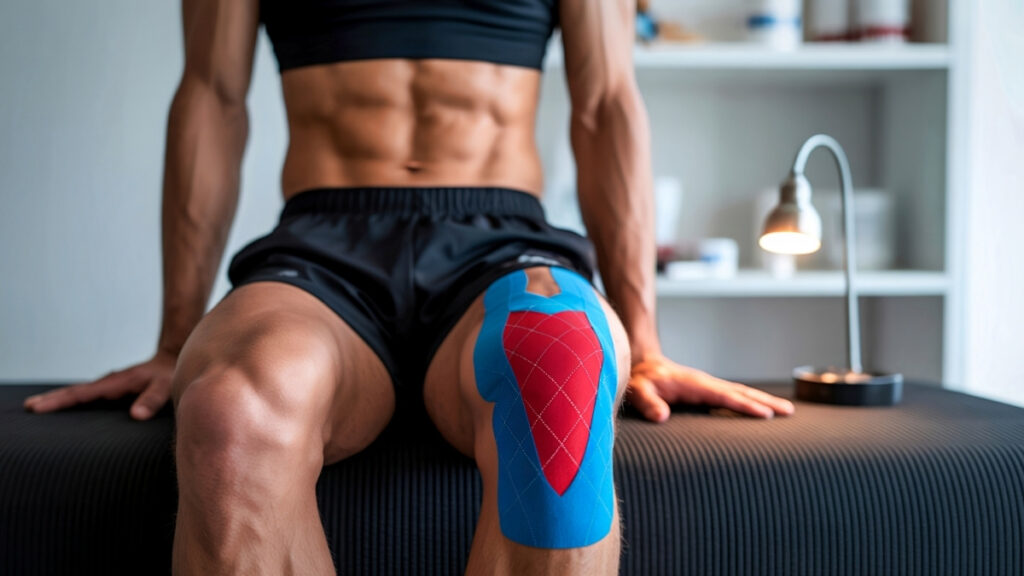
Your muscles don't grow during your workout. They grow after. When you lift weights, you create tiny tears in your muscle fibers. Your body sees this as damage that needs repair.
So it starts a process called muscle protein synthesis. This is when your body builds new muscle protein to repair and strengthen those fibers.
Here's what most people get wrong: muscle protein synthesis stays elevated for up to 24 hours after you exercise. But the biggest response happens in the first 2 hours. That's your window. Miss it, and you're leaving gains on the table.
Sleep plays a huge role too. A single night of bad sleep can reduce muscle protein synthesis by 18%. That's almost one-fifth of your recovery gone because you stayed up watching TV.
The research is clear now. Combining good nutrition with good recovery works better than nutrition alone. Scientists used to focus on treating muscle loss symptoms. Now they're studying why muscle loss happens in the first place. And the answer points to what you do after your workout.
Age matters too. Older adults face something called anabolic resistance. Their muscles don't respond to protein as well as younger people. They need more protein to get the same results. At least 1.2 grams per kilogram of body weight every day.
The numbers tell a scary story. Between 10% and 27% of older adults over 60 have sarcopenia. That's the medical term for serious muscle loss. Research on this problem has exploded. Zero studies in 2005. But 134 studies in 2023 alone.
Why? Because scientists now understand that muscle loss isn't just about aging. It's about what you do every single day. Your nutrition. Your sleep. Your stress. Your recovery habits.
Get these wrong, and you're fighting an uphill battle. Get them right, and you can build muscle at any age.
Nutritional Mistakes
Mistake #1: Skipping the Post-Workout Meal Window

You've heard the debate. Some people say the post-workout window is a myth. They're wrong.
Here's the science. Muscle protein synthesis peaks right after your workout. It stays high for about 2 hours. Then it starts to drop. If you trained more than 3 to 4 hours after your last meal, your body needs protein fast. At least 25 grams.
Wait too long and you lose out. Delaying by just 2 hours can cut your glycogen recovery in half. That's 50% less energy stored in your muscles for tomorrow. Think about this scenario. You train at 6 AM with nothing in your stomach. You shower, get dressed, commute to work.
By the time you eat, it's 10 AM. You just missed the critical 4-hour window when your muscles were screaming for nutrients. Your body was ready to absorb everything you gave it. But you gave it nothing.
The Fix:
Eat within 1 to 2 hours after your workout. Aim for 20 to 40 grams of protein plus 30 to 60 grams of carbs. If recovery is your main goal, get more specific: 1 gram of carbs per kilogram of body weight and 0.5 grams of protein per kilogram. And do it within 30 minutes.
Keep it simple. A protein shake with a banana works. Chicken and rice works. Greek yogurt with fruit works. Just eat something.
Mistake #2: Insufficient Protein Intake
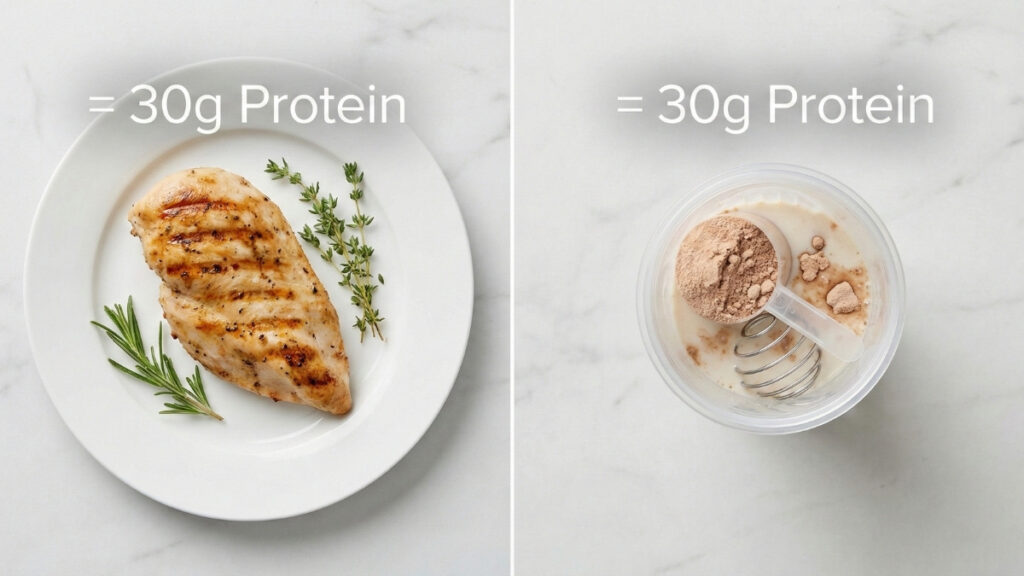
Most people don't eat enough protein. Not even close. The old recommendation was 0.8 grams per kilogram of body weight. That's fine if you sit at a desk all day and never exercise. But if you're training? You need more.
Studies show 1.0 to 1.2 grams per kilogram works better for keeping muscle. Older adults need even more because of anabolic resistance. They need at least 1.2 grams per kilogram when they combine protein with resistance training.
But total daily protein is only part of the story. Each meal matters too. You need 20 to 40 grams of protein per meal to maximize muscle protein synthesis. Or 0.25 to 0.4 grams per kilogram of body weight.
The type of protein matters too. Leucine is an amino acid that triggers muscle growth. Whey protein has a lot of it. So do eggs and chicken.
One study gave people 40 grams of whey protein every day for 12 weeks. They gained 1.8 kilograms of lean muscle. That's almost 4 pounds of pure muscle in 3 months just from adding protein. The evidence-based recommendation for post-workout? 25 to 30 grams of protein.
Here's a real example. Say you weigh 150 pounds. That's about 68 kilograms. You need 82 to 109 grams of protein per day. With 25 to 30 grams right after your workout. That's roughly 4 ounces of chicken breast. Or 1.5 scoops of whey protein.
The Fix:
First, do the math. Take your weight in kilograms and multiply by 1.2. That's your daily protein target. Second, prioritize 25 to 30 grams of high-quality protein after your workout.
Third, choose protein sources rich in leucine. Whey protein, eggs, and chicken are your best options.
Mistake #3: Neglecting Carbohydrates
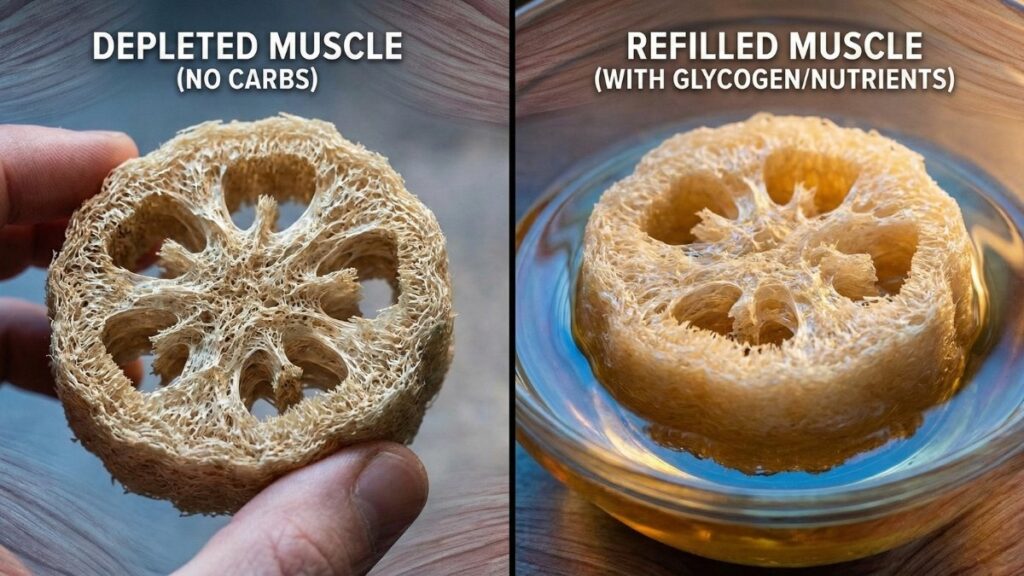
Carbs get a bad reputation. But your muscles need them to recover. When you work out hard, your muscles use glycogen for energy. Glycogen is just stored carbohydrates. After your workout, those stores are empty. You need to refill them.
Wait too long and your recovery suffers. Delaying carbs by just 2 hours cuts your glycogen refill rate in half. Your muscles stay depleted longer.
Low glycogen does more than leave you tired. It impairs something called mTOR signaling. This is a key pathway for muscle protein synthesis. No glycogen means less muscle building.
But when you eat carbs and protein together, magic happens. They work better together than either one alone. The combination increases muscle protein synthesis more than protein by itself.
Right after exercise, your body becomes more sensitive to insulin. This creates a perfect window for nutrient uptake. Your muscles soak up everything like a sponge.
Here's what happens when you skip carbs. Say you're cutting weight. You avoid carbs because you think they'll make you fat. Your muscles stay depleted. This triggers cortisol release. High cortisol breaks down muscle tissue. You're literally eating your own muscle because you wanted to look leaner.
The Fix:
Eat 1 gram of carbohydrates per kilogram of body weight after your workout. This gives you optimal glycogen refill. Always pair your carbs with protein. They amplify each other's effects.
Choose high-glycemic carbs right after training. White rice, potatoes, and fruit are perfect. Save the slow-digesting carbs for later meals.
Mistake #4: The "Earned It" Junk Food Trap
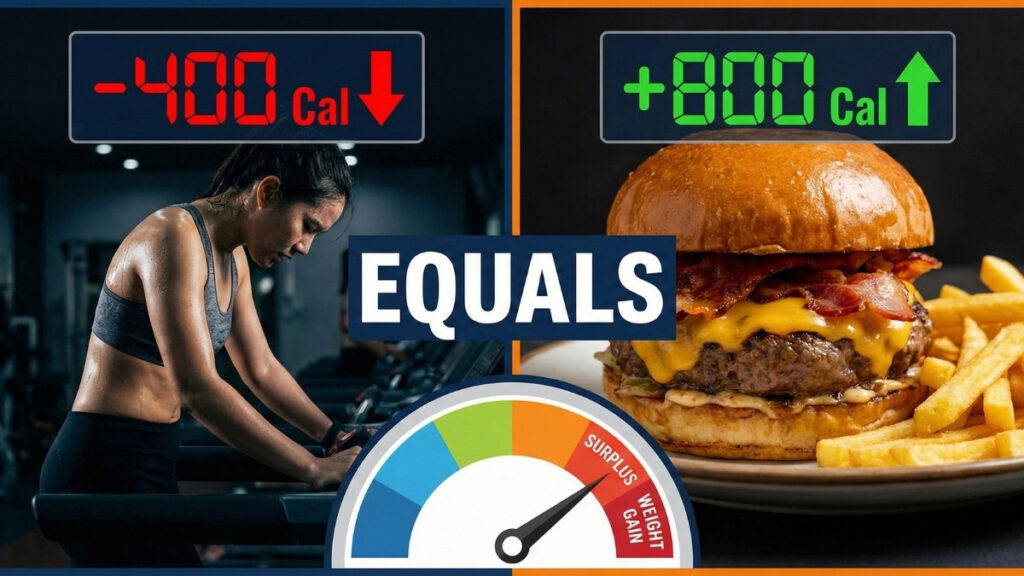
You worked hard. You burned 400 calories. You deserve a treat, right? This thinking destroys more progress than almost anything else.
That burger and fries might have 800 calories. It might even have protein. But the high fat content slows down digestion. Your muscles need nutrients fast. Fat makes everything move slower.
Plus, you just turned a 400-calorie deficit into a 400-calorie surplus. You didn't earn the weight loss. You erased it.
Psychologists call this the halo effect. You feel good about exercising, so you give yourself permission to overeat. Most people eat back more calories than they burned. Sometimes twice as much.
Junk food gives you calories but nothing else. No vitamins. No minerals. No nutrients that help recovery. Just empty energy that could have come from real food that actually helps you.
The Fix:
Save treats for later. Wait 3 to 4 hours after your workout if you want something indulgent. Right after training, stick to whole food protein plus carbs. Keep it clean when your body needs it most.
Track your total daily calories, not just what you eat after the gym. That burger might fit your goals if you plan for it. But not as a surprise reward.
Mistake #5: Dehydration and Electrolyte Imbalance
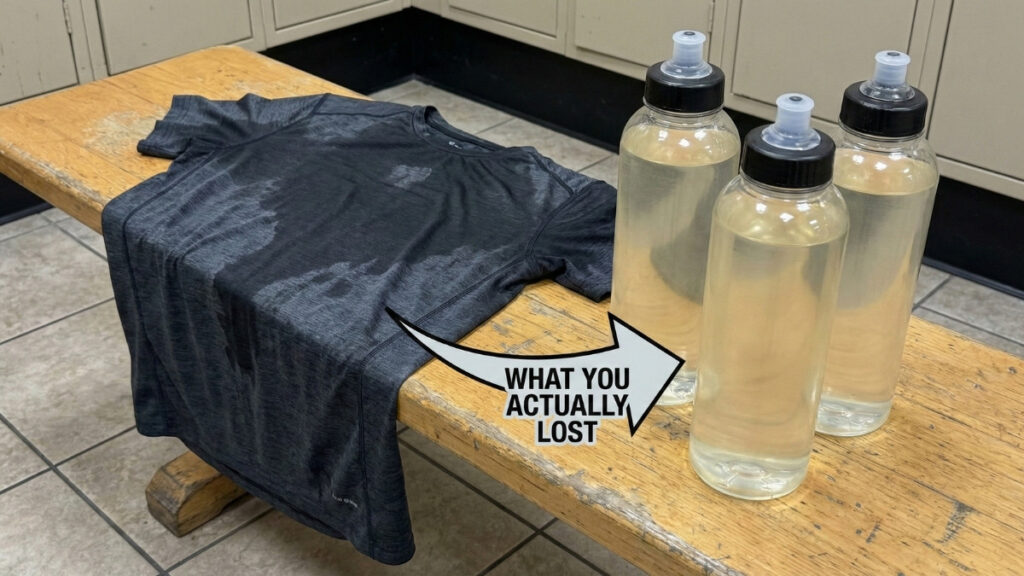
Water does more than quench your thirst. It's essential for muscle recovery. Dehydration reduces muscle protein synthesis rates. Even losing 2% of your body weight through sweat hurts your performance and recovery.
During intense exercise, you can lose 2 to 3% of your body weight through sweat. For a 150-pound person, that's 3 to 4.5 pounds of fluid. Gone.
But it's not just water you're losing. You're sweating out electrolytes too. Sodium, potassium, magnesium. These minerals help your muscles contract. They help transport nutrients. Without them, everything slows down.
Here's the tricky part. By the time you feel thirsty, you're already behind. Thirst lags behind your actual hydration needs.
The Fix:
Weigh yourself before and after hard workouts. The difference is mostly water weight you lost.
Replenish 150% of what you lost. If you lost 2 pounds, drink 3 pounds of fluid. This accounts for ongoing losses through breathing and more sweating.
Add electrolytes if your workout lasted more than 60 minutes. Sports drinks work. So does coconut water. Or just add a pinch of salt to your water.
Check your urine after your workout. Aim for pale yellow. Dark yellow means you need more water.
Mistake #6: Chronic Under-Eating (Low Energy Availability)
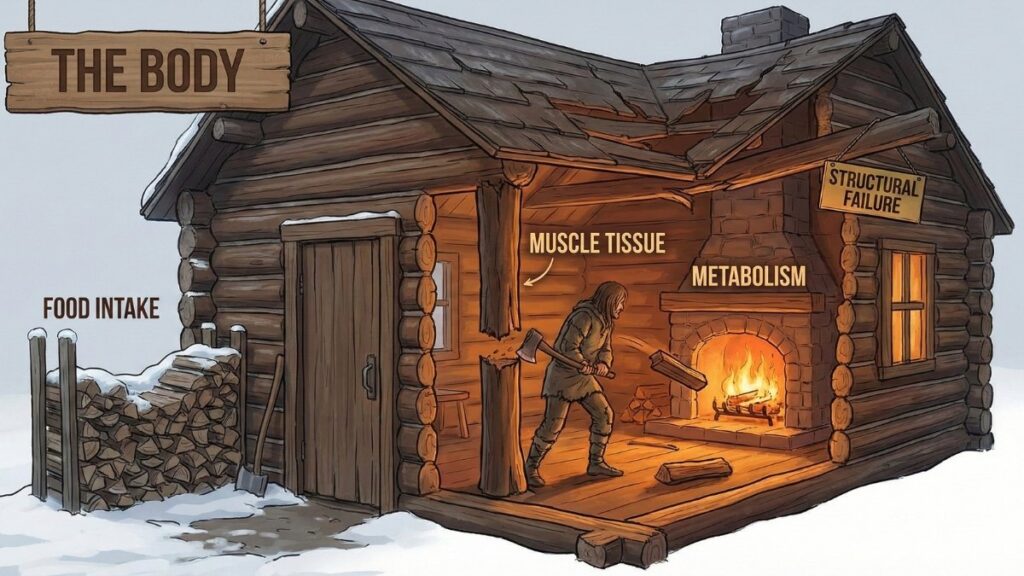
Some people think eating less always equals better results. They're wrong. Your body needs energy to build muscle. When you don't eat enough, your body goes into survival mode. It starts breaking down muscle tissue to meet its energy needs.
Low energy availability messes with your hormones. Cortisol goes up. Insulin gets disrupted. Testosterone drops. All of this points to overtraining syndrome. This happens a lot with people who train hard and diet hard at the same time. They think they're being disciplined. Really, they're sabotaging themselves.
Your body might even slow down your metabolism to protect itself. This makes it harder to lose fat and easier to lose muscle.
Here's a real example. Say you eat 1,500 calories a day. You burn 500 in your workout. Your body needs 1,800 just for basic functions like breathing and thinking. That's an 800-calorie deficit every single day.
Your body can't sustain that. It will find the energy somewhere. And muscle tissue is easier to break down than fat.
The Fix:
Calculate your Total Daily Energy Expenditure (TDEE). Lots of free calculators online can help. If you're trying to lose fat, keep your deficit moderate. 300 to 500 calories below TDEE is enough. More than that and you risk losing muscle.
Increase your protein when you're in a deficit. Aim for 1.2 to 1.6 grams per kilogram of body weight.
Track how you feel. Low energy, poor sleep, and slow recovery are all warning signs that you're not eating enough.
Mistake #7: Ignoring Omega-3 Fatty Acids
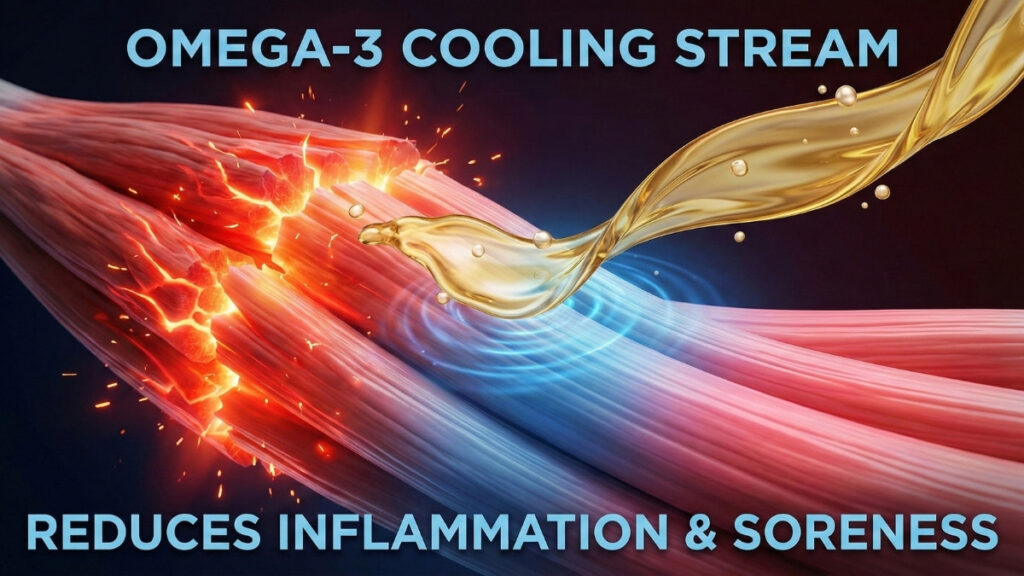
Most people focus on protein and carbs. They forget about healthy fats. Omega-3 fatty acids do two important things. They reduce inflammation from training. And they help your body use protein better.
The two types that matter most are EPA and DHA. Studies show they improve your muscle protein synthesis response when you eat amino acids. Your body gets better at turning protein into muscle.
Their anti-inflammatory effects speed up recovery too. Less inflammation means less soreness and faster healing.
Most people don't get enough omega-3s from food. Research suggests athletes need 2 to 3 grams of combined EPA and DHA every day. That's way more than the average person eats.
The Fix:
Eat fatty fish 2 to 3 times per week. Salmon, mackerel, and sardines are the best sources. Consider a quality fish oil supplement. Look for one that gives you 2 to 3 grams of EPA plus DHA combined.
Pair omega-3s with resistance training. They work better together than either one alone. If possible, monitor your omega-3 levels through blood work. This tells you if you're actually getting enough.
Recovery & Behavioral Mistakes
Mistake #8: Immediate Immobility (Desk Job Syndrome)
You finish your 7 AM workout. You feel great. Then you sit at your desk from 8 AM until noon without moving. Your muscles just lost four hours of prime recovery time.
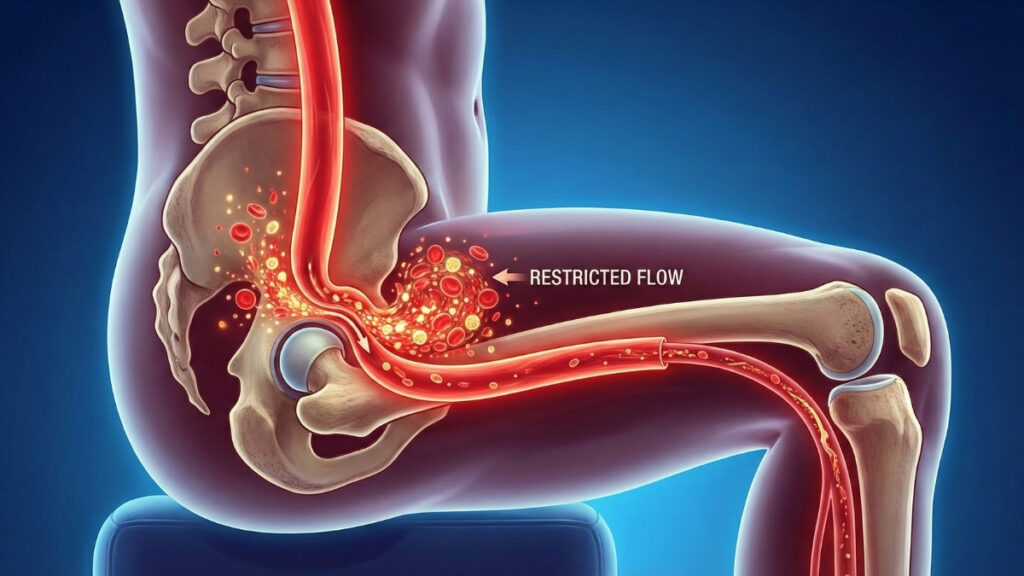
When you sit for long periods right after training, you restrict blood flow. Less blood flow means fewer nutrients reaching your muscles. The protein shake you drank? It's moving slower than it should.
Sitting also increases stiffness. Your muscles tighten up. Blood can pool in your legs instead of circulating properly.
This matters most in the first 2 hours after your workout. That's when your muscles need nutrients the most. But sitting blocks delivery.
The Fix:
Stay lightly active for 10 to 15 minutes after your workout. Walking is perfect. If you work at a desk, stand up and move every 30 to 45 minutes. Set a timer if you have to.
Try light stretching or foam rolling between work tasks. Schedule short walks during the first 2 hours after training. Even 5 minutes helps.
Mistake #9: Skipping the Cool-Down
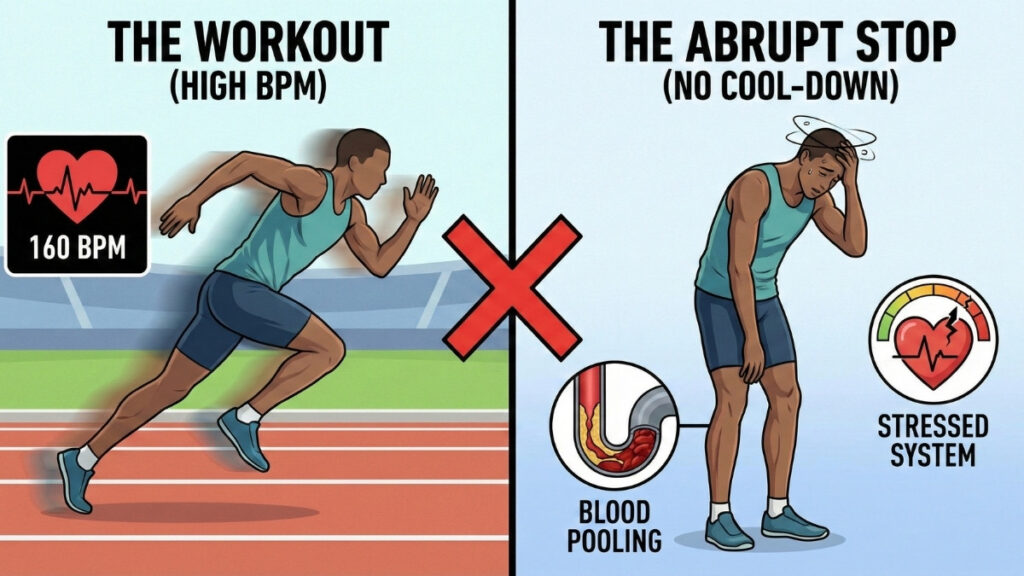
Most people finish their last set and head straight to the locker room. Big mistake. When you stop exercising suddenly, blood pools in your arms and legs. Your heart is still pumping hard, but now the blood has nowhere to go efficiently. This can make you dizzy.
Abrupt stops also prevent your body from clearing out metabolic waste products. These byproducts of exercise need to be flushed out. A cool-down helps with that.
You also miss a chance to bring your heart rate down gradually. Going from 160 beats per minute to 80 instantly stresses your cardiovascular system.
The Fix:
Spend 5 to 10 minutes doing light cardio at 50 to 60% of your max heart rate. Easy walking or slow cycling works. Gradually reduce intensity. Don't just stop. Add some basic stretches. Nothing intense, just gentle movement.
Practice deep breathing to activate your parasympathetic nervous system. This is your body's rest-and-recover mode.
Mistake #10: Inadequate Sleep (The Silent Muscle Killer)
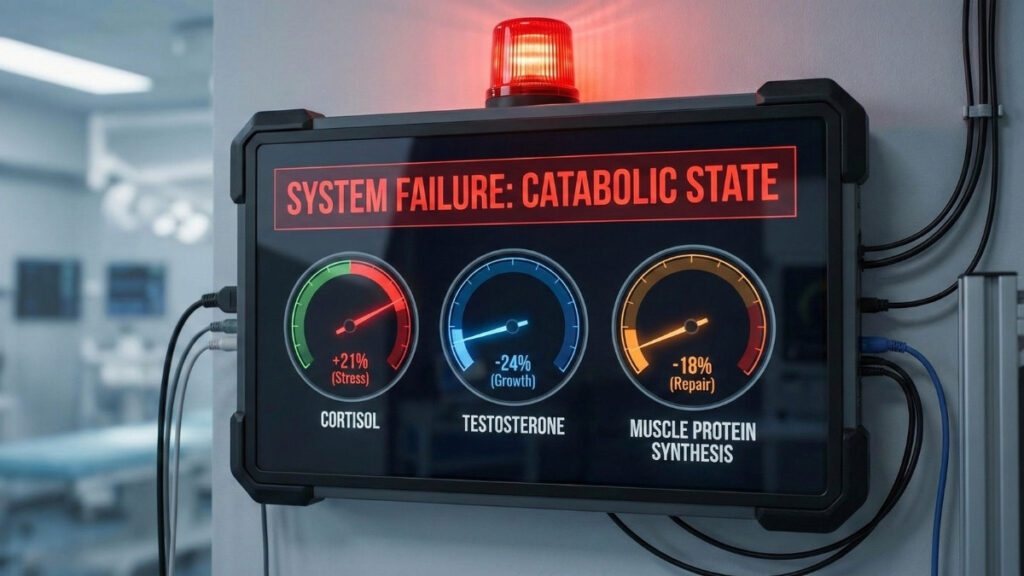
Sleep isn't just rest. It's when your body does most of its repair work. One night of bad sleep reduces muscle protein synthesis by 18%. It also increases cortisol by 21% and drops testosterone by 24%. That's a triple hit to your recovery.
During deep sleep, your body releases a surge of important hormones. Growth hormone. Testosterone. IGF-1. All of these help repair tissue and build protein.
The first 2 to 3 hours after you fall asleep are crucial. This is prime time for growth hormone release. Your body literally shifts its hormone patterns during sleep to maximize recovery.
Without enough sleep, you create a catabolic environment. Catabolic means breaking down. Your body starts destroying more muscle than it builds.
Chronic sleep deprivation makes everything worse. Cortisol stays elevated. Testosterone and growth hormone stay suppressed. You're working against yourself. The evidence shows you need 7 to 9 hours of sleep. Not sometimes. Consistently.
Here's a real scenario. You train hard and then only sleep 5 hours. It's like putting in maximum effort for minimum results. Your muscles simply can't repair themselves properly.
The Fix:
Aim for 7 to 9 hours of sleep every night. Not just on weekends. Protect the first 2 to 3 hours after you turn off the lights. This is when growth hormone release peaks.
Create a good sleep environment. Dark room. Cool temperature. Quiet space. Avoid alcohol before bed. (More on this next.) Consider tracking your sleep with an app or device. This helps you see patterns and make improvements.
Mistake #11: Post-Workout Alcohol Consumption
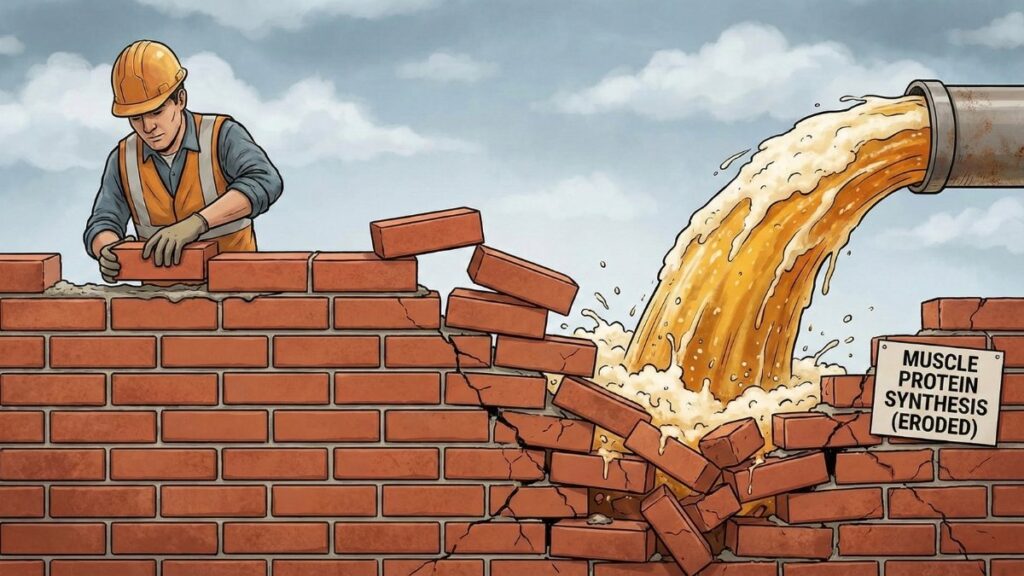
Beer after the game is a tradition. It's also killing your gains. Heavy drinking after exercise destroys muscle protein synthesis. When people drank 1.5 grams of alcohol per kilogram of body weight (about 8 drinks for a 160-pound person), their muscle protein synthesis dropped by 37%.
Even when they also consumed 25 grams of protein, synthesis still fell by 24%. The alcohol negated most of the protein's benefits.
The good news? Small amounts don't hurt as much. Drinking 0.5 grams per kilogram or less won't significantly impact recovery. That's about 2 drinks for a 120-pound person or 3 drinks for a 180-pound person.
But alcohol does more than just block protein synthesis. It increases cortisol levels. It decreases testosterone. This creates an imbalance between building up (anabolic) and breaking down (catabolic) processes.
Here's what really happens. You play a hard game or finish a tough workout. Then you have 3 to 4 beers with your friends. Those drinks are actively preventing your muscles from recovering from what you just did.
The Fix:
Limit yourself to 0.5 grams per kilogram or less if you drink after working out. Always eat protein and drink water before any alcohol. Get your recovery nutrition in first.
Better yet, wait 6 or more hours after training before drinking. If social drinking matters to you, save it for rest days instead of training days.
Mistake #12: Training Same Muscles Daily (Overtraining)
More is not always better. Sometimes more is just more. Between 30% and 60% of high-level athletes show signs of overtraining. If it happens to them, it can happen to you.
Overtraining messes with your hormones. Cortisol and testosterone responses get blunted. When your testosterone-to-cortisol ratio drops by 30% or more, it means you're not recovering enough.
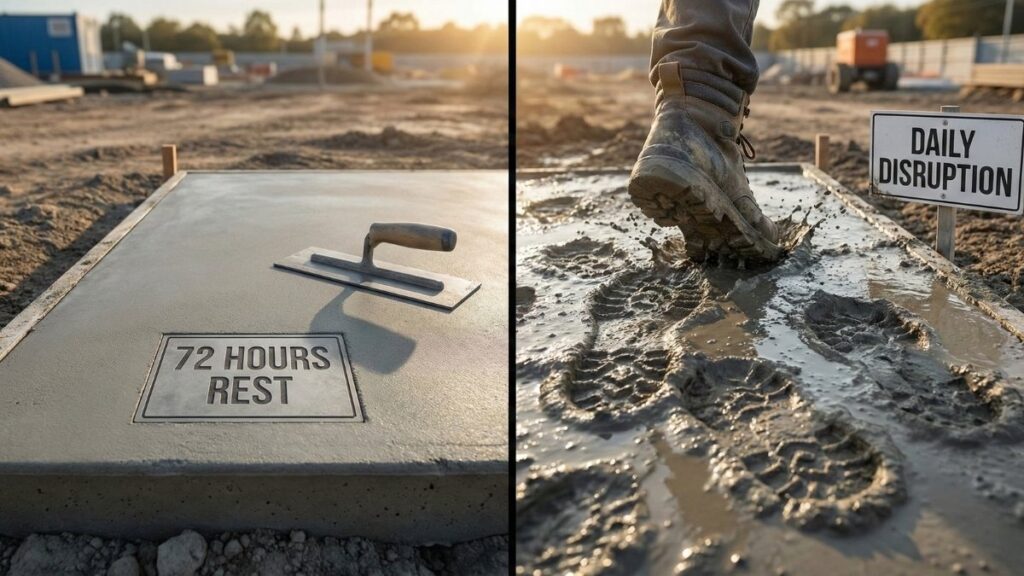
Your muscles need 48 to 72 hours between intense sessions that target the same muscle groups. This isn't optional. It's biology.
Overtraining also causes chronic inflammation, oxidative stress, and DNA damage in your muscle tissue. You're literally damaging yourself beyond what your body can repair.
Research shows the best muscle growth happens with 2 to 3 sessions per muscle group each week. This allows 48 to 72 hours of recovery between sessions.
Here's what it looks like when you get it wrong. Say you do chest workouts Monday, Tuesday, and Wednesday. You think you're working three times harder, so you'll get three times the results. Wrong. You'll get zero results because your muscles can't recover. They're just getting damaged over and over.
The Fix:
Follow a structured split routine. Push-pull-legs or upper-lower splits work well. Always allow 48 to 72 hours between training the same muscle groups.
Monitor your recovery markers. How's your sleep? Your mood? Your performance in the gym? These tell you if you're recovering. Take 1 to 2 complete rest days every week. Your body needs them.
Consider scheduling a deload week every 4 to 6 weeks. Reduce volume and intensity to let your body fully recover.
Mistake #13: Pushing Through Severe DOMS
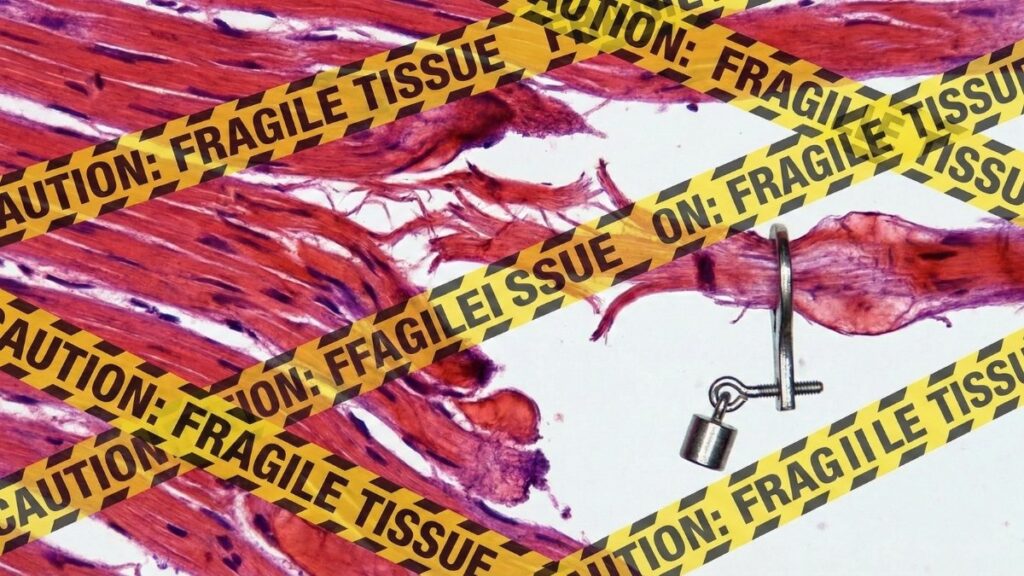
DOMS stands for Delayed Onset Muscle Soreness. It's that deep ache that peaks 24 to 48 hours after a hard workout. Some soreness is normal. Severe pain is not.
DOMS means you have muscle damage. Training through severe pain doesn't make you tougher. It increases your injury risk.
You're adding new damage to tissue that's already compromised. This compounds the problem instead of making you stronger. There's a difference between productive discomfort and counterproductive pain. You need to learn which is which.
Here's an example. You did a hard leg workout. Two days later, you can barely walk down stairs. Your quads are screaming. But you force another leg session anyway because it's leg day on your schedule. You're not building muscle. You're damaging already-hurt tissue.
The Fix:
Use a pain scale from 1 to 10. If you're at a 3 or 4, you can train normally. At 5 or 6, modify your workout. At 7 or higher, take a rest day. Try active recovery for moderate soreness. Light cardio and stretching can help.
Take complete rest when soreness is severe. Train different muscle groups instead. If your legs are destroyed, work your upper body. Listen to what your body is telling you. Pain is a signal, not a challenge to overcome.
Mistake #14: Unmanaged Chronic Stress

Stress from your job affects your muscles the same way stress from training does. When cortisol stays elevated for long periods, it breaks down protein. This leads to muscle loss and eventually sarcopenia.
Your body can't tell the difference between physical and psychological stress. Work stress, relationship stress, financial stress. It all adds up with your training stress.
High cortisol blocks the pathways that build muscle protein. Even if you're eating right and training smart, chronic stress can stop your progress. One night of bad sleep raises cortisol by 21%. Chronic stress makes this even worse. The effects multiply.
Here's a real scenario. You eat perfectly. You train hard. But work has you stressed and sleeping only 5 hours. You're constantly anxious. Your cortisol is through the roof. It's breaking down the exact muscles you're trying to build.
The Fix:
Practice stress management every day. Meditation works. Breathing exercises work. Find what helps you. Prioritize sleep as a stress recovery tool. Sleep and stress management go together.
Consider reducing your training volume during high-stress life periods. Your body has limited recovery capacity. If life is taking most of it, scale back the gym. Monitor your heart rate variability (HRV). This metric shows how well you're handling stress.
Seek professional help if you're dealing with chronic stress or anxiety. This isn't weakness. It's smart. Eat enough carbohydrates and protein. Both help minimize excessive cortisol response to training.
The Bottom Line
Building muscle isn't just about what you do in the gym. It's about what you do in the 23 hours you're not training. Post-workout recovery determines whether you build muscle or lose it. The science is clear.
The 2-hour window after training is real, especially if you trained without eating first. Your muscles are ready to absorb nutrients. Feed them.
Sleep is not negotiable. One bad night cuts muscle protein synthesis by 18%. Consistent poor sleep creates a muscle-destroying environment.
Alcohol hits hard. Eight or more drinks can reduce protein synthesis by 37%, even if you eat protein with it. Chronic stress and overtraining work against you. They create a catabolic environment where your body breaks down more than it builds.
The most effective approach combines everything. Good nutrition plus quality recovery plus smart training. All three together work better than any single factor alone.
You don't need to fix everything at once. Start with three changes this week. First, set a 2-hour post-workout nutrition reminder on your phone. Eat 25 to 30 grams of protein plus carbs within that window.
Second, commit to 7 or more hours of sleep every night. Protect this time like you protect your workouts. Third, schedule one complete rest day each week. Mark it on your calendar and honor it.
Track your energy and strength for two weeks. Write it down. You'll see the difference. Your muscles will thank you.
Preventing muscle loss and optimizing muscle protein synthesis isn't about training harder. It's about recovering smarter. These 14 post-workout mistakes could be the difference between building the body you want and fighting muscle loss as you age. The choice is yours.