Over 50? These 12 Breakfast Foods Are the Secret to Melting Stubborn Fat
If you’re eating the same breakfast you ate at 35 and wondering why the scale won’t budge, this isn’t a matter of willpower. Your body has literally changed the rules.
After 50, your metabolism can burn 250 to 300 fewer calories daily due to hormonal shifts. Women in post-menopausal years gain roughly 1.5 pounds per year, while men lose up to 30 percent of peak testosterone, driving visceral fat gain and muscle loss. The old playbook stops working.
But breakfast is where you take back control. The 12 foods in this article are not a magic pill or another fad. They are real food, backed by real science, chosen specifically for how your body works right now.
50+ Breakfast Builder
Select exactly 3 foods to build a fat-melting plate.
Why Your Body Is Storing Fat Differently Now (And What Breakfast Has to Do With It)
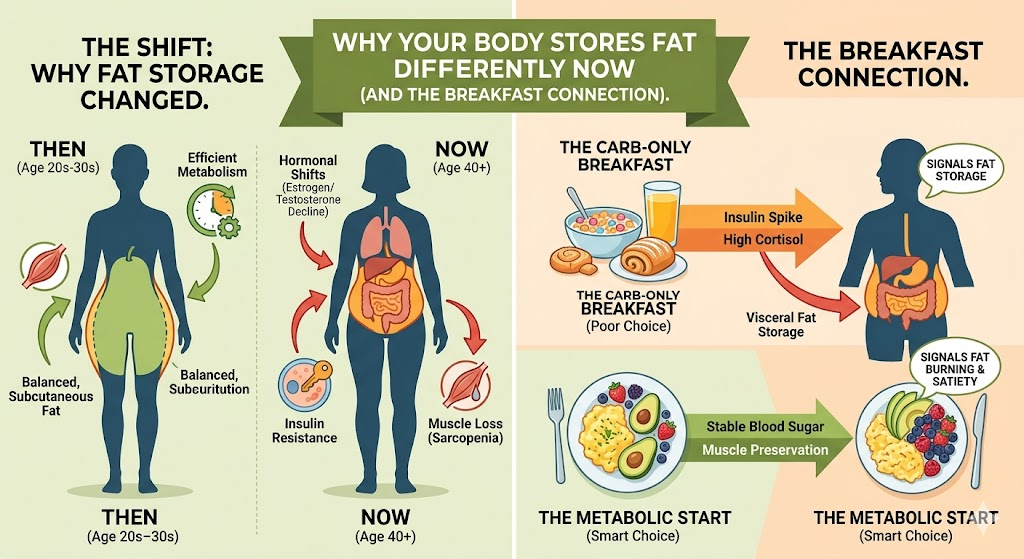
Before we get into the food list, it’s worth taking 60 seconds to understand why your body is doing this. Because once you understand the “why,” the food choices start making sense.
When estrogen and testosterone levels drop in your 40s and 50s, your body changes where it stores fat. Instead of spreading it around evenly, it starts packing it specifically around your midsection. This includes subcutaneous fat, the soft layer just under the skin, and visceral fat, the deeper, harder-to-lose kind that wraps around your organs.
The average adult loses about 1% of their muscle mass every single year starting in middle age. Less muscle means your body burns fewer calories even while you’re sitting still. So you’re getting less efficient at burning energy and better at storing it. That’s the double hit most people don’t see coming.
Here’s something most doctors don’t mention: you also lose brown fat efficiency. Brown fat is the “good” fat your body uses to generate heat and burn energy. In postmenopausal women, it only increased 1.4 times. That difference points directly to how estrogen loss reduces your body’s ability to burn fat the way it once did.
According to data from Midi Health, 87% of patients over 50 report weight gain and body composition changes tied to hormonal shifts. Postmenopausal women also burn roughly 250 to 300 fewer calories per day at rest than they did before menopause. That’s not opinion. That’s biology.
Now, you might think skipping breakfast is the fix. It seems logical. But multiple studies have linked missing breakfast to stronger appetite later in the day, worse food choices, more snacking, and actual weight gain over time. Skipping it is not the smart strategy here.
The real solution is eating the right breakfast. One that does three specific things: stabilizes your blood sugar, protects your muscle mass, and keeps your hunger hormones quiet for hours at a stretch.
The 3 Things Every Breakfast Must Do After 50
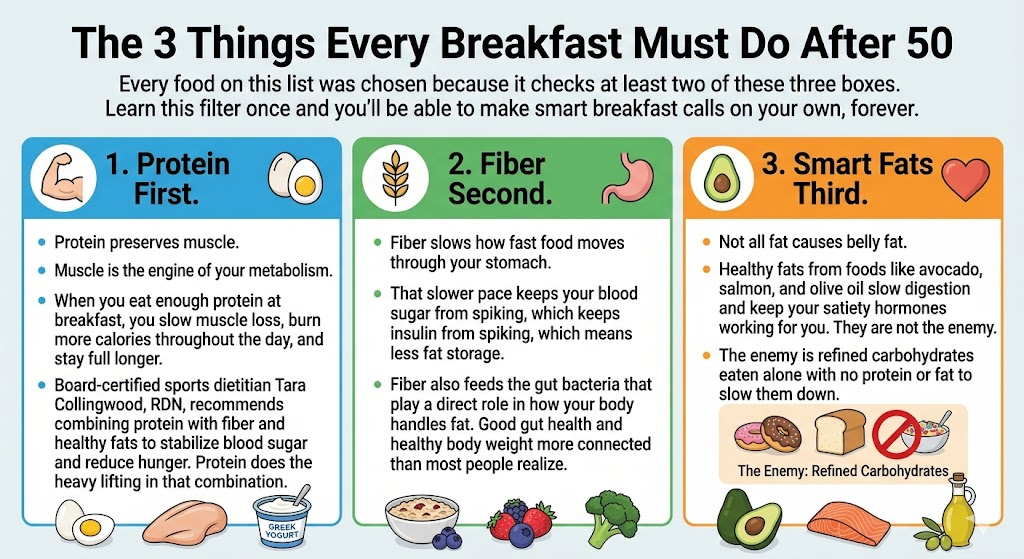
Every food on this list was chosen because it checks at least two of these three boxes. Learn this filter once and you’ll be able to make smart breakfast calls on your own, forever.
Protein first. Protein preserves muscle. Muscle is the engine of your metabolism. When you eat enough protein at breakfast, you slow muscle loss, burn more calories throughout the day, and stay full longer. Board-certified sports dietitian Tara Collingwood, RDN, recommends combining protein with fiber and healthy fats to stabilize blood sugar and reduce hunger. Protein does the heavy lifting in that combination.
Fiber second. Fiber slows how fast food moves through your stomach. That slower pace keeps your blood sugar from spiking, which keeps insulin from spiking, which means less fat storage. Fiber also feeds the gut bacteria that play a direct role in how your body handles fat. Good gut health and healthy body weight are more connected than most people realize.
Smart fats third. Not all fat causes belly fat. Healthy fats from foods like avocado, salmon, and olive oil slow digestion and keep your satiety hormones working for you. They are not the enemy. The enemy is refined carbohydrates eaten alone with no protein or fat to slow them down.
The 12 Breakfast Foods That Actually Work After 50
1. Eggs
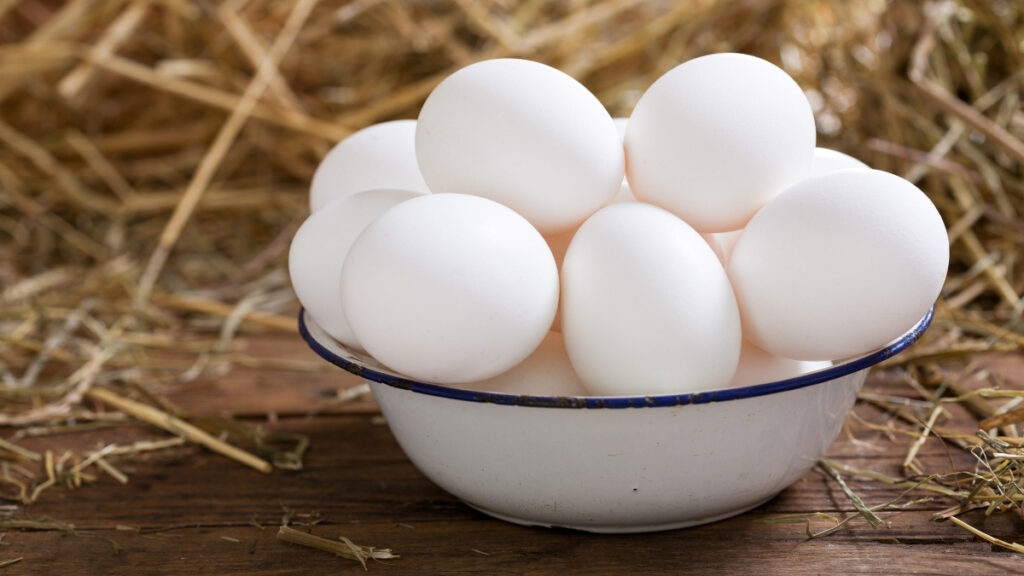
Eggs are one of the most efficient breakfast foods you can eat after 50. Each egg delivers 6 to 7 grams of complete protein. That protein supports muscle maintenance, which slows the metabolism decline that comes with age.
But here’s the part most people skip over. A peer-reviewed study found that eating two eggs for breakfast decreased plasma ghrelin levels compared to eating oatmeal alone. Ghrelin is the hormone that makes you feel hungry. Lower ghrelin means fewer cravings, less snacking, and fewer moments where you eat something you didn’t plan to. Dietitian Tara Collingwood specifically calls eggs out for their ability to keep you full for hours.
Two scrambled eggs with a handful of spinach and one slice of whole-grain toast takes about five minutes. That’s it. That’s the whole breakfast.
The Ghrelin Advantage: Two eggs at breakfast, not one. The research used two eggs to measure the drop in ghrelin. One egg is a snack. Two eggs is a signal your body actually responds to.
2. Greek Yogurt
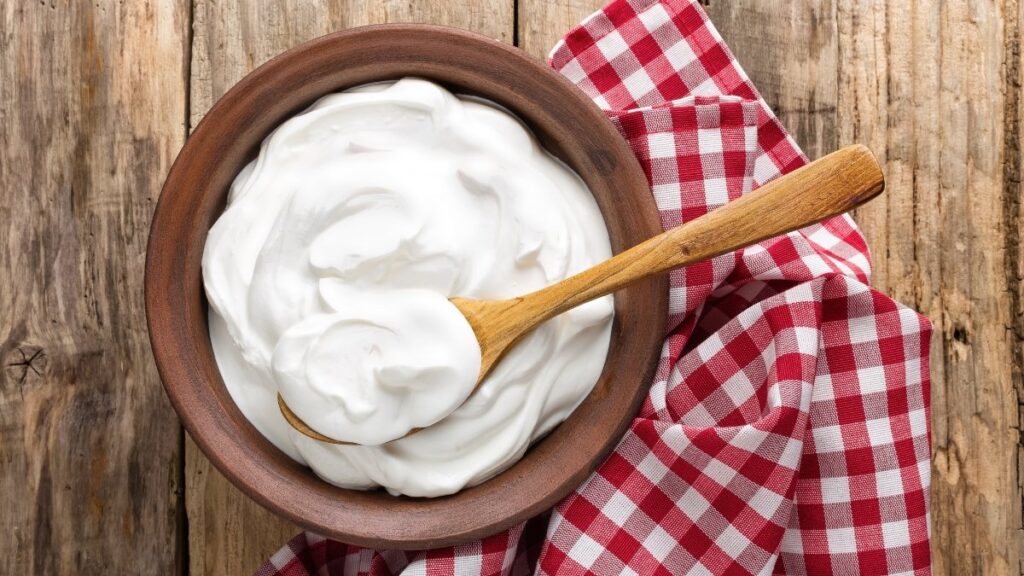
Greek yogurt can hold up to 20 grams of protein in a single cup. That’s more than three eggs and it takes zero cooking.
Beyond the protein, the calcium in Greek yogurt is linked to healthy weight maintenance, and the probiotics support a diverse gut microbiome, which directly influences metabolic health and how your body stores fat. For people over 50, who need more protein per meal to trigger muscle protein synthesis than younger adults do, Greek yogurt is one of the most efficient choices available.
The key word here is plain. Flavored Greek yogurts often carry as much sugar as a candy bar. Go unsweetened and add your own toppings. A bowl of plain Greek yogurt with frozen blueberries and a tablespoon of ground flaxseed gives you protein, fiber, and omega-3 fatty acids in under two minutes of prep.
The Label Trap: Check the sugar grams before buying any Greek yogurt. Anything above 8 grams per serving means sugar has been added. Stick to 6 grams or below and you’re in good territory.
3. Oatmeal (Steel-Cut or Rolled, Not Instant)
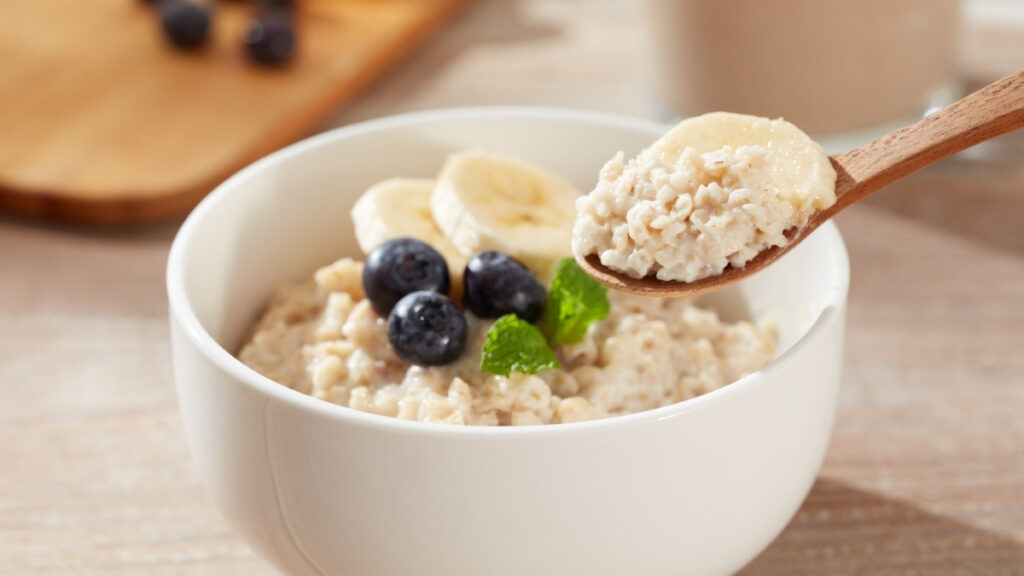
Oatmeal earns its spot here not because of tradition, but because of one specific ingredient: beta-glucan fiber. Research published in a peer-reviewed paper found that oats have a measurable impact on appetite hormones and body weight management over time.
Steel-cut oats have a lower glycemic index than instant oats. That matters because a lower glycemic index means glucose enters your bloodstream slowly, steadily, instead of in one fast spike. Slow glucose release means no energy crash at 10 a.m. No energy crash means you’re not standing in front of the pantry looking for something to eat.
Cook your oats with water or unsweetened almond milk. Add a shake of cinnamon, which has been shown to help regulate blood sugar on its own. Top with a small handful of walnuts for healthy fat and extra protein. This is a $1.50 breakfast that outperforms almost anything in a box with a health claim on the label.
The Glycemic Swap: Instant oats and steel-cut oats look the same but act differently in your body. Instant oats are more processed, which speeds up how fast they digest. The slower the digestion, the better the blood sugar response. Choose the oats that take longer to cook.
4. Blueberries
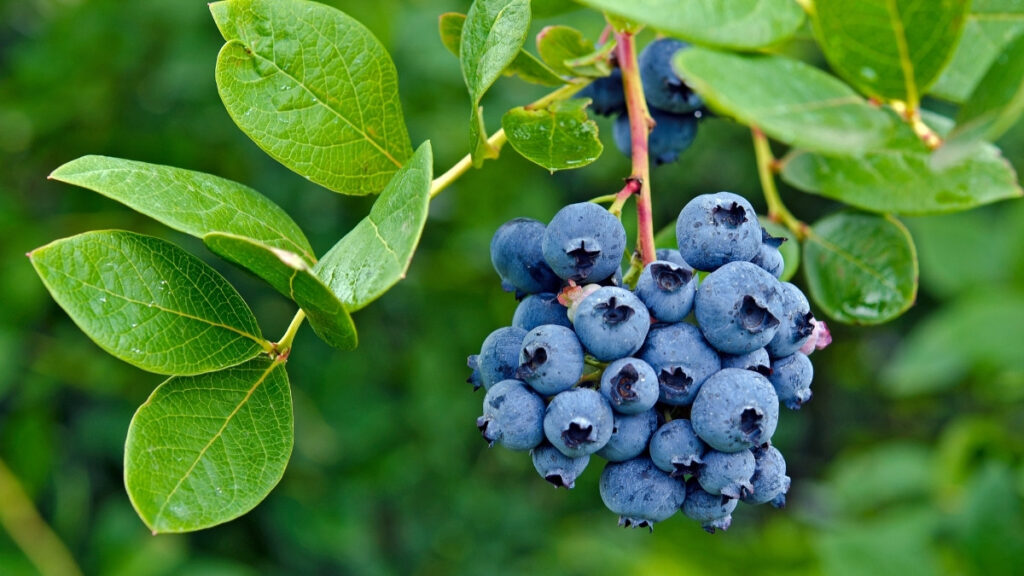
Blueberries are loaded with a compound called anthocyanin. This antioxidant is the reason blueberries have repeatedly shown up in nutrition research connected to healthy weight.
In one study that tracked fruit intake across different groups, the lowest weight gain was seen in people who ate the most blueberries. The polyphenols in blueberries also reduce inflammation.
This is specifically relevant after 50 because chronic low-grade inflammation is one of the main drivers of visceral fat accumulation in middle-aged adults. You cannot outrun inflammation with exercise alone. What you eat matters.
Half a cup in your yogurt or oatmeal, or blended into a smoothie, is all you need. Frozen blueberries work just as well as fresh ones and cost a fraction of the price. Keep a bag in the freezer and you’ll never run out.
The Inflammation Angle: Most belly fat conversations focus on calories. But inflammation is the silent co-driver that most breakfast choices completely ignore. Blueberries address it directly and they taste good. That’s a rare combination.
5. Almonds
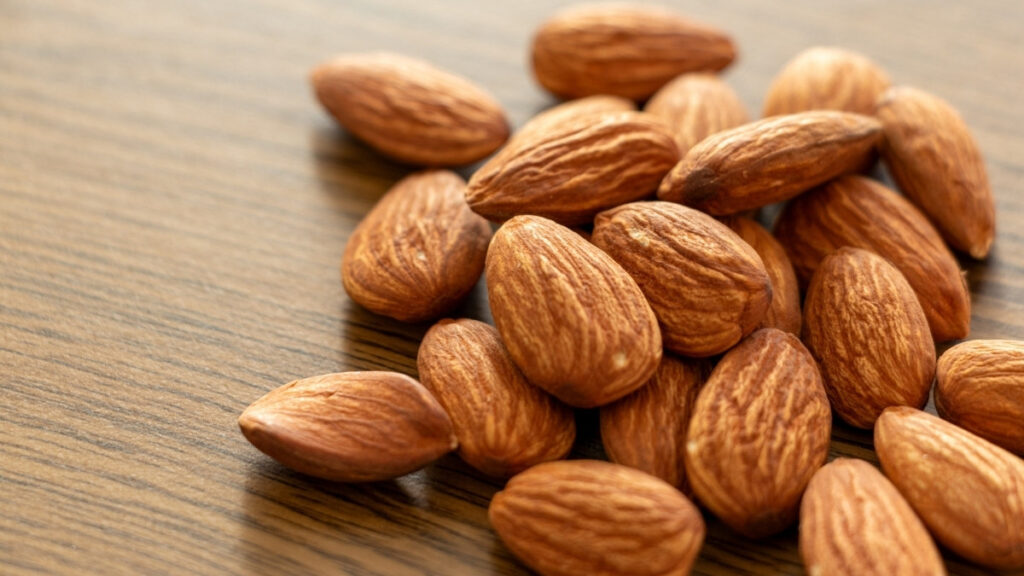
A 2025 peer-reviewed study found that eating at least two 1-ounce servings of almonds per day helped with modest weight loss. The reason is partly how the body actually metabolizes almonds. Not all the calories in an almond are absorbed, which means they deliver less net energy than the label suggests.
Almonds also contain both soluble and insoluble fiber. Soluble fiber forms a gel in your gut that slows digestion and blunts blood sugar spikes. Insoluble fiber keeps things moving and adds bulk that makes you feel full. One ounce is about 23 almonds. That’s one small handful.
The form matters here. Whole almonds work. Almond flour and almond milk do not deliver the same benefit. The physical structure of the whole nut is part of why it works the way it does. Eat them whole, sprinkled into oatmeal or yogurt, or on the side with your eggs.
The Whole Nut Rule: The fiber and metabolic benefits in almonds are partly physical, not just nutritional. When the nut is ground into flour or pressed into milk, those benefits shrink significantly. Keep them whole.
6. Cottage Cheese
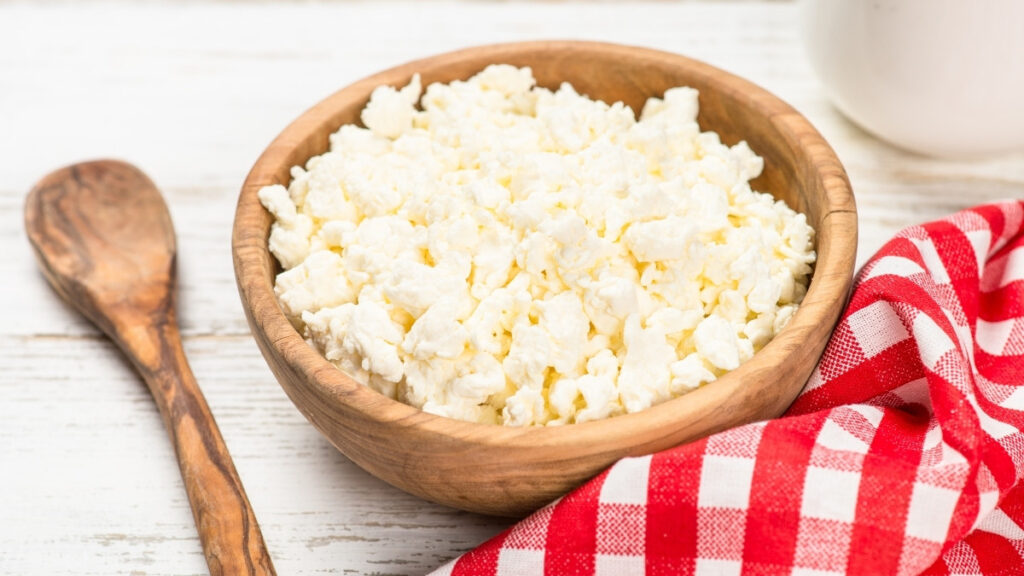
Cottage cheese had a long stretch of being ignored. That’s changing, and for good reason.
Half a cup of low-fat cottage cheese comes in at under 100 calories but delivers nearly as much protein as Greek yogurt. It is also high in calcium, which research links to regulating how the body stores fat.
For people over 50, who need more protein per meal to stimulate muscle protein synthesis than younger adults do, cottage cheese is one of the most efficient options on this entire list.
The texture puts some people off at first. Here’s how to make it work. For a savory version, top it with cherry tomatoes and a drizzle of olive oil. For something sweeter, use berries and a small drizzle of honey. Both take about 90 seconds to put together and both give you a genuinely satisfying breakfast.
The Satiety Math: At under 100 calories per half cup with nearly the same protein as Greek yogurt, cottage cheese gives you one of the best protein-per-calorie ratios of any breakfast food. For anyone watching overall intake while trying to preserve muscle, that ratio matters.
7. Chia Seeds
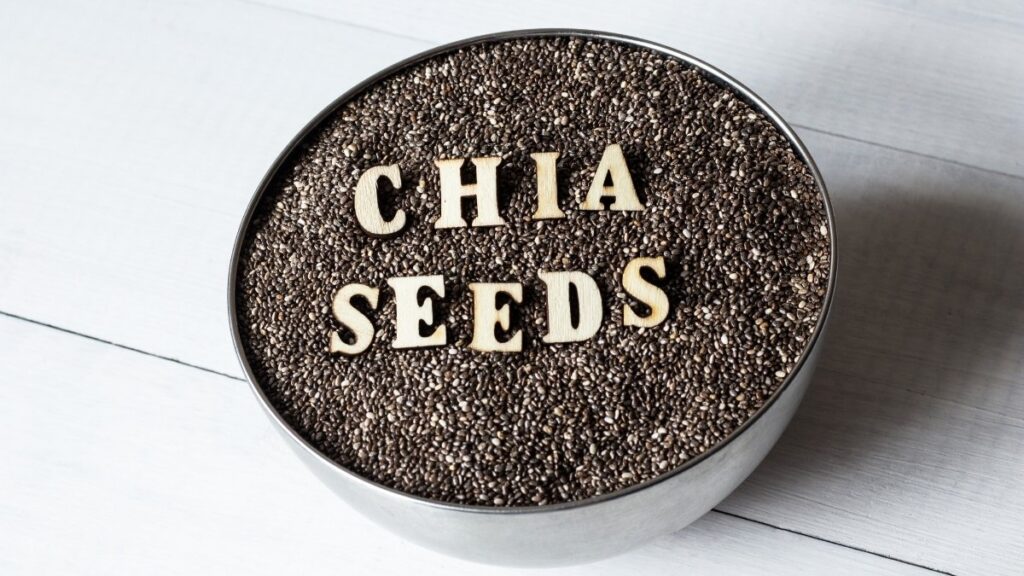
Two tablespoons of chia seeds contain about 10 grams of fiber and 5 grams of protein. Those numbers are impressive for something that small. But the real story is what happens when chia seeds hit liquid.
They absorb up to 10 times their weight in water and form a thick gel. That gel physically slows how fast your stomach empties. Slower gastric emptying means a steadier release of glucose into your blood and longer-lasting fullness. Chia seeds are also one of the best plant-based sources of omega-3 fatty acids, which research connects to reduced visceral fat over time.
Add two tablespoons to overnight oats. Stir them into a smoothie. Or make a simple chia pudding the night before by mixing them with unsweetened almond milk and leaving it in the fridge. You wake up to breakfast already made.
The Overnight Trick: Chia pudding takes three minutes to assemble the night before and zero minutes in the morning. Mix chia seeds with almond milk, add a splash of vanilla, and refrigerate. Top with berries in the morning. Minimal effort, maximum payoff.
8. Avocado
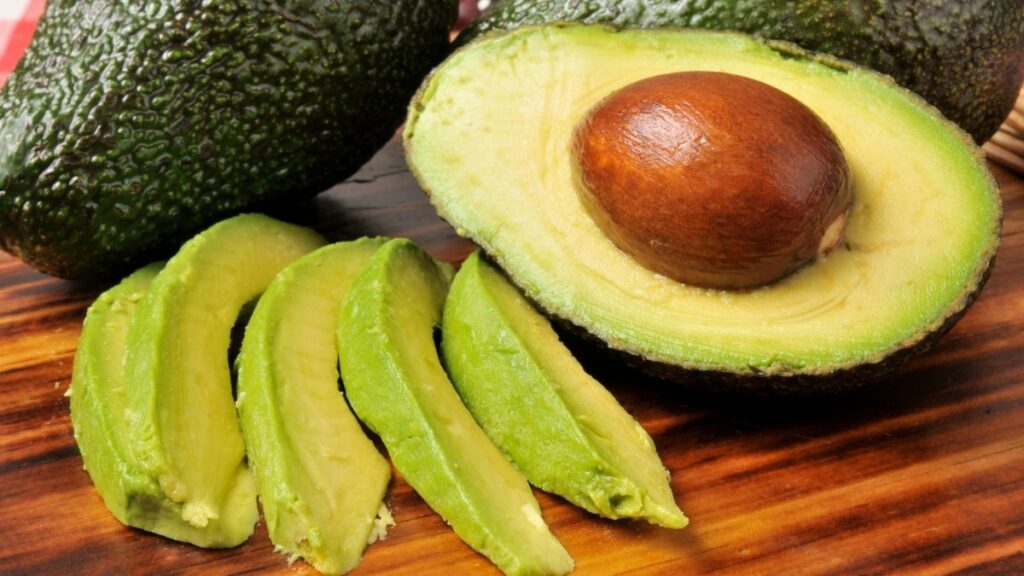
Avocados are not just trendy. The monounsaturated fat in avocados, specifically a fatty acid called oleic acid, has been linked in research to reduced abdominal fat when it replaces refined carbohydrates in the diet.
They also deliver fiber and potassium. Potassium helps regulate fluid balance, which is relevant for people over 50 who often notice more bloating and fluid retention than they did in earlier decades. That puffiness is not always fat. Sometimes it’s fluid that the right food can help manage.
Half an avocado on one slice of whole-grain toast with two poached eggs is one of the most protein-and-fat-dense breakfasts on this entire list. It keeps you full for hours and takes about eight minutes to make if you’ve never poached an egg before, less once you get the hang of it.
The Oleic Acid Angle: The specific fat in avocado is oleic acid, and its effect on abdominal fat is dose-dependent. Half an avocado at breakfast is enough to be meaningful. A thin smear on toast is not. Make it a real half, not a garnish.
9. Salmon (or Smoked Salmon)
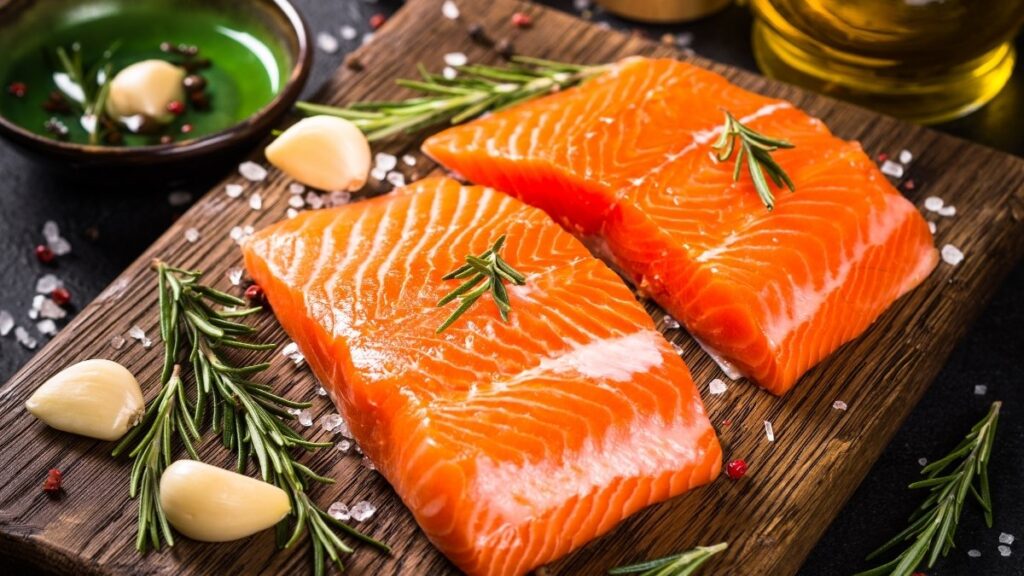
Fish for breakfast sounds unusual. It is actually one of the single most impactful dietary changes someone over 50 can make at the first meal of the day.
Salmon is high in omega-3 fatty acids and high-quality protein. Both matter here. But the omega-3 piece is especially relevant because of cortisol. Multiple studies have shown that the omega-3s in fatty fish reduce cortisol levels.
Cortisol is your primary stress hormone, and it is directly linked to visceral fat accumulation in middle-aged adults. More cortisol means more belly fat. Less cortisol means less of it, all else being equal.
Smoked salmon on whole-grain crackers takes about two minutes. A small salmon fillet with scrambled eggs takes about ten. Both are real food that does real things for your body in a way that a granola bar never will.
The Cortisol Connection: Most fat loss advice ignores cortisol entirely. But for people over 50, managing cortisol is as important as managing calories. Omega-3s from salmon are one of the few dietary tools with actual research behind this specific effect.
10. Flaxseeds (Ground)
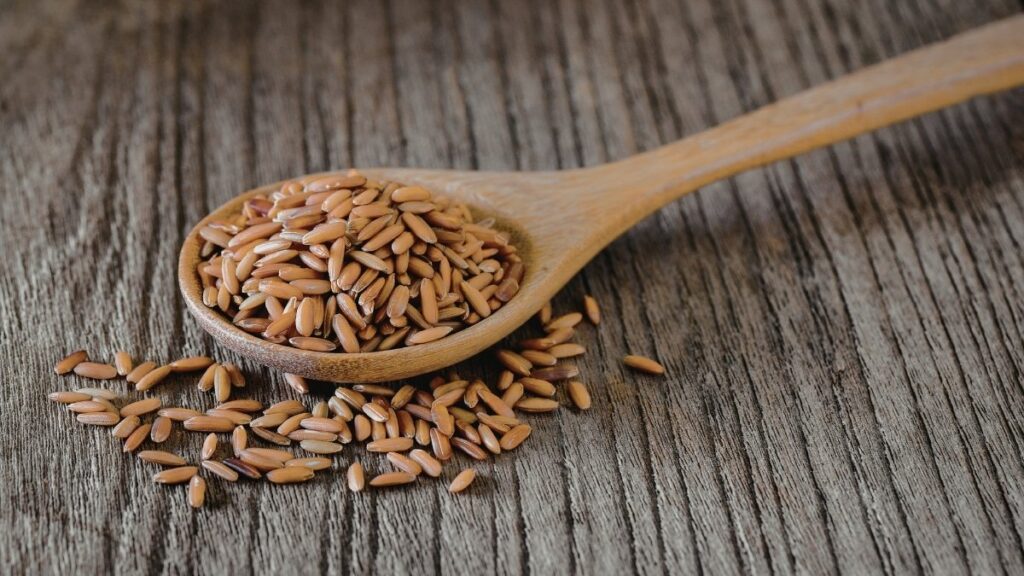
Ground flaxseeds are one of the only plant foods that contain lignans. Lignans are compounds that help your body metabolize estrogen more efficiently. For women in perimenopause or post-menopause, this is particularly relevant because fluctuating estrogen levels are directly tied to where belly fat accumulates and how much of it builds up.
Beyond the lignans, ground flaxseeds also provide soluble fiber and omega-3 fatty acids. One tablespoon stirred into yogurt, oatmeal, or a smoothie is enough to matter.
One important detail: always use ground flaxseed, not whole flaxseed. Your body cannot break down the outer shell of a whole flaxseed efficiently. Whole flaxseeds mostly pass through without releasing the nutrients inside. Ground is the version that actually works.
The Grinding Rule: Whole flaxseeds are not the same as ground flaxseeds in the body. Buy them pre-ground or grind them at home in a coffee grinder. Store ground flaxseed in the fridge to keep the oils fresh. A bag lasts weeks.
11. Kefir

Kefir is fermented milk in drinkable form. It has more probiotic strains than regular yogurt, more protein than most people expect, and a slightly tangy taste that some people love immediately and others grow into.
The gut microbiome plays a bigger role in fat metabolism and inflammation than most people know. Research from 2024 continues to reinforce the link between gut microbiome diversity and healthy body weight. Kefir feeds that microbiome directly. It is one of the most probiotic-dense foods you can eat at any meal.
A small glass alongside your eggs works perfectly. Or blend it into a smoothie as the liquid base instead of regular milk or juice. It adds creaminess, protein, and a significant probiotic boost without changing the flavor dramatically.
The Microbiome Window: The gut microbiome is most receptive to probiotic input in the morning when the gut is relatively empty. Eating kefir at breakfast, rather than as an afternoon snack, gives those probiotic strains the best chance to establish and do their job.
12. Whole Grain or Sprouted Bread (as a base, not the main event)
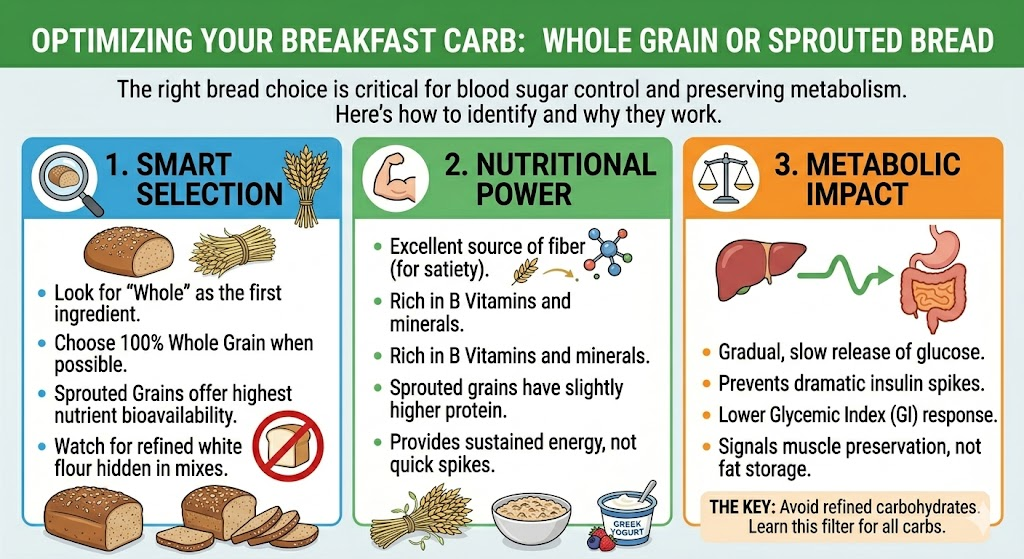
This one comes with a condition attached. White bread converts rapidly to glucose in your body. It spikes your blood sugar, triggers an insulin response, and contributes directly to fat storage. It’s not breakfast food for anyone over 50 who is trying to manage body composition.
But whole-grain or sprouted bread is a different product. It delivers B vitamins, magnesium, and fiber. These nutrients support energy metabolism, which tends to be depleted in adults over 50.
The catch is how you use it. One slice under two eggs or half an avocado gives you a complete, balanced breakfast. One slice alone with jam is just sugar on carbohydrates. Pair it with protein every single time.
The Pairing Principle: Bread is a vehicle, not a breakfast. It works when it carries something substantial. Eggs, avocado, nut butter, smoked salmon. Any of these turn a slice of toast into a real, blood-sugar-stabilizing meal. Without the protein and fat on top, you’re back to square one.
How to Build a Fat-Fighting Breakfast in Under 10 Minutes
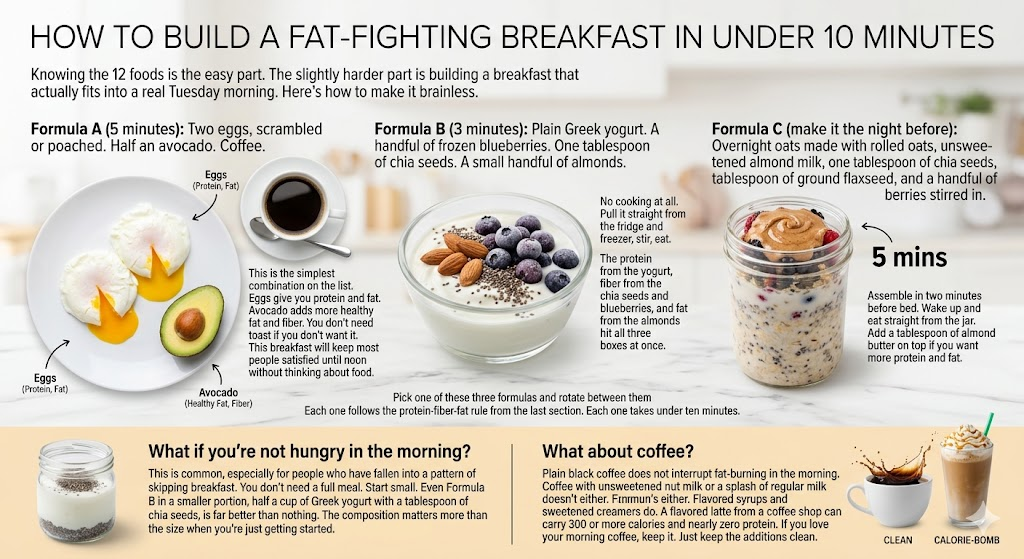
Knowing the 12 foods is the easy part. The slightly harder part is building a breakfast that actually fits into a real Tuesday morning. Here’s how to make it brainless.
Pick one of these three formulas and rotate between them. Each one follows the protein-fiber-fat rule from the last section. Each one takes under ten minutes.
Formula A (5 minutes): Two eggs, scrambled or poached. Half an avocado. Coffee. This is the simplest combination on the list. Eggs give you protein and fat. Avocado adds more healthy fat and fiber. You don’t need toast if you don’t want it. This breakfast will keep most people satisfied until noon without thinking about food.
Formula B (3 minutes): Plain Greek yogurt. A handful of frozen blueberries. One tablespoon of chia seeds. A small handful of almonds. No cooking at all. Pull it straight from the fridge and freezer, stir, eat. The protein from the yogurt, fiber from the chia seeds and blueberries, and fat from the almonds hit all three boxes at once.
Formula C (make it the night before): Overnight oats made with rolled oats, unsweetened almond milk, one tablespoon of chia seeds, one tablespoon of ground flaxseed, and a handful of berries stirred in. Assemble in two minutes before bed. Wake up and eat straight from the jar. Add a tablespoon of almond butter on top if you want more protein and fat.
What if you’re not hungry in the morning?
This is common, especially for people who have fallen into a pattern of skipping breakfast. You don’t need a full meal. Start small. Even Formula B in a smaller portion, half a cup of Greek yogurt with a tablespoon of chia seeds, is far better than nothing. The composition matters more than the size when you’re just getting started.
What about coffee?
Plain black coffee does not interrupt fat-burning in the morning. Coffee with unsweetened nut milk or a splash of regular milk doesn’t either. Flavored syrups and sweetened creamers do. A flavored latte from a coffee shop can carry 300 or more calories and nearly zero protein. If you love your morning coffee, keep it. Just keep the additions clean.
What to Stop Eating at Breakfast If You’re Over 50
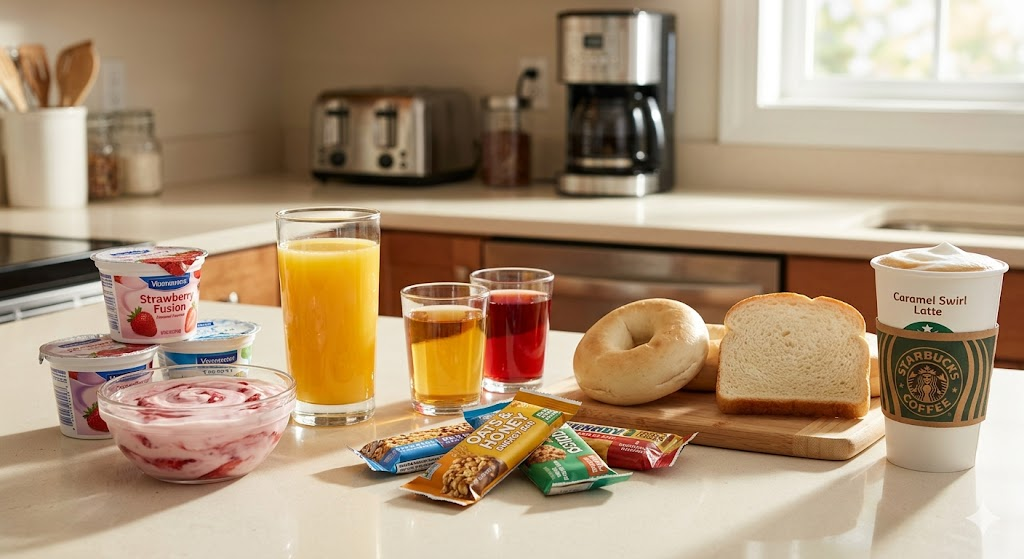
These foods aren’t the enemy. They just stop working the way you need them to once your metabolism has shifted. Here’s what to know.
Flavored yogurt. A single serving can carry as much sugar as a candy bar. The protein benefit is there, but the sugar load cancels most of it out with a blood sugar spike and subsequent crash.
Fruit juice. Orange juice, apple juice, cranberry juice. These are concentrated sugar with no fiber. Your body processes them almost identically to soda. The vitamins are real, but the blood glucose spike is also real.
Granola bars marketed as healthy. Most are high in sugar and low in protein. Read the label. If the first few ingredients are oats, sugar, and honey, and the protein count is under 6 grams, it’s a snack bar, not breakfast.
Bagels or white bread eaten alone. Both convert rapidly to glucose. Without protein or fat alongside them, they trigger a blood sugar spike that your body responds to with insulin and, eventually, fat storage.
Sweetened coffee drinks. A large flavored latte from a coffee chain can easily carry 300 or more calories with little to no protein. That’s not a beverage, it’s a meal with no satiety payoff.
Again, none of these foods are catastrophic if you have them occasionally. The issue is making them the daily default when your metabolism no longer handles them the same way it did at 35.
The Takeaway
The biology of fat storage after 50 is real. But it is not permanent and it is not hopeless.
Breakfast is the most consistent daily opportunity you have to stabilize your blood sugar, protect your muscle mass, and keep your hunger hormones under control. The 12 foods in this article are not exotic superfoods that cost a fortune or require a culinary degree. They are accessible, affordable, and easy to put together in combinations that actually work.
Start with just two changes this week. Swap your current breakfast for one of the three formulas in the section above. Try it for 7 days. Pay attention to how your energy and hunger feel by day 4. Most people notice a real difference before the week is out.
The best breakfast for fat loss after 50 is not a single superfood. It’s a consistent habit built from the right combination of protein, fiber, and healthy fats, eaten every morning, without exception.