
My Daily Habits at 52 Give Me Superior Bloodwork to My 30-Year-Old Daughter: My Exact Routine Revealed
It was a quiet morning in the doctor’s office when the final lab results came back. Jacissa, at 52 years old, sat waiting for bad news but instead got a perfect report card.
Her 30-year-old daughter, sitting right next to her, was the one who received a serious health warning. The doctor looked at the papers and admitted that the mom was biologically younger than her own child.
This happens because we trust the word “normal” too much when looking at our medical tests. “Normal” just compares you to the average person, and the average person today is sadly not very healthy.
If you only aim for the average, you are accidentally waiting for sickness to find you. We need to stop accepting “okay” results and start looking for optimal ones to truly protect our future.
Jacissa didn’t get these results by accident or by having lucky genetics. She follows a specific 6-step plan every day to keep her metabolic health over 50 in peak condition.
Activity Title
The Data: Why “Normal” Labs Aren’t Good Enough

Most doctors tell you that your lab results look “normal” and simply send you home. But when we looked at Jacissa’s blood work, we saw a totally different story.
We compared her numbers directly to her teenage daughter’s results to see how her body had actually aged over time.
Standard reference ranges compare you to the average population, which sadly includes many sick people. Being “average” in this system often just means you haven’t been diagnosed with a serious disease yet.
We focus on the optimal range instead because that is where true health and a long life actually happen.
Key longevity biomarkers like fasting insulin levels give us clues about your health long before problems start. We also look at ApoB vs LDL to get a much clearer picture of your specific heart health risks. This detailed data helps us stop big health issues years before they become emergencies.
Standard labs miss the early signs. Jacissa’s insulin was “normal” by standard rules, but it was three times higher than her daughter’s.
ApoB tells the truth. While LDL is a common test, ApoB is a better predictor of heart disease risk and showed us Jacissa needed support.
The youth shows the goal. Comparing against her daughter’s baseline highlights exactly how much inflammation has built up over the years.
Prevention is the key. By aiming for the optimal column, you stop treating symptoms and start fixing the root cause.
6:00 AM: Hydration & Mindfulness (Lowering Inflammation)

Start your day with a large glass of water the moment you wake up. Your body loses a lot of fluid while you sleep, and your kidneys need that water to start filtering out waste.
Drinking 16 ounces immediately helps flush out toxins that built up overnight. It wakes up your internal organs much faster than a cup of coffee does.
After you drink your water, sit quietly for just ten minutes before you check your phone. We naturally experience a morning cortisol spike to help us wake up, but checking emails adds unnecessary stress that pushes levels too high.
Using a simple app like Calm or Headspace keeps that stress hormone in check. This short pause sets a calm tone for the rest of your busy day.
New research from 2024 confirms a direct link between daily mindfulness and better physical health. High stress raises a marker in your blood called $hs-CRP$, which measures dangerous inflammation levels.
By calming your mind early, you effectively reduce inflammation naturally throughout your entire body. It is a small habit that makes a measurable difference in your longevity.
Filter the waste. Hydration supports your kidneys in removing toxins right away.
Control the spike. Meditation prevents your natural morning cortisol from turning into chronic stress.
Lower the numbers. consistent mindfulness is proven to lower $hs-CRP$ levels in blood tests.
Protect your heart. Lowering inflammation protects your arteries from long-term damage.
7:00 AM: The “Second Meal Effect” Breakfast
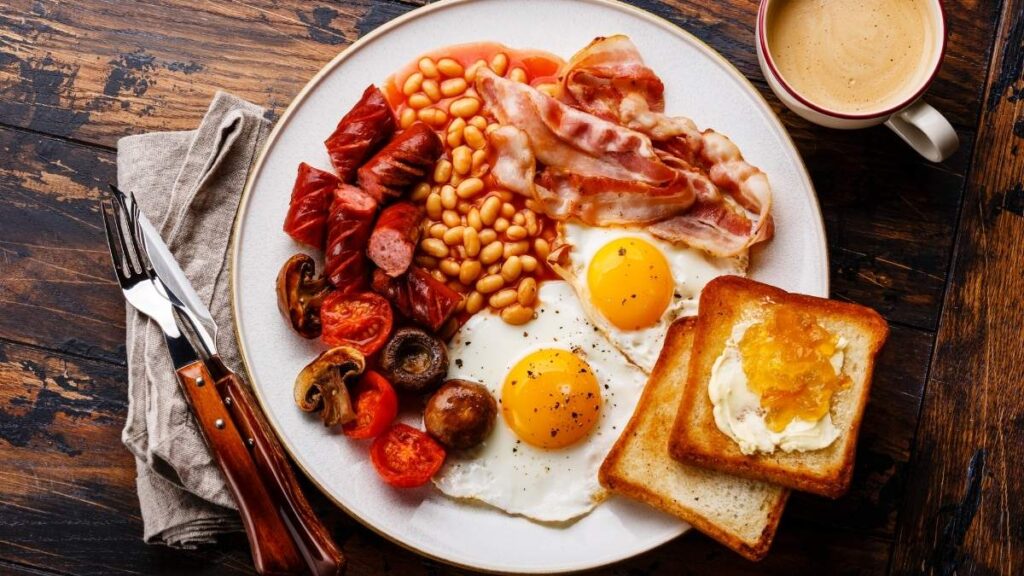
Your first meal determines how much energy you will have for the rest of the day. Skip the toast or sugary cereal and choose a solid source of protein instead. A simple three-egg omelet or a bowl of plain Greek yogurt works perfectly here. This simple switch stops the mid-morning energy crash before it even happens.
There is a powerful biological reason to prioritize protein this early in the morning. It triggers a phenomenon doctors call the “Second Meal Effect.”
This means eating protein now actually helps your body handle sugar better when you eat lunch later. You are essentially training your metabolism to stay steady all day long.
This specific habit is why Jacissa keeps her long-term blood sugar numbers so healthy. Her recent lab tests show an $HbA1c$ level of just 5.1%, which is excellent for her age.
You can lower HbA1c naturally just by changing what hits your stomach first. It is one of the easiest ways to protect your blood vessels from damage.
Avoid the crash. Sugary breakfasts give you a quick spike followed by a slump, but protein fuels you for hours.
Protect your lunch. The Second Meal Effect ensures your blood sugar stays stable even after you eat your next meal.
See the benefits. High protein breakfast benefits include better focus and less hunger throughout the morning.
Track the long term. consistent protein intake keeps your $HbA1c$ low, which is crucial for preventing diabetes.
10:00 AM: Strength & HIIT (The Insulin Sink)

At 10:00 AM, Jacissa hits the gym for her most critical health intervention. She does strength training three times a week and High-Intensity Interval Training (HIIT) twice a week for just 20 minutes. We prioritize building muscle because it is the largest organ that controls your blood sugar levels.
We actually stopped her long, slow “Zone 2” cardio sessions this year based on new data. A major 2025 review by Storoschuk et al. found that for most people, long, slow cardio isn’t the best use of limited time.
The study showed that higher-intensity workouts deliver the same (or better) heart and mitochondrial benefits in a fraction of the time, which is exactly what a busy schedule needs.
The science behind this is simple: your muscles act like a massive “glucose sink.” When you contract your muscles during lifting or sprinting, they activate a transporter called GLUT4.
This transporter moves to the surface of your muscle cells and pulls sugar out of your bloodstream without even needing insulin. This gives your pancreas a break and directly fights insulin resistance.
Be efficient. The 2025 data confirms you don’t need hours of cardio; 20 minutes of intense effort works better for longevity.
Open the sink. Every rep you do physically pulls glucose out of your blood to fuel the movement.
Build the reserve. Strength training for women over 50 builds the “storage tank” (muscle) so you can handle carbohydrates better.
Fix the root. These insulin sensitivity exercises lower your fasting insulin levels permanently, not just for the day.
12:30 PM: The 10-Minute Walk Hack

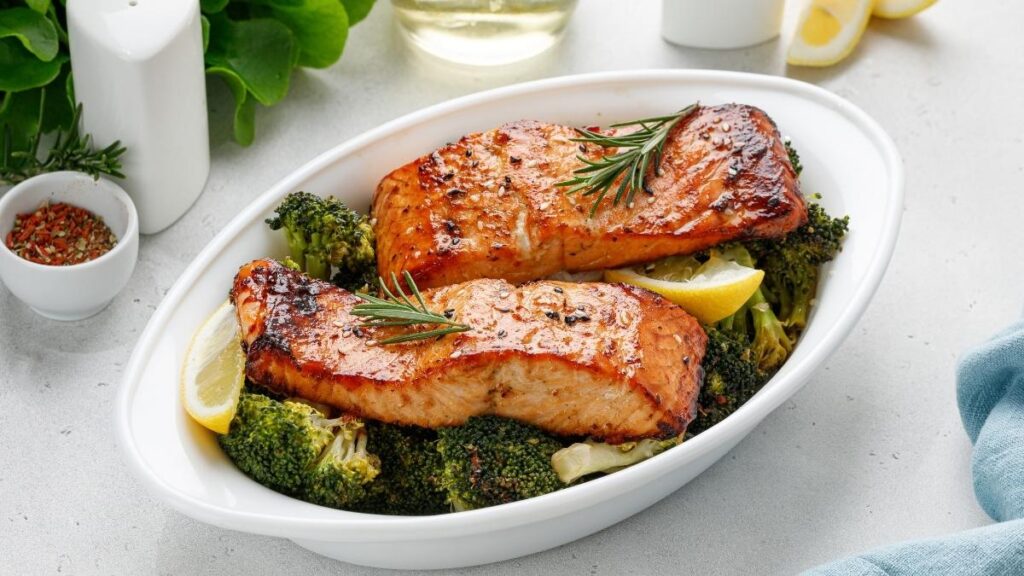
For lunch, Jacissa focuses on a Mediterranean-style plate packed with healthy fats like salmon or sardines. These foods are rich in Omega-3 fatty acids, which are essential for cleaning up her blood work.
We specifically added these to her diet to lower her triglyceride levels, which had started to creep into the danger zone.
But the most critical part of her lunch break happens the moment she finishes eating. Instead of sitting back down at her desk, she immediately heads out for a ten-minute walk. It doesn’t have to be fast or sweaty; the goal is simply to get her muscles moving while her body starts to digest the food.
Timing is the secret ingredient here. A study published in Scientific Reports showed that walking right away is far more effective at stopping sugar spikes than waiting until later. When you move immediately, your muscles soak up the sugar from your meal before it can flood your bloodstream and cause damage.
Flatten the curve. Walking after eating prevents the sharp blood sugar spikes that lead to energy crashes and fat storage.
Don’t wait. The science proves that immediate movement works better than waiting for your food to “settle.”
Heart helpers. Mediterranean diet benefits include higher Omega-3s, which protect your arteries and lower bad cholesterol.
Use the fuel. Walking turns your lunch into immediate energy rather than letting it sit in your system as excess sugar.
7:00 PM: Circadian Eating & The Alcohol Swap
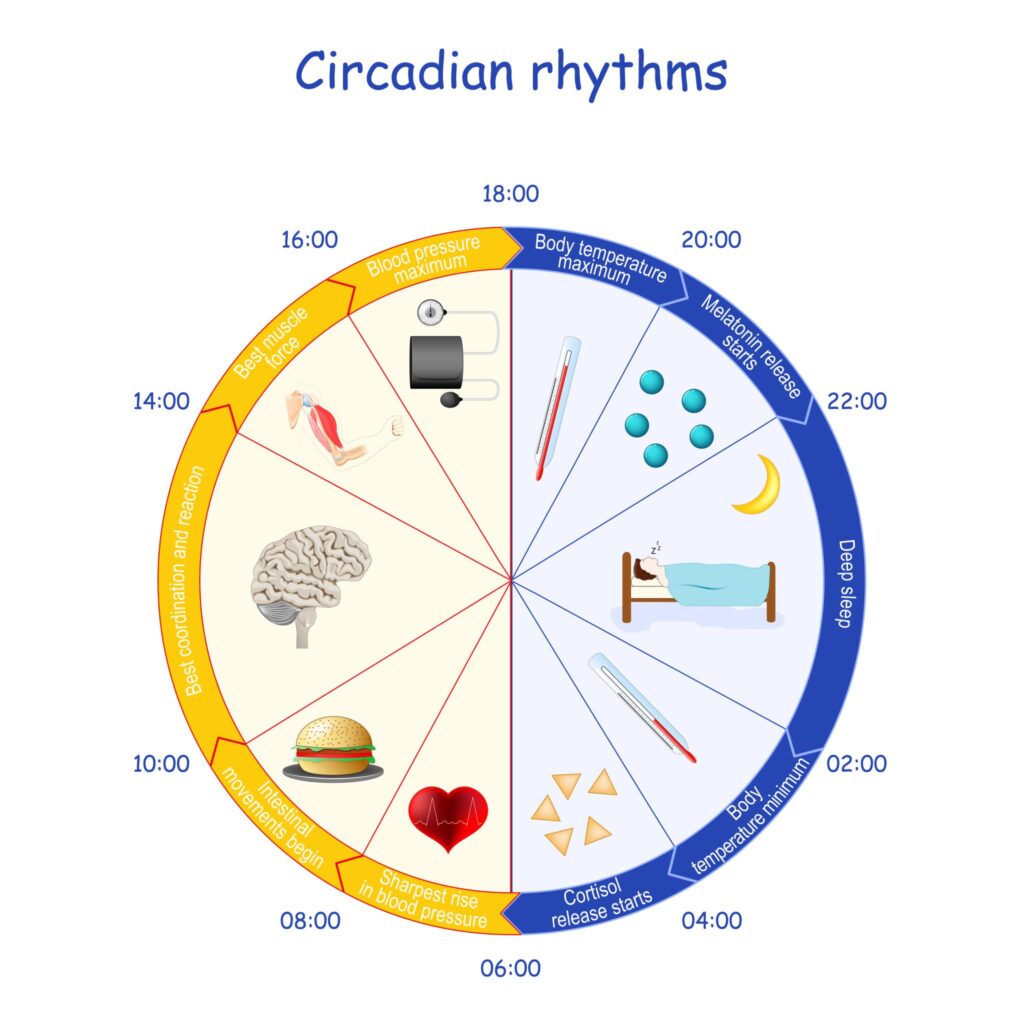
Jacissa finishes her last meal of the day by 7:00 PM sharp to signal her body that it is time to rest. This practice is called Time-Restricted Eating, and it matches your eating schedule to your body’s natural internal clock.
When you stop eating early, you give your liver a break so it can focus on repair instead of digestion. Eating late forces your organs to work overtime when they should be sleeping.
She also made a tough but necessary trade by swapping her evening glass of wine for herbal tea. Many people don’t realize that alcohol converts almost directly into fat in your bloodstream.
Your liver pauses everything else to handle the alcohol, meaning the food you ate with it gets stored as fat immediately. This process is a major reason why many people struggle with high triglycerides.
This specific change had the biggest impact on alcohol and metabolic health markers in her blood work. Alcohol ruins your sleep quality and prevents your body from entering the deep restoration phases it needs.
By cutting the nightcap, you lower triglycerides naturally and wake up with a lower heart rate. It proves that what you don’t consume is often more important than what you do.
Stop the production. Alcohol turns into blood fat quickly, spiking your numbers.
Rest the filter. Stopping food at 7 PM allows your liver to focus on cleaning your blood.
Protect the sleep. Skipping alcohol ensures you get the deep sleep needed to lower cortisol.
Burn the fat. Fasting for 12 hours overnight encourages your body to use stored fat for fuel.
9:30 PM: Sleep Hygiene as Medicine

At 9:30 PM, the day officially ends with a strict shutdown ritual. Jacissa aims for exactly seven to eight hours of rest every single night.
This isn’t just about feeling energetic the next morning; it is a non-negotiable medical requirement for her body to repair itself. She dims the lights and cools the room to force her brain into recovery mode.
We target this specific timeframe because health risks follow a “U-shaped” curve. This means that getting too little sleep is dangerous, but sleeping more than nine hours consistently is actually just as bad for your longevity.
The data proves that people who stay in that middle sweet spot have the fewest heart issues. You have to find the balance between rest and oversleeping.
Missing sleep does more than just make you groggy; it confuses your biology. Sleep deprivation causes your blood markers to look exactly like those of someone suffering from obesity or a chronic infection.
Your body panics and raises inflammation levels to fight a threat that does not exist. Immune system recovery only happens when you shut down for the full night.
Hit the target. Aim specifically for 7 to 8 hours to stay at the bottom of the risk curve.
Stop the confusion. Lack of sleep makes your body act like it is sick or inflamed.
Calm the fire. The link between sleep and inflammation is direct; better sleep means less internal swelling.
Reset the system. Your immune system does its best work while you are unconscious, so don’t cut that shift short.
Conclusion: The Compound Effect of Small Choices
People often look at Jacissa’s lab results and assume she just has “good genes.” But the data proves that her health is actually the result of a specific daily schedule, not luck.
She didn’t inherit these low inflammation levels; she built them hour by hour. Biology follows your habits, not just what your parents gave you.
You might feel overwhelmed looking at her entire day laid out on paper like this. Please do not try to change everything in your life tomorrow morning, or you will likely quit.
Just pick one easy win, like the 10-minute walk after lunch or the evening alcohol swap. Small changes that stick are always better than big overhauls that fail.
Jacissa proves that getting older doesn’t have to mean getting weaker or sicker. Her health in her 50s is objectively better now than it was when she was in her 30s. By sticking to an optimal bloodwork routine, you stop guessing and start fixing the real problems. You can turn back the clock on your internal health.