

I Stretched for Just 10 Minutes a Day—It Cured the Lower Back Pain I Had for a Decade
For ten years, I woke up every single morning moving like a 90-year-old, and the only thing that finally changed it cost me nothing but ten minutes a day.
I tried rest, painkillers, expensive ergonomic chairs, and physical therapy sessions that helped temporarily but never solved the problem. I was stuck in a cycle of chronic back pain, inactivity, and more pain.
If that sounds familiar, this guide is for you. You will learn the real root cause of lower back pain that most people miss, the exact 10-minute stretching routine that targets it directly, and how to build a simple daily stretching habit without relying on willpower or discipline.
10-Minute Back Rescue
Stretching only works if you do it correctly. This simulator builds your routine habit. Practice holding steady without bouncing.
Slowly bring one knee up toward the chest and hold it gently. Keep your lower back pressed to the floor.
Habit Unlocked!
You completed the simulation. Remember, consistency is more important than duration. Tie this 10-minute routine to your morning coffee.
Missing one day is fine. Missing a week starts the process over. Just start again the next morning.
Lower Back Pain Has Followed Jack for Years. Here Is How a 10-Minute Morning Routine Finally Changed That.
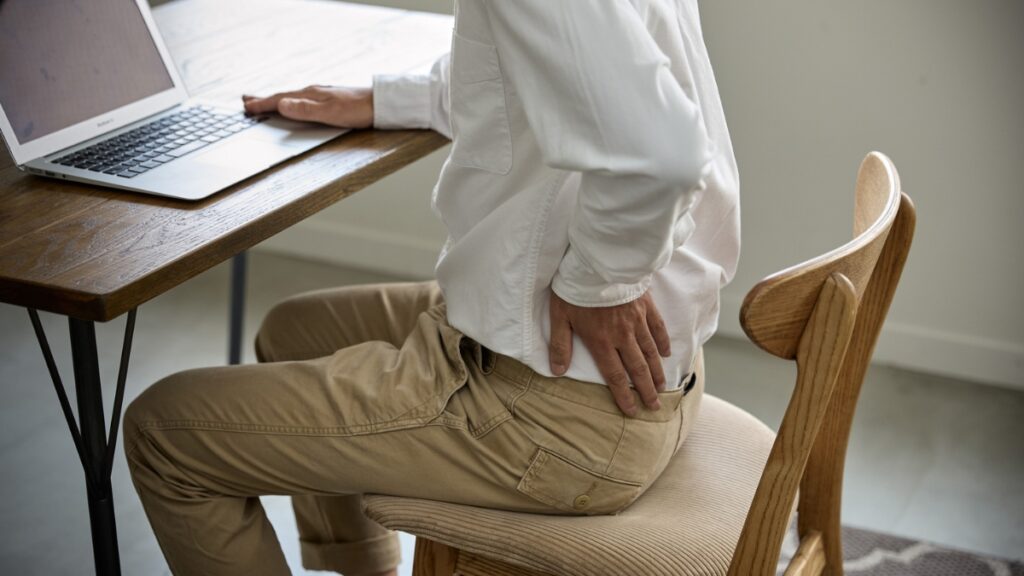
Jack is not lazy. He is not weak. And he is definitely not alone. For years, Jack woke up every morning with a familiar, dull ache in his lower back. Some days it was mild. Other days it made getting out of bed feel like a project.
He tried rest. He tried ignoring it. He tried expensive gadgets and random YouTube videos. Nothing really stuck. What Jack did not know then is that his pain had a very specific cause. And that cause could be addressed with just ten minutes a day.
This article breaks down exactly what is happening inside the body when lower back pain strikes, which muscles are really to blame, and the exact six-stretch routine that can start making a real difference in as little as two weeks.
Why Lower Back Pain Becomes a Decade-Long Problem (And Why It Is Not Your Fault)

Jack’s back pain did not come out of nowhere. It built up slowly, quietly, over years of sitting at a desk, commuting in a car, and collapsing onto a couch at the end of a long day. Sound familiar?
Here is the scale of this problem. In 2020, a staggering 619 million people worldwide suffered from lower back pain. That is nearly 10% of the entire world’s population. By 2050, that number is expected to climb to 843 million. This is not a niche issue. This is a global epidemic, and Jack is right in the middle of it.
Between 50% and 80% of all adults will experience at least one serious episode of back pain during their lifetime. So if Jack feels like his body is betraying him, the truth is that his body is responding the same way hundreds of millions of bodies respond to the way modern people live.
Quick Tips:
- Jack is not unusual for having this pain. Most adults will face it at some point.
- The root cause is usually lifestyle, not a permanent injury.
- Recognizing this early makes it much easier to fix.
When a person sits for extended periods, specific muscles like the hip flexors and hamstrings become tight and overworked. At the same time, muscles like the glutes and core grow weaker from not being used. This imbalance slowly pulls the spine out of its natural position, and the pain begins.
Once that pain starts, most people do what feels logical. They stop moving. They rest. They protect the area. But this is exactly the wrong response. Inactivity causes muscles to grow even weaker and joints to stiffen further. The pain gets worse. Then the person moves even less. It becomes a loop that is very hard to break.
Quick Tips:
- Sitting for long periods is one of the top causes of lower back pain in adults.
- Resting too much after pain starts often makes the problem worse, not better.
- Short movement breaks throughout the day can interrupt this cycle before it gets serious.
The economic cost of this problem is staggering. In the United States alone, about $86 billion is spent every year on back pain treatments. Roughly 186.7 million workdays are lost annually because of this condition.
Jack is not dealing with a minor inconvenience. He is dealing with one of the most expensive health problems on the planet, and it is happening inside his own body every single morning.
The good news is that for the vast majority of people, this kind of pain is driven by muscle imbalances. And muscle imbalances can be fixed.
What Actually Happens to Your Back When You Stretch (The Science in Plain English)

Stretching feels good. Most people know that. But Jack was surprised to learn that stretching does something very specific and very measurable inside the body.
A Canadian study published in the Scandinavian Journal of Pain found that stretching the lower back produces a local and systemic reduction in pain sensitivity. That means the pain signal itself gets turned down. Not through medication. Not through surgery. Through deliberate, controlled movement.
Research also shows that patients who completed a four-week stretching program saw an average 58% improvement in their back pain. That is not a small number.
A randomized clinical trial involving nurses with chronic back pain found that those who followed a structured stretching program had significantly lower pain scores at two, four, and six months compared to the control group. And 81% of those participants reported a moderate to high level of pain relief.
Quick Tips:
- Stretching does not just feel good. It has real, measurable effects on pain levels.
- A four-week program is all it takes to start seeing meaningful results.
- Consistency matters more than intensity. Short daily sessions beat occasional long ones.
Here is something important to be honest about. Stretching alone is not a cure. It has a strong short-term pain-relieving effect, but it does not fix the underlying cause on its own.
Strengthening the trunk muscles, including the abdominal and back muscles, has a more lasting long-term impact. The good news is that the routine Jack follows in this article combines both stretching and gentle activation, so he is addressing the problem from both angles.
A 2025 network meta-analysis published in Frontiers in Public Health confirmed that significant pain reduction can be achieved with exercise sessions as short as 15 to 30 minutes. Even brief sessions produce real results. This removes one of the most common excuses: not having enough time.
Lori Walter, a physical therapist and Doctor of Physical Therapy at Hinge Health, puts it plainly: “Most of the time, back pain will get better after a few weeks with movement and lower back pain exercises.” Online yoga classes were even found to relieve chronic low back pain and reduce the need for pain medication, according to a study published in late 2024.
Quick Tips:
- Stretching works best when combined with light strengthening. This routine does both.
- Sessions as short as 10 to 15 minutes can produce measurable pain reduction.
- Most people start feeling a difference within two weeks of daily practice.
The Muscles You Must Stretch (Most People Skip These)
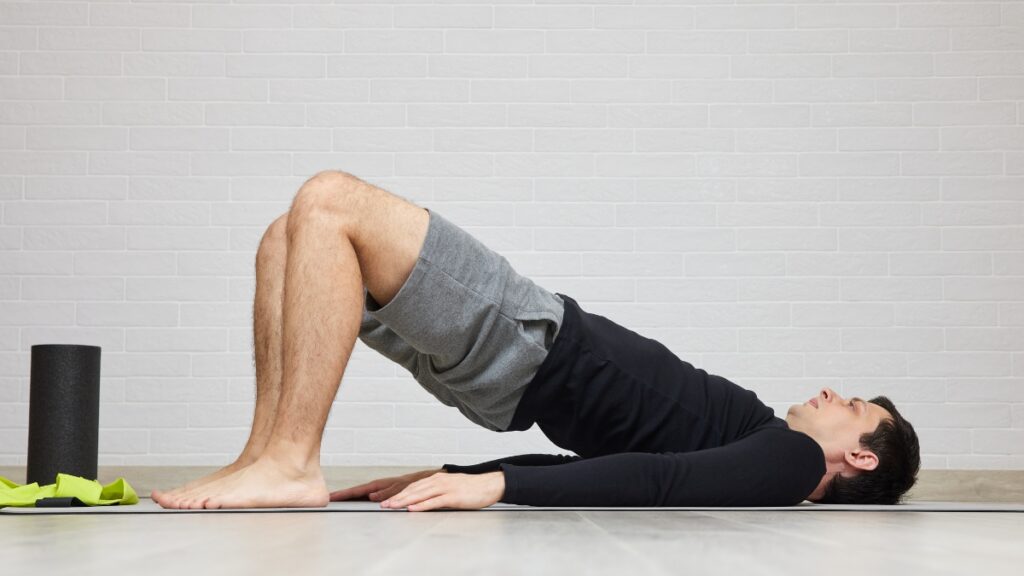
When Jack first started working on his back pain, he did what most people do. He stretched his lower back directly. He did the bend-forward-and-hold move. He felt a slight release. Then the pain came back.
The reason is that the lower back is usually not the real source of the problem. It is the victim. The real culprits are the muscles connected to it from above and below.
Barry Shafer, a physical therapist and Doctor of Physical Therapy at Cedars-Sinai, makes this very clear: “Hamstrings and gluteals, your butt muscles, are two big muscle groups that connect to your pelvis and lower spine. They are the most important muscles to stretch if you are dealing with low back pain.” Most people never touch these muscles when trying to fix their back.
Quick Tips:
- Stretching only the lower back is like treating a symptom while ignoring the cause.
- The hamstrings and glutes pull directly on the pelvis. When they are tight, the lower back suffers.
- Adding just two targeted stretches to a routine can dramatically change results.
The hip flexors are another group that Jack had completely ignored. These muscles run from the front of the hip up into the lower spine. When they are tight, they affect the alignment and stability of the pelvis, which increases stress on the lower back. After years of sitting, almost everyone has tight hip flexors without knowing it.
Brett Pugh, a physical therapist and Doctor of Physical Therapy at Commons Clinic, explains that a successful plan requires both mobility and strength training together. “For back muscles to function effectively, they must possess both the strength and mobility necessary to perform their role efficiently.” One without the other is incomplete.
Then there is the core. This word gets used a lot, but here is what it actually means for the lower back. When core muscles are inactive or weak, the spine loses its natural support system.
It has nothing to hold it in place. Prolonged sitting shortens and tightens the hip flexors, which then pull on the lower back and cause poor posture and spinal instability. The spine ends up working much harder than it should just to keep the body upright.
Quick Tips:
- Hip flexors are almost always tight in people who sit for most of the day.
- A weak core forces the spine to carry extra load with no support.
- Targeting all three areas, which are the glutes, hamstrings, and hip flexors, gives the lower back real relief.
The Exact 10-Minute Daily Stretching Routine (Do This Every Morning)
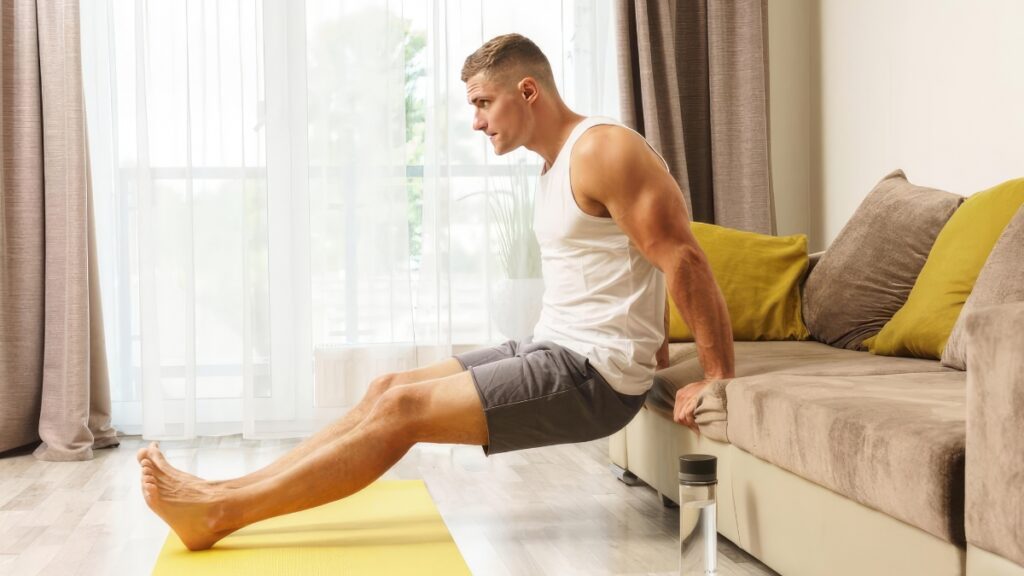
This is the part that actually matters. Jack does not need a gym membership. He does not need expensive equipment. He needs a mat, some floor space, and ten minutes.
Before starting, spend two to three minutes warming up. Walk around the house, march in place, or do gentle arm swings. Cold muscles are less flexible and more likely to strain. This simple step makes every stretch more effective and safer.
A few key rules to keep in mind throughout the routine. Hold each stretch for 20 to 30 seconds. Research shows this is the sweet spot that allows muscles to relax and actually lengthen.
Holding longer than 60 seconds does not provide much extra benefit. Never bounce or jerk during a stretch. Everything should be slow, steady, and controlled. And if possible, do this routine once in the morning and once in the evening.
Quick Tips:
- Always warm up before stretching. Two minutes of light movement makes a big difference.
- The 20 to 30 second hold is backed by research. Do not rush through the stretches.
- A morning and evening session accelerates results significantly.
Here is the exact six-stretch sequence:
1. Knee-to-Chest Stretch Targets: Lower back, glutes Hold: 30 seconds each side
Lie flat on the back on a mat with both legs extended. Slowly bring one knee up toward the chest and hold it gently with both hands. Keep the other leg relaxed and flat on the floor.
The stretch should feel like a gentle pull in the lower back and the back of the hip. Do not yank the knee hard toward the chest. Keep the lower back pressed lightly toward the floor.
2. Cat-Cow Stretch Targets: Full spine, core activation Hold: 60 seconds at a slow, rhythmic pace
Start on all fours with the hands directly below the shoulders and the knees below the hips. For the “cow” position, let the belly drop toward the floor, lift the head slightly, and allow the back to arch gently.
For the “cat” position, press the hands into the floor, round the back upward like a scared cat, and tuck the chin toward the chest. Move between the two positions slowly and with breathing. This should feel like a gentle wave moving through the spine. Avoid forcing either extreme position.
3. Child’s Pose Targets: Lower back, hip flexors, upper back Hold: 30 seconds
From a kneeling position, sit back toward the heels and reach both arms forward along the floor. Let the forehead rest on the mat. The chest should sink toward the floor as the stretch deepens.
This should produce a wide, deep stretch across the entire lower back and into the hips. Avoid this stretch if there is knee pain. Breathe slowly and let gravity do the work.
Quick Tips:
- The first three stretches set the foundation. Do not skip Cat-Cow. It activates the core gently.
- In Child’s Pose, try walking the hands slightly to each side to stretch the sides of the lower back too.
- These moves work especially well immediately after waking up when the spine is slightly compressed from sleep.
4. Supine Spinal Twist Targets: Lower back, piriformis muscle Hold: 30 seconds each side
Lie flat on the back with both knees bent and feet flat on the floor. Let both knees fall slowly to one side while keeping both shoulders pressed to the floor. The head can turn in the opposite direction from the knees for a fuller stretch.
This should feel like a wringing sensation through the lower back and the outer hip. Do not force the knees all the way to the floor. Let gravity guide them down gradually.
5. Hip Flexor Lunge Stretch Targets: Hip flexors, iliopsoas muscle Hold: 30 seconds each side
Start in a kneeling position with one foot forward and the other knee on the mat. Shift the body weight gently forward until a stretch is felt at the front of the back hip. Keep the torso upright and avoid leaning forward.
The stretch should be felt deep in the front of the hip, not in the knee. This is one of the most important stretches in the routine because it directly targets the muscles that pull on the lower back after hours of sitting.
6. Lying Hamstring Stretch Targets: Hamstrings, sciatic nerve Hold: 30 seconds each side
Lie flat on the back. Lift one leg and hold it behind the thigh with both hands. Slowly straighten the knee as much as comfort allows. The foot can flex toward the ceiling to increase the stretch along the back of the leg.
This should feel like a pull along the entire back of the thigh. Do not lock the knee or force the leg straight. A slight bend in the knee is fine.
Quick Tips:
- The hip flexor lunge is often the most uncomfortable for people who sit all day. That discomfort means it is working.
- The hamstring stretch also relieves pressure on the sciatic nerve, which runs down the back of the leg.
- If the floor feels too far away for the hamstring stretch, use a towel looped around the foot for help.
How to Make This a Habit You Actually Keep (The 10-Minute Rule)
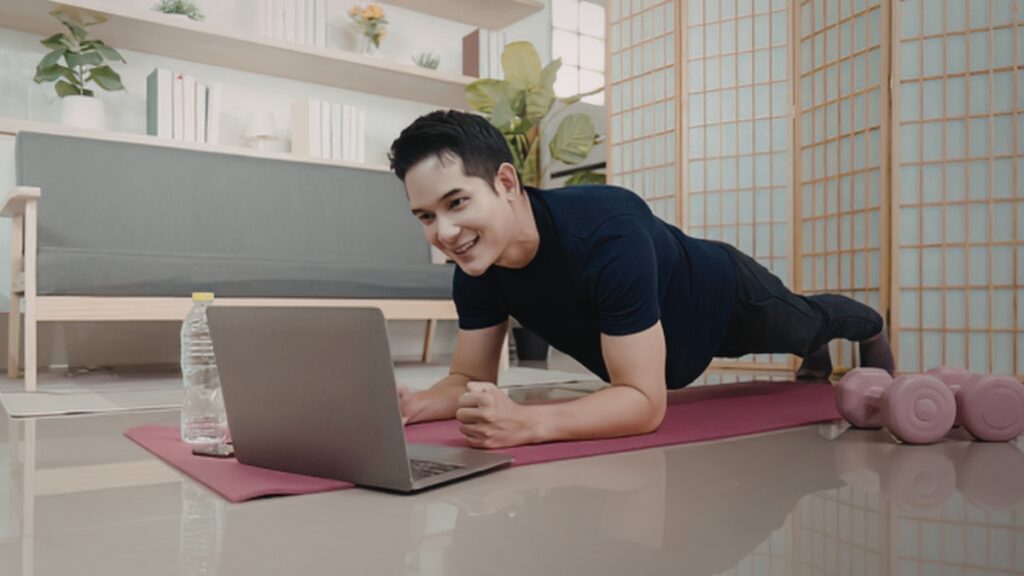
The stretches are simple. The science is solid. The time commitment is tiny. So why do most people still not do it? Because the hardest part is not the stretching. It is starting.
Jack found this out the hard way. He saved the routine. He meant to start Monday. Monday became next week. Next week became “when things slow down.” That day never came.
What finally worked for Jack was habit stacking. He tied the stretches to something he already did every morning. The moment his coffee started brewing, he got on the mat. By the time the coffee was ready, the routine was done.
Quick Tips:
- Habit stacking is one of the most effective behavior change tools available. Attach stretching to a habit already in place.
- Options include brushing teeth, waiting for coffee, the end of a first meeting, or before a morning shower.
- The goal is to make the decision automatic, not something that requires motivation.
Brett Pugh at Commons Clinic makes an important point for people with busy lives: “For someone with a demanding schedule, this may look like five minutes of mobility in the morning before everyone else in the household wakes up.”
Consistency is more important than duration. A short routine done every day beats a perfect routine done once a week.
It also helps to break it up throughout the day if needed. A few stretches when waking up, one or two simple moves at a lunch break, and a short relaxing session before bed can add up to real relief without requiring a dedicated block of time.
Set realistic expectations too. Most people feel a noticeable difference within two weeks. Meaningful pain reduction typically comes within four to six weeks.
That lines up with the research from Section 2, which found a 58% improvement after a four-week stretching program. Stretching occasionally does almost nothing. But adding these stretches to a daily routine produces lasting, cumulative results over time.
Quick Tips:
- Two weeks is the realistic timeline for first feeling a difference. Give it that long before judging results.
- Breaking the routine into morning and evening halves makes it easier to fit in a busy day.
- Missing one day is fine. Missing a week starts the process over. Just start again the next morning.
When to See a Doctor: Red Flags That Should Never Be Ignored

This routine works for a large number of people. But Jack also knows that stretching is not a replacement for professional medical evaluation in every situation.
Lower back pain can sometimes be a symptom of something deeper. Kidney stones, acute pancreatitis, and other internal conditions can produce pain that feels like a back problem but has nothing to do with muscles. While stretching can provide relief in many cases, it is not appropriate for every type of back pain.
Physical therapists are trained to identify whether back pain is purely muscular or whether something else is going on. When stretching and exercise are not enough, a physical therapist can use manipulation, mobilization, and other clinical methods to address the underlying cause.
Quick Tips:
- If pain started after a fall, an accident, or a direct blow to the back, see a doctor before starting any stretching routine.
- A physical therapist is often the best first call for persistent back pain. They can identify what is specifically wrong and create a targeted plan.
- Not all back pain is the same. Getting a clear diagnosis saves time and prevents accidental harm.
Here are the red flags that should prompt an immediate visit to a doctor:
- Pain that radiates down one or both legs
- Numbness or tingling in the legs or feet
- Loss of bladder or bowel control
- Pain that began after a fall or injury
- Pain that gets worse at night or when resting
Barry Shafer, physical therapist at Cedars-Sinai, advises clearly: “See a doctor if your pain is acute or persists more than a few days, or if you have weakness or numbness.” This is practical, common-sense guidance that Jack takes seriously.
The routine in this article is for everyday back pain caused by muscle tightness and imbalance, not for diagnosing or treating medical conditions.
Start Tomorrow Morning. Your Back Will Thank You.
Lower back pain is one of the most common and expensive health problems on the planet. But for millions of people, including Jack, the cause is not a serious injury or a complex medical condition. It is something much more fixable: muscle imbalances built up over years of modern sedentary life.
A consistent 10-minute stretching routine, done daily, directly targets those imbalances. It lengthens the hip flexors. It releases the hamstrings. It activates the glutes. It gives the spine the mobility it needs to stop aching.
Jack does not need a gym, a doctor’s note, or expensive equipment. He needs a mat and ten minutes. He sets his alarm ten minutes earlier and gets on the floor before his coffee finishes brewing. That is it.
The most effective 10-minute stretching routine for lower back pain is the one a person actually does. So start simple, and start today.