
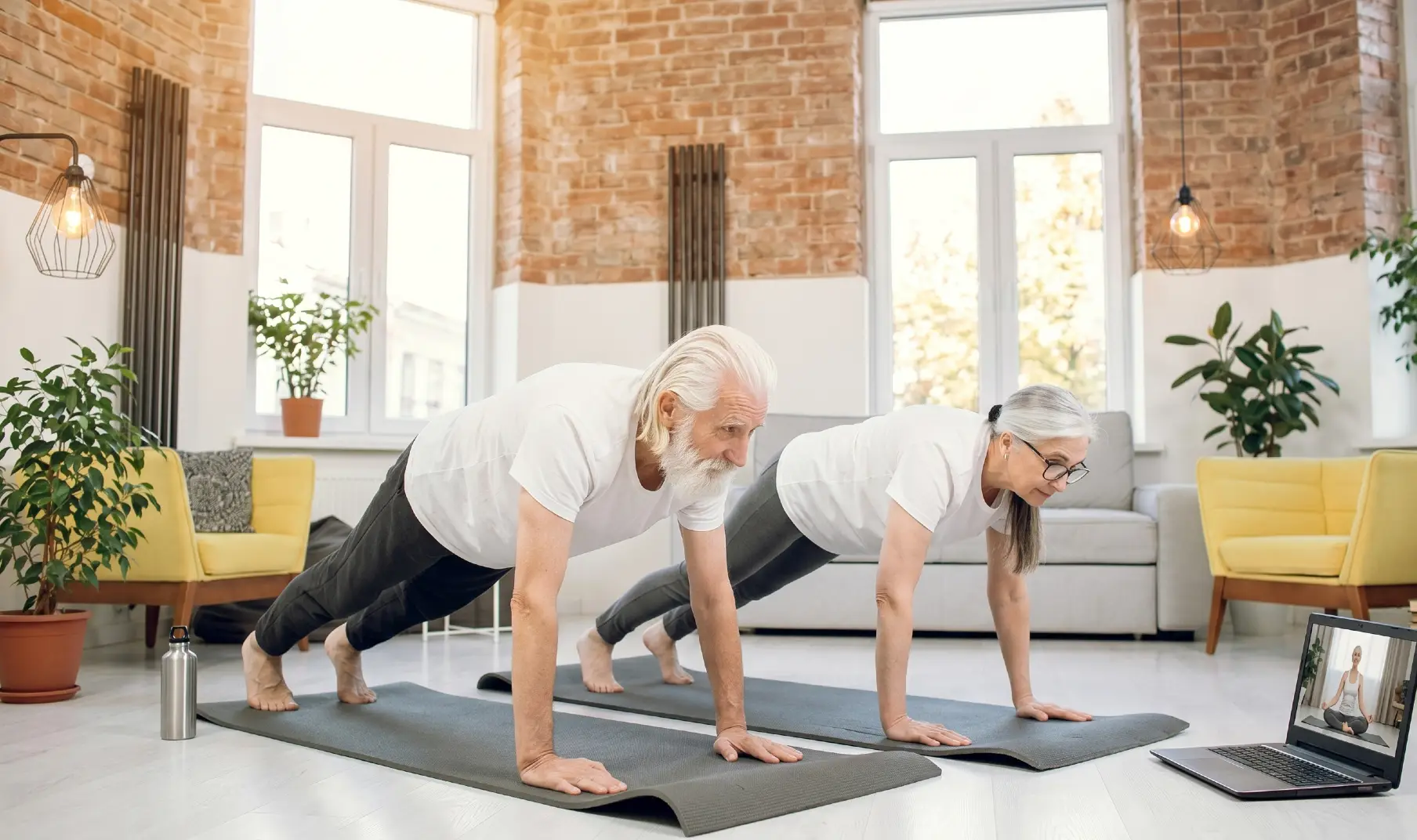
Most falls do not happen during exercise or risky activity. They happen in the morning, in the hallway, stepping out of the shower, or walking to the kitchen, because the body has spent hours lying still and no one told it to wake up properly.
During sleep, muscles lose elasticity, joints stiffen, and proprioception, your body’s ability to sense its own position, temporarily dulls. Blood flow drops overnight, leaving muscles cold and slow to respond.
Those first few minutes after getting up are when fall risk is at its highest. Four simple stretches, taking about 10 minutes and requiring no equipment, directly target the calves and ankles, hip flexors, hamstrings, and lower back, the exact areas that give out first.
Daily Mobility Routine
Why Mornings Are the Most Dangerous Time of Day for a Fall

You slept. Your body rested. And now, the moment you swing your legs over the side of the bed, something feels off. Your ankles are stiff. Your hips feel tight. Your legs take a second to cooperate.
That feeling is not just age. It is what happens to muscles and connective tissues after hours without movement. Think of them like rubber bands left in a cold drawer overnight. They still work, but they need a moment before they stretch without snapping.
This is the window when falls happen most. And the numbers are serious.
Falls are the leading cause of injury-related death for adults 65 and older. The fall death rate went up 21% between 2018 and 2024. In 2021, falls caused 38,000 deaths among people 65 and older, and emergency rooms recorded 3 million visits from older adults who had fallen. Right now, 1 in 4 Americans over 65 falls every year. That is 14 million people.
The healthcare cost from nonfatal falls alone hit $80 billion in 2022. By 2030, that number is expected to top $101 billion.
But here is what most people do not hear: most falls are preventable. Dr. Jennifer L. Vincenzo, a professor at the University of Arkansas for Medical Sciences, put it plainly: accidental falls are not an inevitable part of getting older. There are real things you can do to lower your risk.
Research backs that up. Physical activity, including regular stretching and exercise, reduces falls by 13% to 40% in older adults who live at home.
Morning stiffness is real. Balance problems are real. But so is your ability to address them, starting with how you begin each day.
The good news is your morning already contains the perfect opportunity to fix this, and it costs nothing.
What These 4 Stretches Actually Target (and Why It Matters)
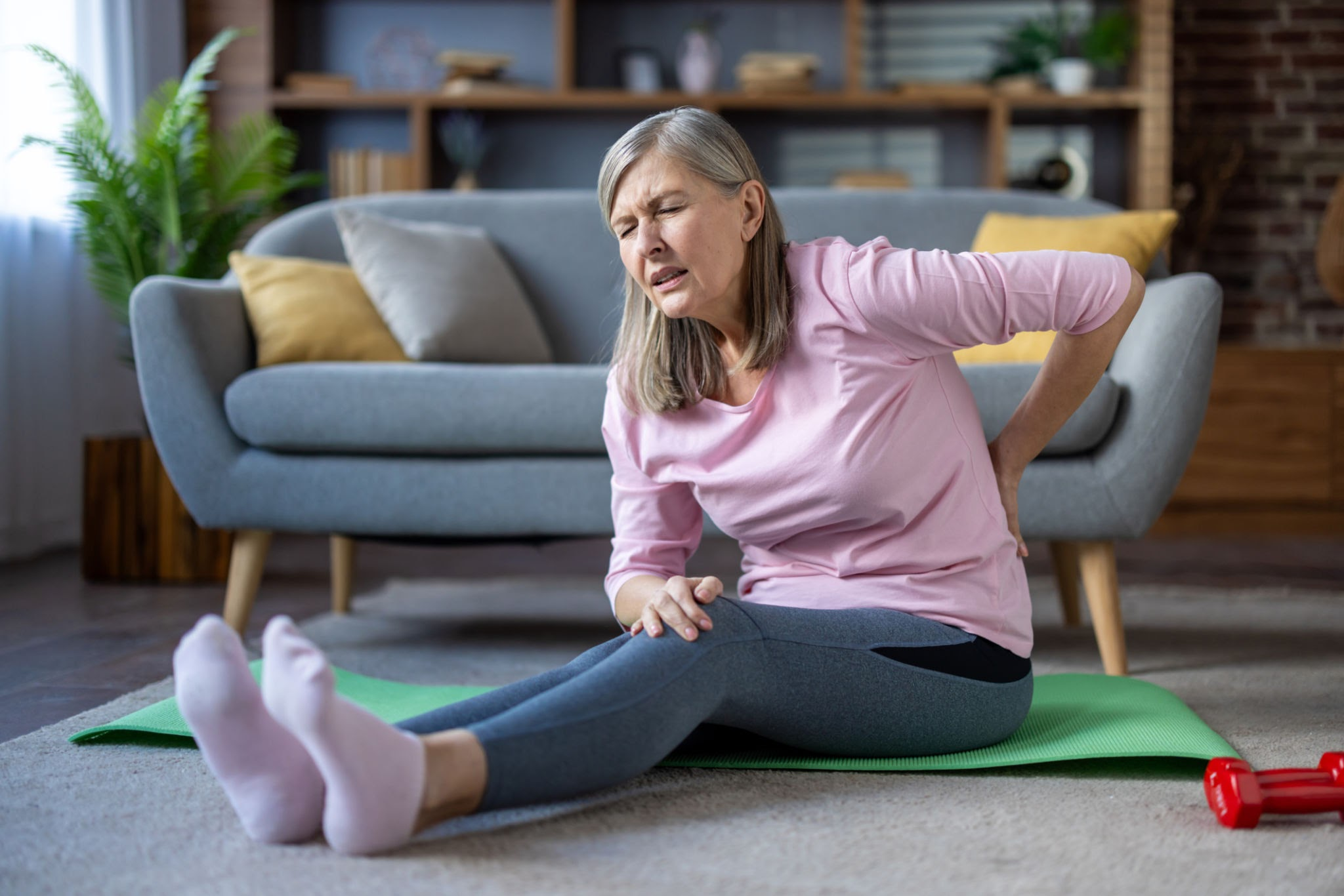
Balance is not one single thing. Your body uses three systems at once to keep you upright: your muscles and joints for physical stability, your inner ear to track where you are in space, and your eyes and nervous system to make constant small adjustments in real time.
Most falls in older adults come down to one part of that system: the muscles and joints. And stretching can directly fix that.
Your ankles and calves act like springs at the base of everything. If they are stiff, the whole structure above them struggles to recover when you step on uneven ground or shift your weight quickly.
A physical therapist from Confluent Health pointed out that 40% of your walking cycle is spent balanced on a single leg. If your ankles cannot stabilize that, your strides get shorter and slower, and that itself creates a fall risk.
Your hip flexors shorten when you sit or lie still for long periods. Tight hip flexors tilt your pelvis forward, which throws off your spine’s alignment and shortens the length of each step you take.
Your hamstrings connect directly to your pelvis. When they are too tight, they pull the pelvis backward, which changes how your spine and hips move during every step you take.
Your lower back and glutes hold the whole chain together. Stiffness there reduces the stability you need when turning, reaching, or moving on uneven surfaces.
Research pulling from 155 studies published between 2004 and 2024 found that balance and strength training improves posture control, gait stability, and coordination. These four stretches target all of it.
The 4 Morning Stretches: Your Step-by-Step Routine
Stretch 1: The Standing Calf and Ankle Stretch
Most people spend their lives in shoes with slightly raised heels. Dress shoes, sneakers, even slippers. Over time, those raised heels keep the calf and Achilles tendon in a shortened position.
The ankle loses range of motion, and the nervous system gradually loses its ability to control deep ankle bending. That is what makes it hard to catch yourself on an uneven sidewalk or a step that is slightly taller than expected.
This stretch brings that control back.
- Stand facing a wall with both hands resting on it at shoulder height.
- Step one foot back about two feet. Keep the heel flat on the floor.
- Gently bend your front knee while pressing your back heel down into the floor.
- Hold for 15 to 30 seconds, then switch to the other side.
- Aim for 2 to 4 repetitions on each leg.
- For a deeper stretch that targets the lower calf, bend the back knee slightly as well.
Safety note: The stretch should feel like mild tension, not a burn. Do not push through pain.
If standing feels unstable, sit in a sturdy chair and loop a towel around the ball of your foot. Gently pull the toes toward you to get a similar stretch without needing to stand.
Stretch 2: The Seated Ankle Circle
The ankle joint stabilizes your body during almost every moment of walking and standing. Keeping it strong and mobile is one of the most practical things you can do for fall prevention. Ankle circles maintain that strength and keep the small supporting muscles alert and responsive.
And the best part: you can do this before you ever stand up.
- Sit in a chair, or stay seated on the edge of your bed.
- Lift one foot slightly off the ground.
- Slowly rotate your ankle in a full circle, 10 times in one direction, then 10 times in the other.
- Then point your toes away from you and flex them back toward you, 10 to 15 times.
- Repeat with the other foot.
Safety note: This requires no standing and carries almost no risk of injury. It is safe for people with limited mobility and is a good starting point for anyone just beginning a routine.
This is the stretch to do first, while you are still sitting on the edge of the bed. No preparation needed. Just wake up and start moving.
Stretch 3: The Hip Flexor Stretch
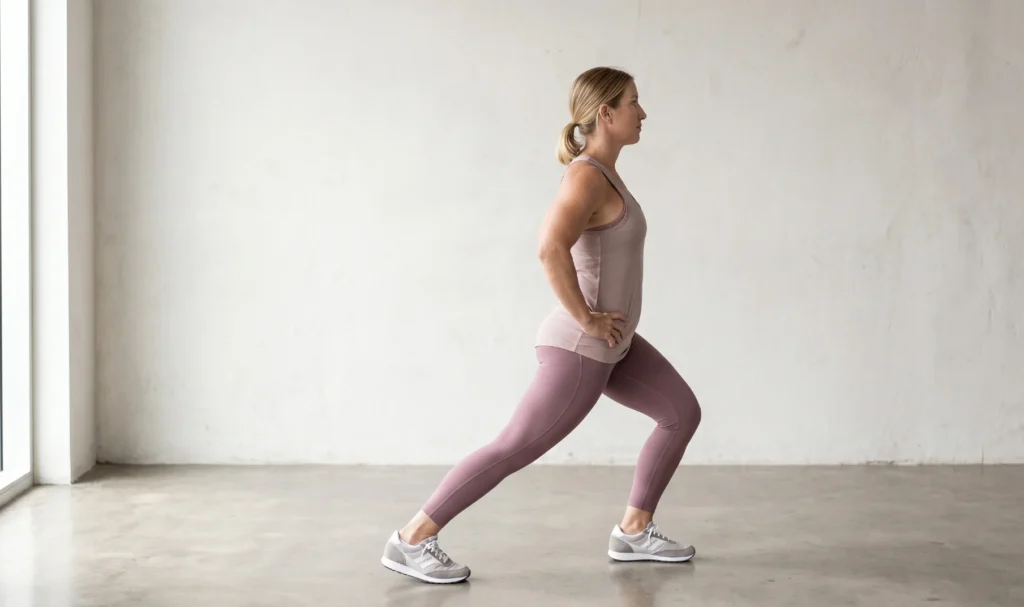
Your hip flexors are the muscles that lift your leg with each step you take. They also hold the pelvis in place. After hours of lying still, they tighten up and pull the pelvis slightly forward. That changes your posture, shortens your stride, and makes the whole pattern of how you walk less stable.
A short hip flexor stretch each morning can restore that alignment and make standing and walking feel noticeably easier.
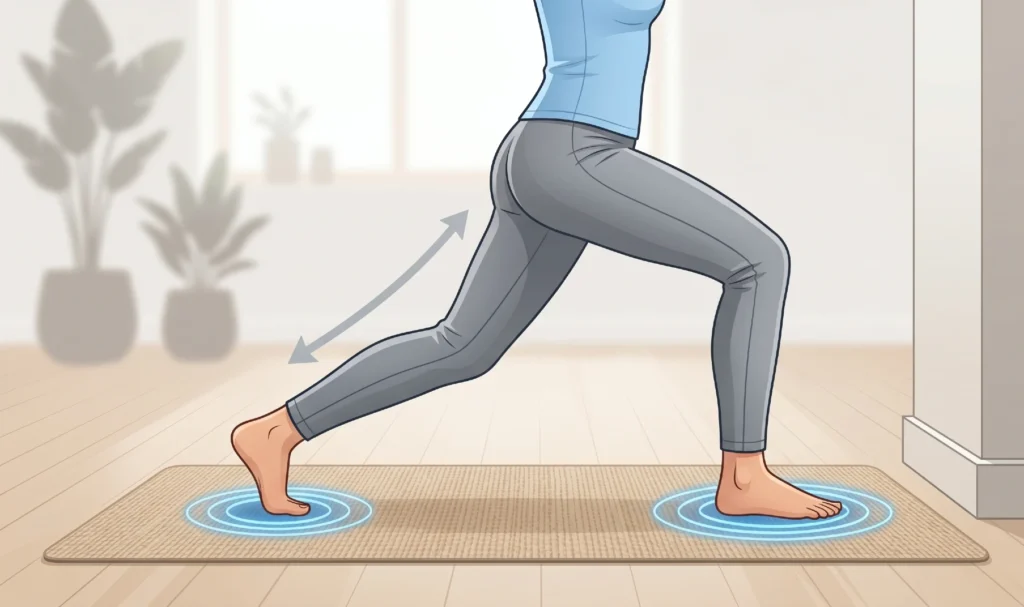
- Stand with your feet about hip-width apart.
- Step one foot back, keeping the toes of that foot pointing forward.
- Bend your front knee slightly while keeping the back leg straight.
- Rest your hands on your hips or on a wall for support.
- Hold for 20 to 30 seconds, then switch sides.
Safety note: Keep your chest lifted throughout. If you feel strain in your lower back, shorten the step behind you.
If standing balance is a concern, this stretch can also be done from a kneeling position on a padded mat. Place one knee on the floor and one foot forward. The stretch is the same, but the position is much more stable.
Stretch 4: The Seated Hamstring Stretch
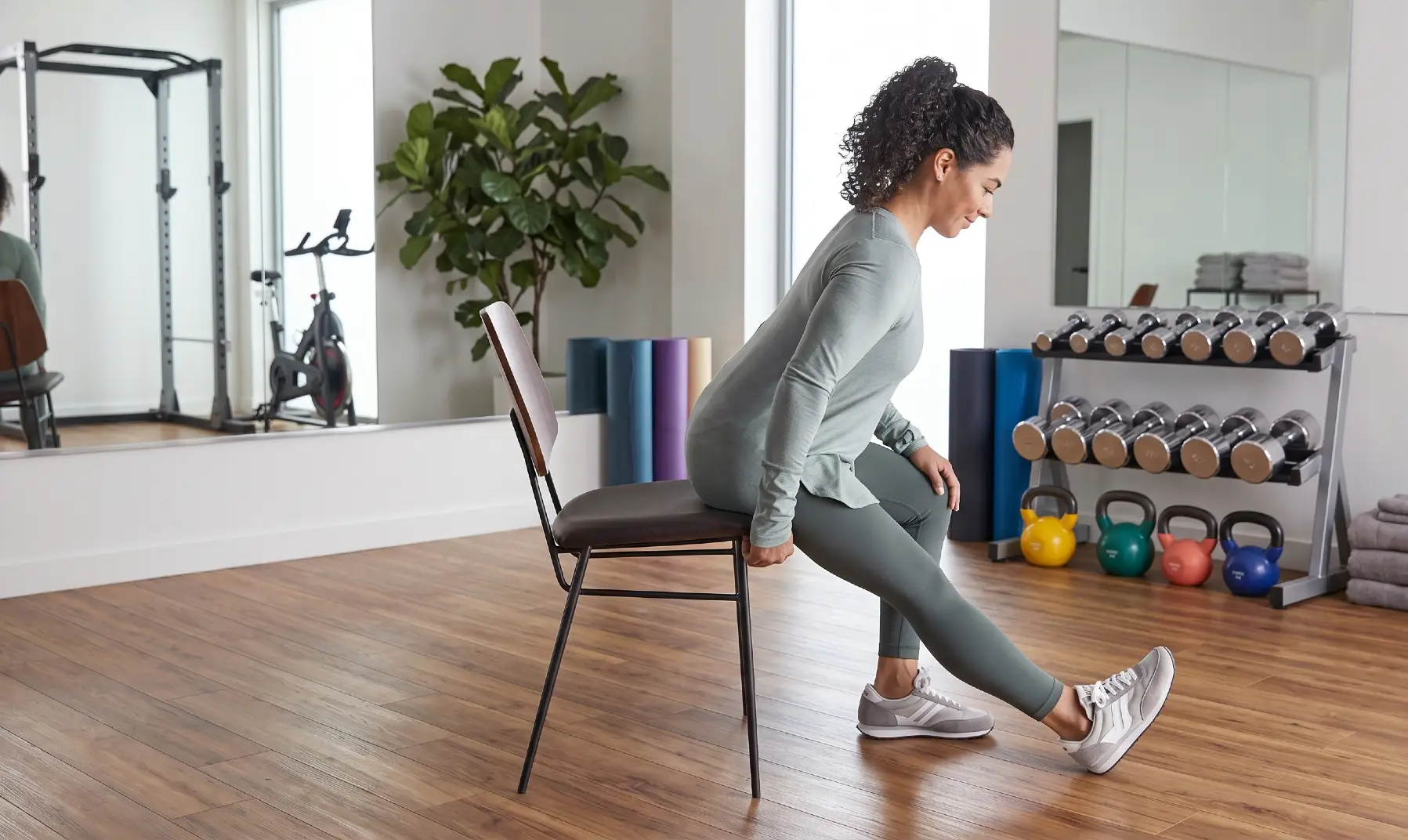
Tight hamstrings are one of the most common problems for older adults. They are also one of the most overlooked. When the hamstrings are too tight, they pull the pelvis backward. That changes how the spine sits, how the hips move, and how stable you feel during every step.
Tight hamstrings are also a major driver of lower back pain, which itself limits movement and increases fall risk.
This stretch targets all of that, and you do it sitting down.
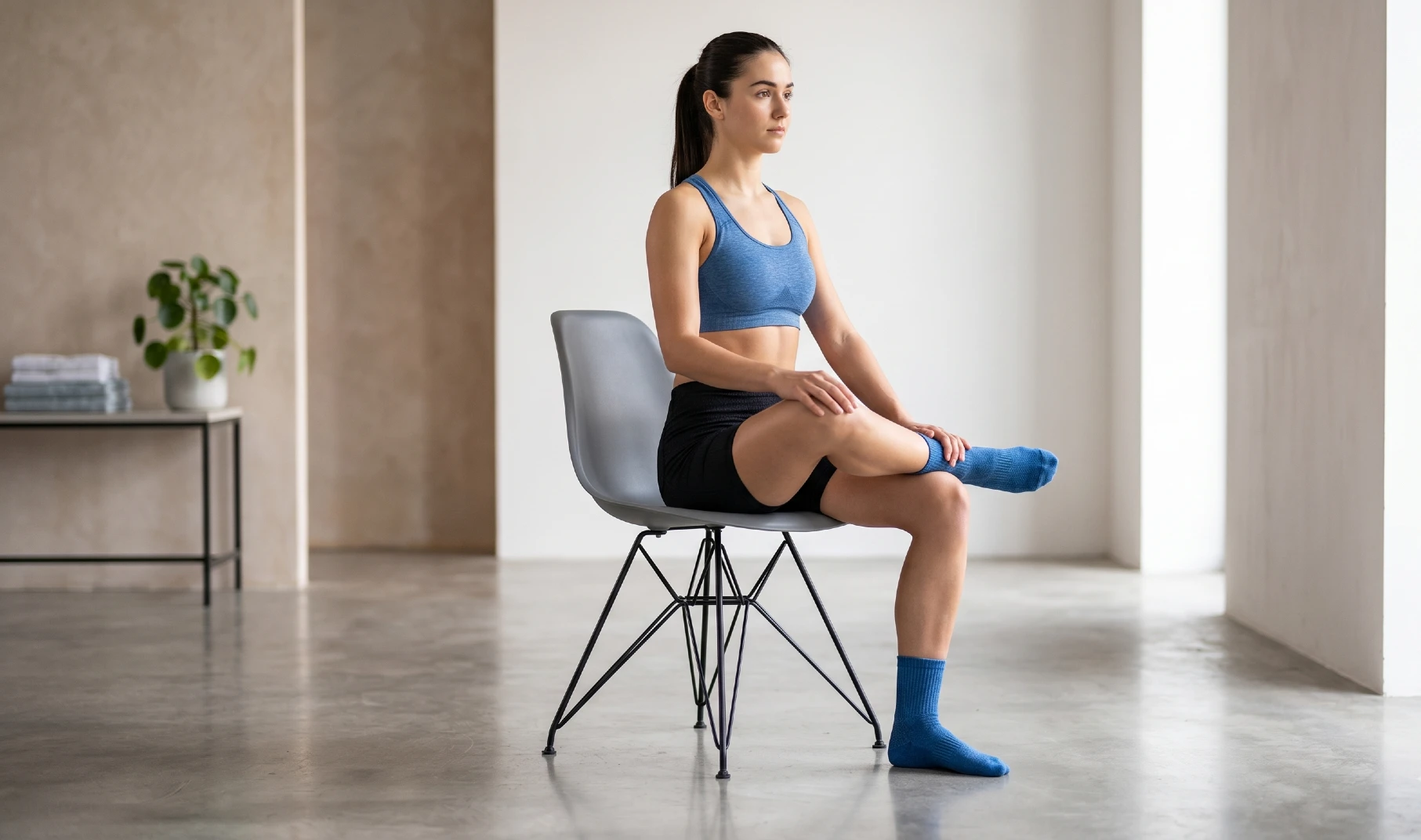
- Sit on the edge of a sturdy chair.
- Extend one leg straight out in front of you with your heel resting on the floor.
- Sit up tall, then lean forward slowly from the hips. Not the waist, from the hips.
- Stop when you feel a stretch along the back of the thigh.
- Hold for 20 to 30 seconds, then switch sides.
Safety note: Keep a slight bend in the knee if you feel discomfort directly behind the joint. The sensation should be in the muscle, not a sharp or pinching feeling.
How to Build This Into a Real Morning Habit
The full routine takes 10 to 15 minutes. That is about the same amount of time most people spend looking for their phone in the morning.
The key is building the routine in an order that makes sense. Start with the ankle circles while you are still sitting on the edge of the bed. That requires nothing from you except being awake. Once you stand up, move to the calf stretch at the wall, then the hip flexor stretch, and finish with the seated hamstring stretch before you sit down for breakfast.
That sequence matches what your body needs. You warm up the smallest joints first, then move to the larger muscle groups.
Research shows that exercise sessions of 30 minutes or less, done 3 times a week over 6 months or more, meaningfully improve balance function in older adults. But even shorter daily sessions build real results over time. One study found that consistent stretching 3 to 5 times a week improves flexibility by 15% within 6 weeks.
A few things that make the routine safer and easier to stick with:
Keep a sturdy chair within reach during any standing stretch. Wear shoes or non-slip socks on hard floors. Do not try to stretch in a dark room. If you are not sure where to start, start with the ankle circles only for the first week.
If you want to go further, pair the morning stretching routine with a short walk later in the day. Even 10 minutes. The combination builds compounding benefit for balance, muscle flexibility, and fall prevention over time.
Start with One Stretch Tomorrow Morning
Falls are the leading cause of injury-related death in older adults. But your body’s morning stiffness is something you can actually do something about.
These four stretches, the calf stretch, the ankle circles, the hip flexor stretch, and the hamstring stretch, take about 10 minutes and directly target the muscle groups most responsible for instability during everyday movement.
You do not need to do all four tomorrow. Try one. Start with the ankle circles from the edge of your bed, because they require nothing except waking up. Do them tomorrow. Do them the day after. Let that be enough for now.
Using morning stretches to improve balance is not about becoming an athlete. It is about keeping the life you already have. Moving through your home without fear. Reaching for something on a shelf without hesitation. Stepping outside on your own terms.
