
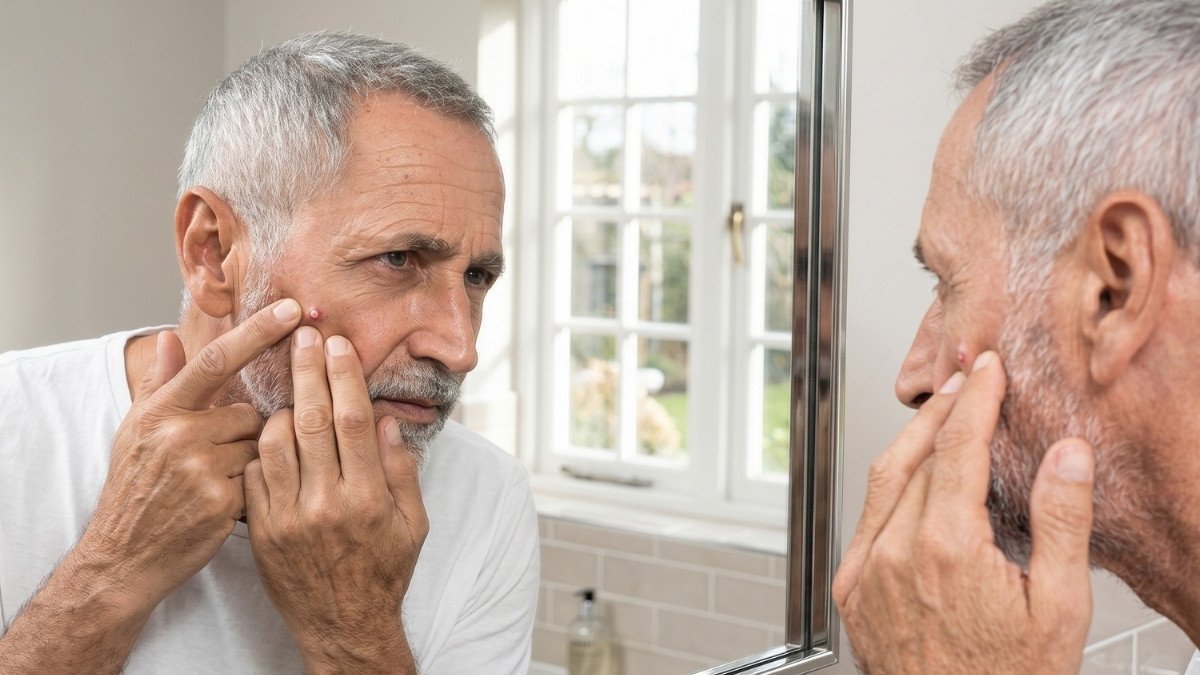
Accelerated Aging Triggers: 6 “Healthy” Snacks That Actually Break Down Skin Collagen
You swapped the candy bar for a granola bar, you drink fruit juice instead of soda, and your snack drawer looks like the inside of a health food store. So why does your skin keep aging faster than it should? The answer is not laziness or bad genes.
It is a biochemical process called glycation, where sugar molecules latch onto your skin’s collagen fibers and slowly destroy them from the inside out, forming what scientists call advanced glycation end products, or AGEs.
These are the real drivers of premature collagen loss and accelerated skin aging, and they hide inside snacks that break down collagen while wearing a health halo.
This article names all six of them, explains exactly what each one does to your skin at the cellular level, and tells you what to eat instead. No eliminating everything. Just six specific switches that actually matter.
Collagen Protector
Some “healthy” snacks secretly break down your skin’s collagen through hidden sugars and glycemic spikes. Can you spot the accelerated aging triggers and save your skin elasticity?
Game Over
Result message here.
Why Your Skin Is Aging Faster Than Your Birthday Suggests
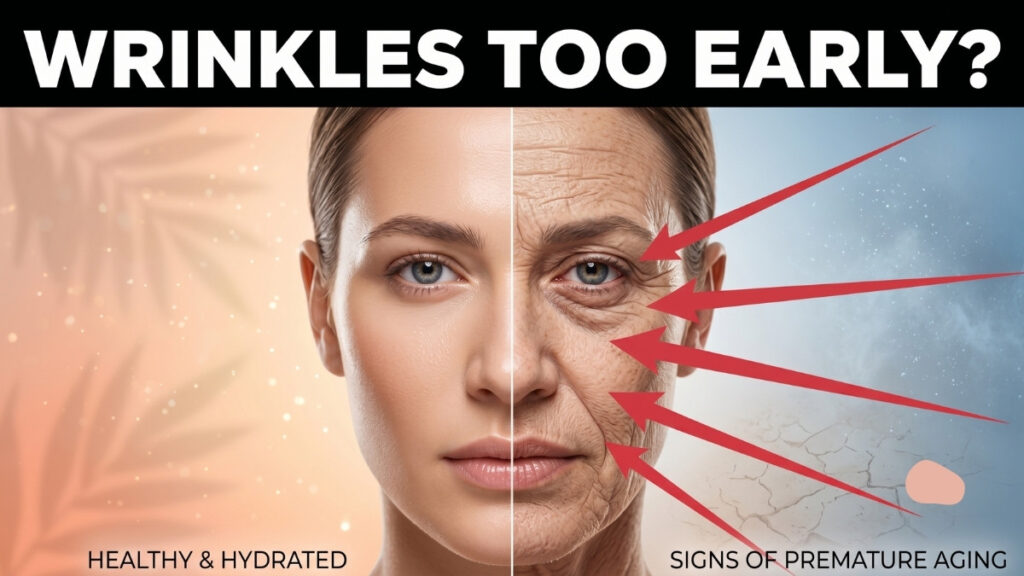
Your skin started losing collagen before you probably noticed anything. According to research published in the journal npj Aging, and confirmed across multiple dermatology reviews, you lose about 1 percent of your skin’s collagen every single year after your mid-twenties.
By age 35, you may have already lost between 10 and 15 percent. For women, the drop gets sharper after menopause, with some losing up to 30 percent of their skin collagen in just five years.
Collagen does not just run out like gas in a tank. A big piece of the visible aging you see, the deep lines, the sagging, the dull skin, comes from something called glycation. It sounds technical. The idea is simple.
When sugar enters your bloodstream, those sugar molecules attach themselves to collagen proteins. They grab on and warp the fibers, making them stiff and brittle. Collagen that has been damaged this way can no longer support your skin properly. Some skin doctors call the result “glycation face.” Think of it as your collagen getting gummed up from the inside.
The byproducts of this process are called Advanced Glycation End Products, or AGEs. Research published in Experimental Dermatology in 2024 (via Wiley Online Library) confirms that high-sugar and high-processed food diets increase systemic AGE levels in the body.
Those elevated AGEs then trigger enzymes that break down the collagen and elastin network in your skin. The stuff that makes skin firm and elastic gets dismantled, piece by piece.
Dr. Anil Rajani, founder and lead researcher at RajaniMD, puts it plainly: “A diet high in refined carbohydrates and added sugars damages collagen, which causes sagging and deep wrinkles.”
Dr. Thivi Maruthappu, a dermatologist and nutritionist who serves as a spokesperson for the British Skin Foundation, adds that excess refined sugar accumulates in the dermis and destroys collagen, leading to lost elasticity and wrinkles.
The worst part? The damage from glycation is largely permanent. Once collagen fibers get cross-linked by AGEs, they are extremely hard to restore. You cannot really fix what has already been done. What you can do is stop adding to the damage, and let your body focus on building fresh, healthy collagen.
Glycation is not just triggered by soda and candy. It is triggered by foods with health halos. Foods you probably bought on purpose because you were trying to do the right thing. That is exactly what the next section covers.
6 “Healthy” Snacks That Are Breaking Down Your Collagen Right Now
1. Flavored Yogurt Cups
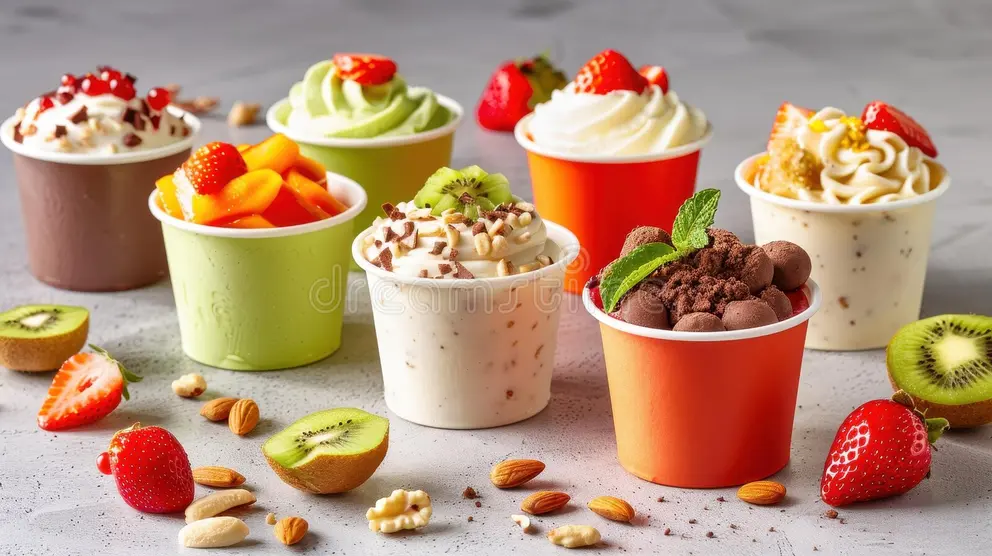
Why you think it is fine: It has probiotics. The label says “live cultures.” Some versions are marked “light” or “low fat.” It feels like a responsible choice.
The real problem: Flavored yogurt cups are one of the most sugar-heavy items in the entire snack aisle. In many cases, they contain more sugar than an actual candy bar. Dr. Anil Rajani specifically calls out flavored yogurt as a hidden sugar delivery vehicle, one that feeds glycation in a way most people never connect to their skin.
The added sugars in commercial flavored yogurts spike your blood sugar fast. That spike is exactly the condition that accelerates AGE formation. Each time you eat one of these cups, you are triggering a small burst of the process that cross-links and stiffens your collagen fibers.
Mass-market brands like Yoplait and Dannon Fruit on the Bottom often contain between 20 and 26 grams of sugar per cup. That is a significant glycation load, and most people eat these without a second thought because they associate yogurt with health.
The label red flag: Check the ingredient list. If any form of sugar appears in the first five ingredients, be careful. Words to watch for: cane sugar, high fructose corn syrup, fruit concentrate, and fructose syrup. The fruit “flavoring” is usually sugar, not actual fruit.
The smart swap: Plain, whole-milk Greek yogurt with a handful of fresh berries. Berries are low on the glycemic index and loaded with antioxidants that actively fight AGE formation. The fiber in whole berries slows how fast sugar enters your bloodstream. That means no spike, no glycation surge, and your collagen stays intact.
2. Store-Bought Granola Bars
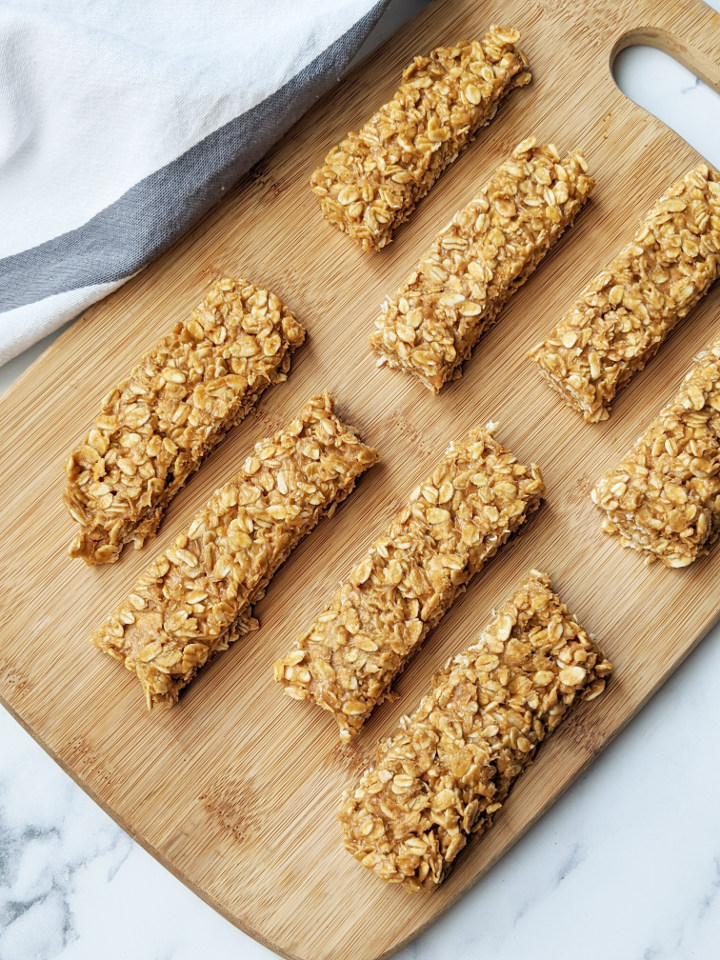
Why you think it is fine: They are made with oats. Some say “whole grain” on the wrapper. Many are marketed as “energy” bars or “natural” bars. They feel like a smart choice on a busy morning.
The real problem: Dr. Anil Rajani specifically names granola bars as something to re-examine when you are auditing your diet for hidden sugar. Most commercial granola bars are held together with honey, brown rice syrup, or cane sugar. All three behave like sugar in your bloodstream. Some bars contain 28 to 30 grams of sugar, which puts them right next to a standard candy bar.
Advanced Skin Therapeutics has flagged granola bars as a place where added sugars hide in plain sight, hidden behind ingredient names that sound wholesome. “Brown rice syrup” sounds like health food. It is not. It is sugar, and it raises blood glucose just like any other sugar does, triggering the same glycation process in your skin.
Stacking two or three of these sweeteners in one bar compounds the problem. A bar with honey, dextrose, and cane juice crystals in the ingredient list is not a light snack. It is a sugar vehicle dressed in oat clothing.
The label red flag: Look for brown rice syrup, honey, cane juice crystals, and dextrose. If two or three of these appear in the same bar, the sugar load is higher than the front label suggests.
The smart swap: A small handful of raw walnuts or almonds with a square of 70 percent or higher dark chocolate. This combination gives you protein, healthy fats, and flavonoids. Flavonoids have research behind them for fighting AGE formation. It is genuinely satisfying and your collagen will thank you for it.
3. Bottled Fruit Juice
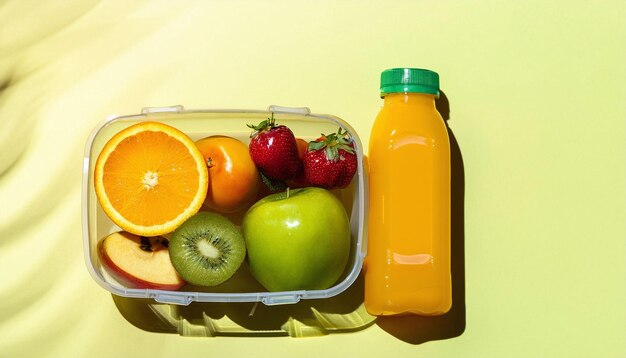
Why you think it is fine: It comes from fruit. The bottle says “100% juice” or “no added sugar.” Compared to soda, it sounds like an obvious upgrade.
The real problem: This is one of the most important distinctions in this entire article. Whole fruit and fruit juice are not the same thing. At all.
When fruit is juiced, the fiber is removed. That fiber is not just filler. It is the mechanism that slows sugar absorption into your bloodstream. Without fiber, juice is essentially concentrated fructose water. It hits your blood sugar fast, and that rapid spike is exactly the condition that drives glycation.
Dr. Anil Rajani specifically warns against fruit juice concentrate as one of the most damaging hidden sugars for collagen, placing it in the same category as high fructose corn syrup for how quickly and aggressively it produces AGEs. Research confirms that fructose produces AGEs faster than almost any other sugar type.
The numbers tell the story. A 12-ounce glass of apple juice contains about 36 grams of sugar. A 12-ounce glass of orange juice contains about 33 grams. Both hit your bloodstream much faster than an actual piece of fruit would, because there is zero fiber left to buffer the spike.
The label red flag: The phrase “100% juice” does not mean low sugar. It means no additional sweeteners were poured in on top of the already-concentrated natural sugar. “Fruit juice concentrate” in an ingredient list is effectively added sugar, regardless of how natural it sounds.
The smart swap: Eat the whole fruit. An apple, a handful of berries, or a sliced orange gives you the same vitamins and antioxidants, but with the fiber still attached. That fiber slows everything down, reduces the blood sugar spike, and dramatically cuts your glycation risk.
4. Rice Cakes

Why you think it is fine: They are low calorie. They are low fat. They are light. They are often recommended on weight-loss plans and in diet culture as a “free” snack.
The real problem: Low calorie is not the same as low glycemic. This is where rice cakes fool people.
The glycemic index, or GI, measures how fast a food spikes your blood sugar. Rice cakes score between 80 and 87 on that scale. Table sugar scores 65. That means rice cakes raise your blood sugar faster than plain sugar does. That rapid spike sends glucose flooding into your bloodstream, which is precisely the condition that accelerates glycation and AGE accumulation in your skin.
Dermatologist insights cited by hellowisp.com specifically list rice cakes as a “surprisingly high glycemic” food. People assume that because something is light and low in calories, it is safe. But your skin does not care about calories. It cares about how fast your blood sugar rises.
The label red flag: Flavored rice cakes, which come in varieties like caramel, white cheddar, and white chocolate, add actual sugar on top of an already high-GI base. Even the plain ones carry the spike risk.
The smart swap: Oat crackers with at least 3 grams of fiber per serving, topped with avocado or almond butter. The fat and fiber together blunt the glycemic response significantly. You get the crunch. You get the satisfaction. Your blood sugar stays steady.
5. Instant Oatmeal Packets
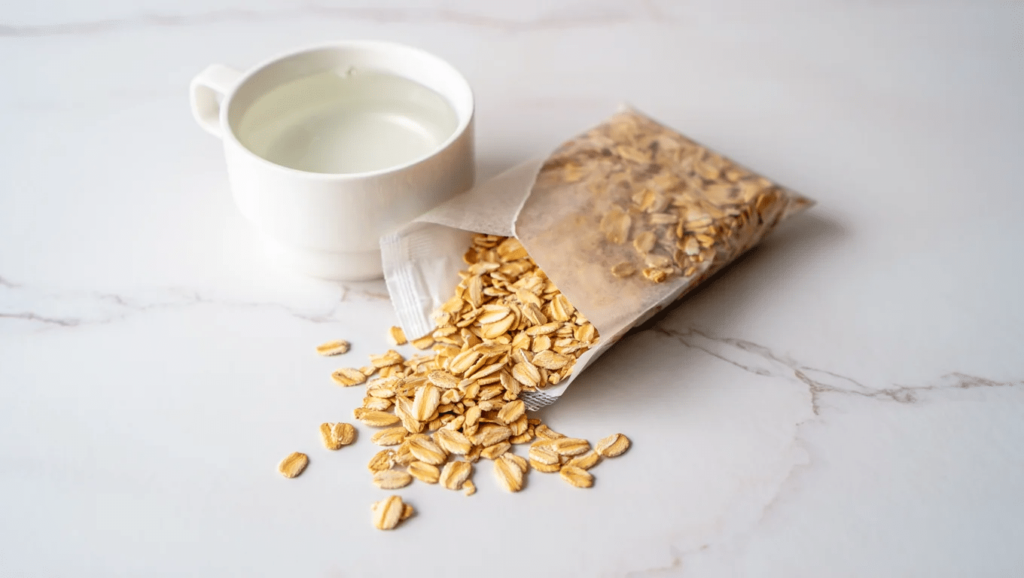
Why you think it is fine: Oats are whole grain. Oatmeal is one of the most frequently praised breakfast foods in nutrition culture. It sounds almost medicinal.
The real problem: Instant oatmeal packets are not the same product as rolled oats or steel-cut oats. The “instant” process grinds the oat down so far that your body digests it almost like a refined carbohydrate. It absorbs quickly. And then most brands pile flavoring sugar on top.
Quaker Instant Oatmeal in Maple and Brown Sugar contains 12 grams of added sugar per packet. Some flavored varieties go past 15 grams. Dr. Anil Rajani specifically calls out instant oatmeal as a product that deserves a second look when you are managing your diet’s impact on skin aging.
The glycemic index numbers here are revealing. Instant oats score around 83 on the GI scale. Rolled oats score around 55. Steel-cut oats score around 42. That gap is not trivial. It represents meaningfully different blood sugar outcomes, and meaningfully different levels of glycation risk. The processing changes everything.
The label red flag: Any flavored packet. The words “maple,” “brown sugar,” “apple cinnamon,” or “honey” in the product name are reliable signals that significant sugar has been added.
The smart swap: Rolled or steel-cut oats cooked with water. Add cinnamon, which research suggests helps regulate blood sugar. Top with a few walnuts and a small handful of blueberries. The result is genuinely filling and it supports your skin instead of working against it.
6. Store-Bought or Bottled Smoothies
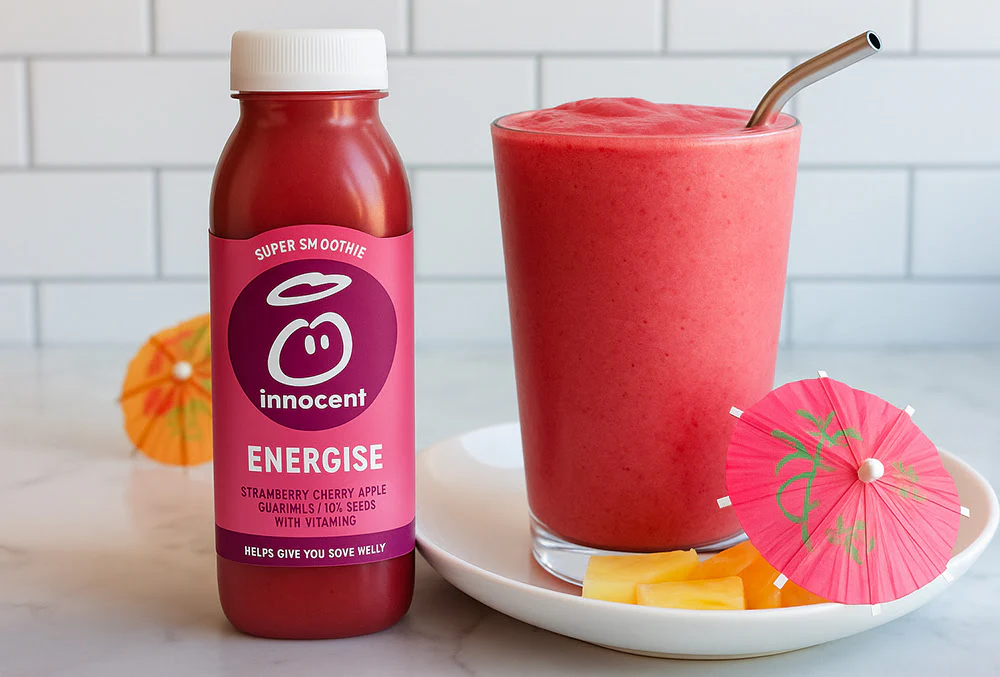
Why you think it is fine: They are made with fruit. Some have kale or spinach. They are often cold-pressed or labeled “raw.” The marketing is convincingly healthy.
The real problem: There are two major issues with pre-packaged smoothies, and both of them hurt your collagen directly.
First, the sugar. Most commercial smoothies combine multiple fruits, often with added fruit juice as the base liquid. The result is a concentrated fructose load with very little fiber to slow it down.
Blending breaks fiber down significantly compared to eating whole fruit, which means absorption is faster than you think. A single 15.2 oz Naked Juice Green Machine contains 53 grams of sugar. That is more than a can of Coca-Cola.
Second, and this one is less talked about: pasteurization. Most bottled smoothies are pasteurized, meaning they are heated to extend shelf life. That heat destroys heat-sensitive vitamins, and Vitamin C takes a significant hit. This matters a great deal for collagen, because Vitamin C is a required cofactor for collagen synthesis.
Without enough of it, your body literally cannot build new collagen effectively. So you are not just getting a sugar spike. You are also missing the exact vitamin your body needs to repair the damage.
The label red flag: If juice appears as the first ingredient, that means it makes up the majority of the bottle. A sugar count above 25 grams per serving is a signal to pause. And when a product says “pasteurized” while also making Vitamin C claims, be skeptical about how much of that vitamin actually survived the process.
The smart swap: Make your own at home. Frozen berries, plain Greek yogurt, a tablespoon of ground flaxseed, and unsweetened almond or oat milk. No juice base. Drink it right away. You keep the fiber, you keep the vitamins, and you avoid the glycation spike entirely.
What to Actually Eat to Protect Your Collagen (Without Overthinking It)

You do not need a new diet. You do not need to throw out everything in your kitchen. You just need a few habits that make the right choice easier than the wrong one.
Start with the two-label rule. Every time you pick up a packaged snack, check two things. First, look at the total sugar grams. Second, check whether sugar appears in the first four ingredients, under any of its many names. If both answers alarm you, put it back. That is it. That one habit will filter out most of the collagen-damaging snacks before they ever make it home.
Fiber is your collagen’s bodyguard. Foods that contain at least 3 to 5 grams of fiber per serving slow down how fast sugar enters your blood. Less spike means less glycation. Less glycation means less collagen damage. When in doubt, pair whatever you are eating with a fiber source.
Your new snack shortlist:
- A small handful of raw walnuts or almonds. Protein, healthy fats, zero glycation risk.
- Whole berries. Low-glycemic, full of antioxidants, and rich in Vitamin C for collagen production.
- Plain Greek yogurt with cinnamon and berries. Protein without the sugar bomb.
- Hummus with sliced vegetables like cucumber or bell pepper. Filling and fiber-rich.
- A square of 70 percent or higher dark chocolate. The flavonoids in dark chocolate actively fight AGE formation.
- A hard-boiled egg. Clean protein with no glycation trigger at all.
Do not forget Vitamin C. Dermatology researchers consistently show that Vitamin C is essential for your body to synthesize new collagen. Bell peppers, kiwi, and strawberries are all excellent sources.
Getting enough of it does not undo damage already done, but it does support your body’s ability to build fresh collagen going forward, which partially offsets the natural decline that happens every year.
A 2025 comprehensive review published in MDPI Antioxidants confirmed that dietary changes designed to reduce glycation can measurably improve skin elasticity, hydration, and dermal density. These are measurable, real outcomes. Not just theory.
One mindset shift worth holding onto. The goal is not perfection. Eating one granola bar will not age your skin. But reaching for these glycation-heavy snacks three or four times a day, every day, is a pattern your skin registers over months and years. You are not trying to eat perfectly. You are trying to shift the pattern.
You Now Know Something Most People Will Never Find Out
There is no guilt in this. You were eating what the packaging told you was healthy. That is completely reasonable. The information just was not there.
Glycation, AGEs, and collagen cross-linking are happening in the background every time you eat something that spikes your blood sugar. The six snacks in this article, flavored yogurt, granola bars, bottled juice, rice cakes, instant oatmeal, and store-bought smoothies, do not look like threats. That is exactly why they do so much damage quietly, over time.
Most snacks that break down collagen do not announce themselves. But now you know exactly where they are hiding.
Start with one swap this week. Just one. Read one label. Choose one alternative. The skin you will have in ten years is being shaped right now by choices that feel completely ordinary today. Make one of those choices different, starting now.