

The Blue Light Myth: Scientists Find The Real Reason Your Vision Is Fading After 40
Screens get blamed for a lot these days, and blurry near vision after 40 is one of the most common complaints pinned on blue light. The real story is less dramatic and far more predictable.
Inside your eye, a lens that once bent and flexed with ease starts stiffening with age, a process called presbyopia. It has nothing to do with how many hours you spend staring at a phone.
Major eye organizations have found little evidence that blue light from screens causes lasting vision damage at all. What is changing is mechanical, not electronic. Understanding the actual cause matters, because it points toward fixes that work instead of ones that just sound modern.
Why Your Vision After 40 is Fading
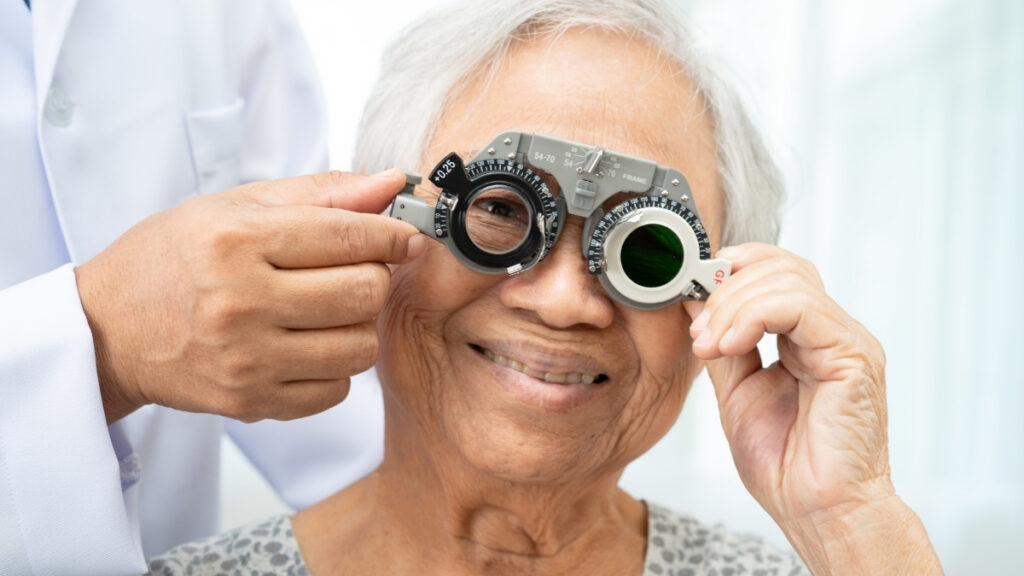
Have you noticed you need to hold your phone further away to read a text? This happens because the clear lens inside your eye is changing. When you are young, this lens is soft and flexible. It bends easily to help you focus on things up close.
As you get older, that lens starts to lose its stretch and begins to harden. This change makes it much harder for your eye to shift focus between distance and close-up tasks. Doctors call this natural aging process presbyopia. It is a normal part of life, but it can feel frustrating when it first starts.
The change in your vision after 40 can be quite dramatic over time. When you are a child, you can focus on things just 10 cm from your face. By the time you reach age 60, that focus point often moves to 100 cm away. That is why your arms eventually feel “too short” to hold a book.
What You Should Know About Your Changing Eyes
It happens to everyone. Even if you have had perfect vision your whole life, presbyopia will eventually affect you.
Lighting matters more. You might find you need a brighter lamp to read small print than you did a few years ago.
Headaches are a sign. Straining to see your screen or a menu can cause tired eyes and pain by the end of the day.
Reading glasses help. Simple “readers” or progressive lenses can do the work your eye lens can no longer do on its own.
It is not a disease. This is simply a physical change in the proteins of your lens, much like getting grey hair.
Vision Decline
MECHANISM:
The primary driver of vision decline after 40 is a progressive biomechanical failure known as presbyopia, not blue light.
Is the Blue Light Myth True?

Many people worry that the light from their phone or laptop is hurting their eyes. However, the truth is that screens are simply not bright enough to cause permanent damage. In fact, natural sunlight has 30 times more blue light than a typical computer screen.
The discomfort you feel after a long day of work is usually digital eye strain, not blue light damage. This happens because you blink less often when staring at a screen, which makes your eyes dry and tired. Because of this, the American Academy of Ophthalmology does not recommend blue light glasses for eye health.
To put it into perspective, think about your time outdoors. Spending just one hour outside on a cloudy day gives your eyes more blue light than sitting at a desk for a full workday. The blue light myth often leads people to buy expensive glasses that they might not actually need.
Simple Ways to Protect Your Eyes
Practice the 20-20-20 rule. Every 20 minutes, look at something 20 feet away for 20 seconds to give your eye muscles a break.
Blink on purpose. You naturally blink less at a screen, so try to blink more often to keep your eyes moist.
Use artificial tears. If your eyes feel gritty or dry, over-the-counter drops can provide quick relief without special lenses.
Adjust your screen. Keep your monitor about an arm's length away and slightly below eye level to reduce strain.
Check the sun. Wear UV-blocking sunglasses outside, as the sun is a much larger source of high-energy light than your iPad.
How to Fix Your Digital Eye Strain

Do your eyes feel itchy or tired after a long day at your desk? Most people do not realize they blink 66% less when they look at a computer screen. This lack of blinking means your eyes do not get the moisture they need to stay healthy.
When you stop blinking normally, your eyes become dry and your vision can get blurry. This often happens because you are staring too hard at the tiny pixels on your device. For those managing vision after 40, this dryness can make focusing on small text feel even more difficult.
Fixing this problem is easier than you might think. You can use the 20-20-20 rule to give your eyes a much-needed rest. Every 20 minutes, simply look at something 20 feet away for 20 seconds. This simple habit helps your eye muscles relax and reset.
Why Eye Care Matters for Everyone
It is a big deal. Unmanaged digital eye strain costs the economy about $151 billion every year in lost work and health costs.
Blink on purpose. Try to make a conscious effort to close your eyes fully while working to spread fresh tears.
Set a timer. If you forget to take breaks, use a phone app to remind you to look away from your screen.
Check your distance. Keep your monitor about an arm’s length away from your face to reduce the work your eyes have to do.
Match the light. Make sure your screen brightness is about the same as the light in the room to avoid extra glare.
3 Ways to Protect Your Sight Now

You can keep your eyes strong by choosing the right foods. Try adding more leafy greens like spinach and healthy fats like eggs to your meals. These foods are packed with Lutein, a nutrient that acts like internal sunglasses for your retina.
The way you set up your desk also makes a huge difference. You should place your computer monitor about 25 inches away from your face. This distance is about the length of your arm and helps reduce the effort your eyes use to focus. Keeping this gap can prevent the tired feeling of digital eye strain after a long day.
Finally, do not skip your yearly check-up with an eye doctor. Many vision problems do not have early warning signs or pain. A quick exam is the only way to catch silent issues before they cause permanent damage. This is especially important for maintaining clear vision after 40.
Proactive Tips for Better Eyesight
Try a morning light boost. Research shows that a 3-minute red light treatment in the morning may help boost the energy in your eye cells.
Add orange to your plate. Carrots and sweet potatoes are rich in Vitamin A, which helps you see better in low light or at night.
Look for the "UV 400" label. Always wear sunglasses that block 100% of UV rays when you are outdoors to prevent cloudy vision later in life.
Lower your screen height. Position your monitor so you are looking slightly downward. This keeps your eyelids lower and prevents your eyes from drying out.
Take "blink breaks." If you find yourself staring at a screen for hours, set a timer to remind yourself to close your eyes for a few seconds.
HEV Blue Light
THE PHYSICS:
Blue light has higher energy ($E = hc / \lambda$), but risk depends on intensity. Digital screens emit orders of magnitude too little to cause retinal death.
Your Eyes Are Not Broken—They Are Just Changing
It is easy to blame your phone or your laptop when your sight feels blurry. But the truth is simpler: your eyes are changing because you are getting older.
The hardening of your eye lens and the symptoms of vision after 40 are natural parts of life. While screens can make your eyes feel tired and dry, they aren't the reason you need reading glasses.
The best thing you can do for your health is to stop guessing and start checking. A professional can help you find the right solution, whether that is a simple pair of "readers" or a new desk setup.
Don't wait until you have a headache to take action. Schedule an eye exam this week to stay on top of your health and keep your vision clear for years to come.
Your Quick Eye Health Checklist
Book it: Call an eye doctor today for a check-up.
Rest them: Use the 20-20-20 rule during your next work block.
Move back: Check that your screen is at least 25 inches away.
Eat well: Grab some spinach or eggs for your next meal.
The Biochemical Clock: Why Vision Fades After 40

If blue light is not the cause of vision loss, the focus must shift to the internal aging of the eye.
Almost universally, individuals entering their 40s begin to notice difficulty with near-vision tasks, such as reading small print or using a mobile device. This is not a pathology in the traditional sense, but a progressive biomechanical failure known as presbyopia.
The Anatomy of Accommodative Failure
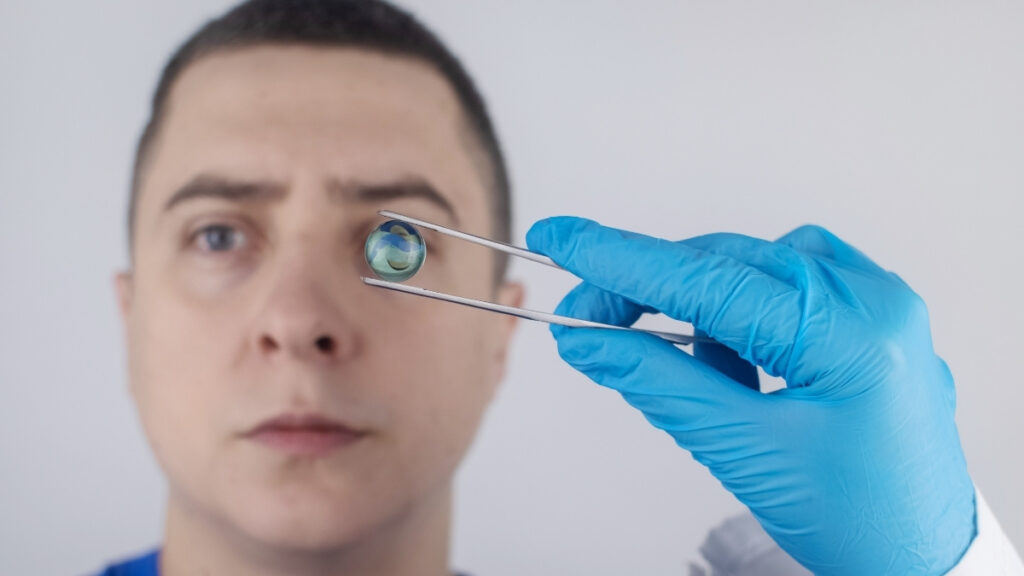
The eye focuses on close objects through the process of accommodation. This involves the crystalline lens—a clear, proteinaceous structure—and the ciliary muscle. In youth, the lens is exceptionally flexible.
To view a distant object, the ciliary muscle relaxes, the zonular fibers (supporting tendons) tighten, and the lens is pulled into a flat shape with low refractive power.
For near vision, the ciliary muscle contracts, which slackens the zonules and allows the elastic lens to "bulge" or thicken, increasing its refractive power to focus light from near objects onto the retina.
The decline of this system after age 40 is driven by three primary molecular events:
Lens Protein Hardening: Over decades, the proteins within the lens (crystallins) undergo post-translational modifications, including glycation and oxidation. These processes lead to protein cross-linking, which dramatically increases the rigidity of the lens tissue.
Continuous Fiber Growth: The lens is an unusual organ that continues to grow throughout life. New lens fibers are added to the periphery, compressing the older fibers in the center (the nucleus). This compaction further reduces the malleability of the lens core.
Zonular and Ciliary Inefficiency: Research suggests that as the lens becomes heavier and more rigid, the force transfer from the ciliary muscle through the zonules becomes less efficient. By age 60, the lens may have lost almost all ability to change shape, a state referred to as being completely non-accommodating.