
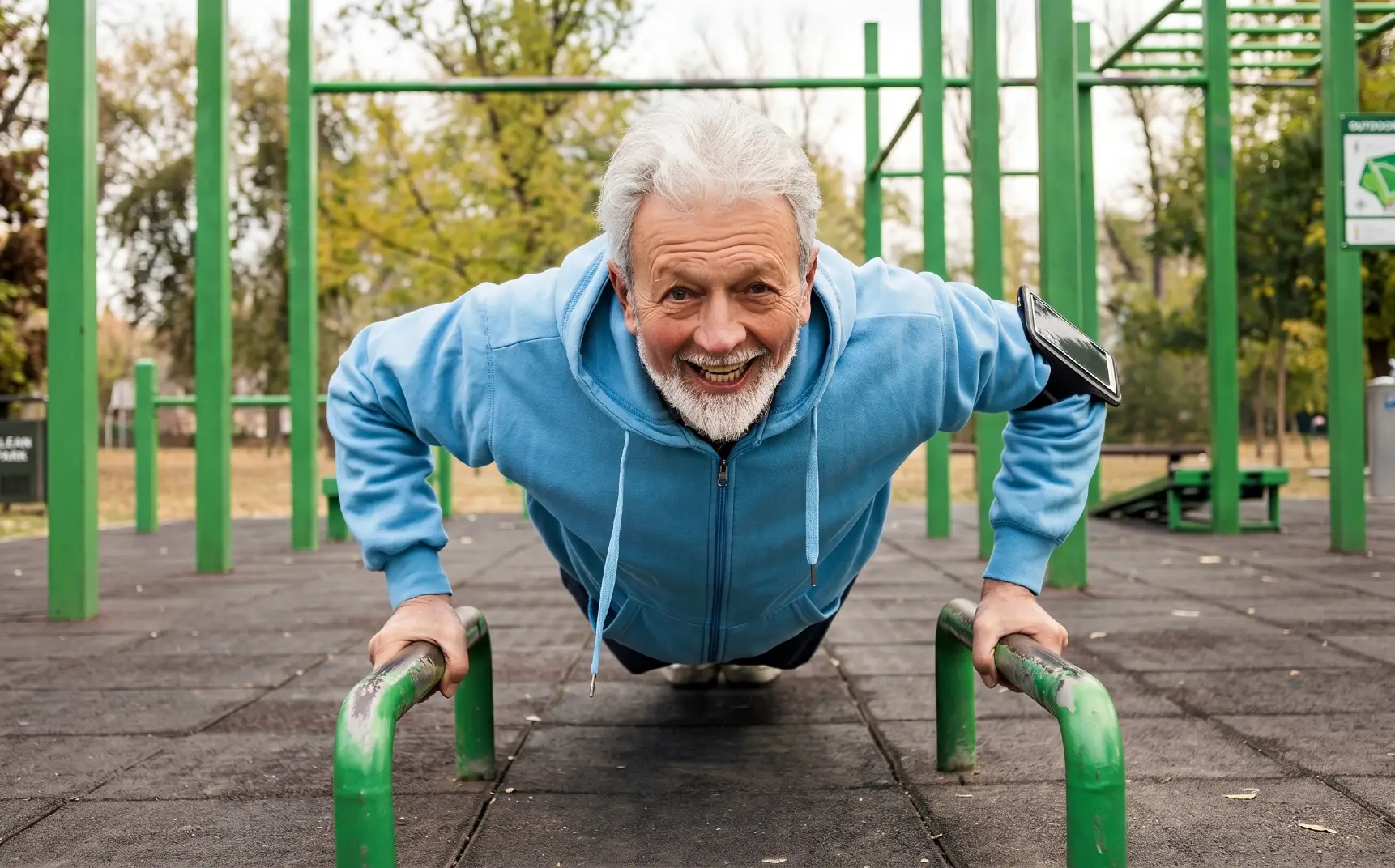
Most people are not failing at fitness because they are lazy. They are failing because no one told them that ten minutes is enough.
You know exercise matters. You even want to do it. But the full hour at the gym never happens. The commute eats the morning, the kids need dinner, and another day slips by. Over time, the back aches, posture slumps, and the body starts to feel older than it should. The real trap is the all-or-nothing belief.
This guide gives you five weight-free core routines you can do anywhere in ten minutes. Short, consistent, and backed by current research. Not a compromise. A smarter way to move.
🧘 Core Longevity Challenge
Building core strength over 50 requires consistency and proper muscle engagement, not heavy weights. Can you maintain optimal core tension for 15 seconds to unlock your daily micro-workout?
Target Achieved!
Great stability! You maintained perfect form.
Why Ten Minutes Is Not a Shortcut. It’s the Strategy.
Most people think a workout only counts if it lasts an hour. That belief keeps millions of people on the couch.
Scientists now have a name for short bursts of movement: exercise snacks. And they work. A 2025 review of 26 studies found that exercise snacks consistently improved blood sugar, insulin levels, blood pressure, and heart and lung fitness. People of all ages stuck with them. They were easy to do and easy to keep doing.
Short workouts also earnestly protect your heart. A 2022 study in Nature Medicine found that people who did three short bouts of vigorous activity per day, each lasting just one or two minutes, had a 48% to 49% lower risk of dying from cardiovascular disease compared to people who did nothing. That’s not a small difference. That’s nearly half the risk, gone, from a few minutes of movement a day.
Even your cardiorespiratory fitness responds to these short sessions. A review of 11 clinical trials found that exercise snacks lasting five minutes or less significantly improved heart and lung fitness. And 83% of participants were able to keep doing them on their own, without anyone watching or reminding them.
A sports scientist from the University of Portsmouth put it simply. Short workouts of 10 to 15 minutes can be very effective, offering real health benefits with a small time commitment.
Think about the person who says, “I’ll start Monday when I have more time.” That Monday never comes. Ten minutes today beats sixty minutes never, every single week of the year. You don’t need more time. You need a better strategy.
Why Your Core Is the First Thing Longevity Experts Protect

Your core is not just your abs. It’s your spine, your hips, your pelvis, your deep stabilizers. It’s the center of everything your body does.
When your core weakens, your body compensates. Your hips tilt. Your lower back takes over. Your knees absorb forces they were never meant to handle. Strength declines ripple outward from the center.
And the data is hard to ignore. Research published in the Journal of Cachexia, Sarcopenia and Muscle in 2024 showed that declines in muscle power are directly linked to higher risk of death in adults over 60. The core is your body’s central power station. Protect it and everything else holds up better.
Falls are one of the leading causes of serious injury and death in older adults. A review of 155 studies found that balance and strength training improves posture, gait stability, and how well your muscles and nerves work together. These are exactly the things that keep you on your feet.
Lower back pain makes things worse. A 14-year study tracking more than 1,200 people found that those with lower back pain were twice as likely to fall as those without it. Twice as likely. Core training directly targets this risk.
Variety also matters. A Harvard study following 111,000 health professionals over 30 years found that mixing strength training with aerobic exercise had the best impact on longevity, regardless of how long each session lasted.
Dr. Stuart McGill, a Distinguished Professor Emeritus of Spine Biomechanics at the University of Waterloo and the world’s leading expert on back mechanics, put it this way: “The key to long life is don’t mess up your joints. You can train hard and build muscle, but muscle is adaptive and resilient. Joints are not.”
And here’s something for those who think core training is only for athletes. A 2025 study from Aristotle University of Thessaloniki found that an eight-week core training program produced real gains in muscle size, balance, and neuromuscular control in everyday non-athletic adults. This is for everyone.
You are not training your core to avoid death. You are training it to keep doing everything you love. Hiking with your kids. Carrying groceries. Sitting without pain. Playing with your grandchildren. That’s the real goal.
The 5 Ten-Minute Core Routines
These are not random exercises strung together. Each routine targets a specific real-world need: protecting your spine, improving balance, building anti-rotation strength, and working the deep stabilizers that most workouts miss entirely. No weights. No gym. No excuses.
Routine 1: The McGill Foundation (For Spine Protection)
Best for: Anyone with a history of back pain, desk workers, beginners.
Dr. Stuart McGill’s research showed that traditional core exercises like sit-ups and crunches can actually do more harm than good for people with back pain. They place too much stress on the lumbar spine. His “Big 3” approach focuses on stability instead of movement, and the science behind it is rock solid.
The Exercises:
Modified Curl-Up – 3 sets of 8 reps. Lie on your back with your hands tucked under your lower spine. Bend one knee, keep the other leg flat. Lift your head and shoulders just slightly off the ground. This is not a crunch. The movement is tiny and controlled.
Bird Dog – 3 sets of 6 reps per side. Hold each rep for 8 seconds. Start on your hands and knees. Brace your core like someone is about to poke you in the stomach. Extend your opposite arm and leg at the same time. The challenge is not the movement.
It’s keeping your hips level while your limbs extend. Research backs this one up strongly. The bird dog activates deep core muscles, strengthens the whole body, and helps stabilize the spine.
Side Plank – 3 sets of 20 seconds per side. Rest on your forearm. Keep your body in a straight line from head to feet. Hold still.
Rest 30 seconds between exercises. Total time: about 10 minutes.
Routine 2: The Dead Bug Circuit (For Deep Core Activation)
Best for: People who sit more than 6 hours a day, anyone who wants to strengthen the deeper abs.
The dead bug is one of the most underrated core exercises most people have never tried. It trains your core to resist extension, which is exactly what your spine needs all day when you’re sitting, standing, and moving through life.
The Exercises:
Dead Bug (Standard) – 3 sets of 10 alternating reps. Lie on your back with your arms pointed at the ceiling and your knees bent at 90 degrees directly above your hips. Lower one arm and the opposite leg toward the floor at the same time. Return slowly. Repeat on the other side.
Dead Bug with Breath Hold – 2 sets of 6 reps. Same movement, but exhale completely before you lower the limbs. Hold that exhale through the movement. This activates your deepest core muscles automatically.
Hollow Body Hold – 2 sets of 20 seconds. Lie on your back. Press your lower back flat to the floor. Lift your legs and shoulders slightly. Hold that position.
Key coaching cue: Press your lower back flat to the floor the entire time. If your back lifts even slightly, reduce how far your limbs go. The contact point is the signal. Keep it.
Rest 30 seconds between sets. Total time: 10 minutes.
Routine 3: The Plank Ladder (For Endurance and Anti-Rotation)
Best for: Building the kind of core endurance that supports every move you make during the day.
The Ladder (One Round):
Standard Plank – 20 seconds
Shoulder Taps – 10 per side. From a high plank, lift one hand and tap the opposite shoulder. Your hips should not rotate at all. Your abs are what hold them still. This is harder than it looks and more useful than it seems.
Side Plank Left – 20 seconds
Side Plank Right – 20 seconds
Plank with Hip Dips – 10 reps. From a forearm plank, slowly lower one hip toward the floor, then the other. Control the movement both ways.
Repeat the full ladder 2 to 3 times. Rest 30 seconds between rounds.
Routine 4: The Standing Core Session (No Floor Needed)
Best for: Office workers, people traveling, anyone who can’t get on the floor.
Not every core routine needs a mat. Standing core work trains balance and functional stability in the positions you actually use all day.
The Exercises:
Standing Oblique Crunch – 12 per side. Stand with feet hip-width apart. Bring one elbow down toward the same-side knee while lifting that knee slightly.
Standing Wood Chop – 10 per side. Clasp your hands together. Swing them diagonally from high to low, like chopping wood, rotating through your torso. No weight needed. Your own arms provide enough resistance.
Single-Leg Balance Hold – 30 seconds each side. Stand on one leg. Keep your core braced. If it’s easy, close your eyes.
Standing Knee Drive to Opposite Elbow – 12 per side. Drive one knee up and across your body toward the opposite elbow. Controlled and deliberate.
Wall Sit with Core Braced – 30 seconds. Back against the wall, thighs parallel to the floor. Hold and breathe.
Do 2 rounds with 30 seconds rest. Total time: 10 minutes.
Coaching cue: Before every exercise, take one breath in, brace your abdomen like someone is about to poke it, and hold that tension throughout the movement. That’s the difference between doing an exercise and actually doing it right.
Routine 5: The Pilates-Inspired Flow (For Mobility and Strength Together)
Pilates Flow Timer
Best for: People who feel stiff, anyone over 50, recovery days.
Research on Pilates-style movement found meaningful improvements in pain management, posture, and functional mobility when done two to three times per week over 8 to 12 weeks. This routine gives you strength and recovery at the same time.
The Exercises:
Cat-Cow – 10 slow reps. On your hands and knees. Breathe in as your spine drops, breathe out as it rounds toward the ceiling. Let the breath lead the movement.
Glute Bridge Hold – 3 sets of 20 seconds. Lie on your back, knees bent, feet flat. Press through your heels and lift your hips. Squeeze your glutes at the top and hold.
Supine Leg Lowering – 10 reps. Lie on your back. Raise both legs toward the ceiling. Slowly lower one leg toward the floor while keeping your lower back pressed flat. Return. Switch sides.
Child’s Pose to Superman Flow – 8 reps. Start in child’s pose. Slide forward into a prone position with arms extended overhead. Lift your arms, chest, and legs off the floor. Hold briefly. Return to child’s pose.
Thread the Needle – 6 reps per side. On your hands and knees. Take one arm and slide it along the floor underneath your body, rotating your upper back. Follow your hand with your eyes. Return.
No rush. Move slowly. This one is recovery and strength together.
How to Actually Make This a Habit
Most habit advice fails because the starting dose is too high. Five days a week sounds good on Sunday night. It feels impossible by Wednesday.
Start with two sessions a week. Not five. Two. Do that for four weeks. That’s what builds the pattern in your brain. Once it feels automatic, add a third day.
Link the workout to something you already do. Not willpower. Habits stack better than goals. Do your ten minutes before your morning coffee. Right after your lunch break. Before your shower. The trigger makes it automatic. Without a trigger, it depends on how you feel. And some days you won’t feel like it.
Use a timer for some exercises instead of counting reps. A free phone timer removes one more mental obstacle between you and starting.
After each session, ask yourself one question: do I feel better than I did before I started? The answer will almost always be yes. That feeling is the feedback loop that keeps you going long-term. Track that. Not the reps. Not the performance.
Remember: 83% of people in real exercise snack research stuck with the program without anyone supervising them. Consistency at a lower dose outperforms perfection that never shows up.
Here’s a simple plan to start:
Weeks 1 to 2: Routine 1, twice per week. Monday and Thursday. Weeks 3 to 4: Add Routine 2. Three days total. Week 5 and beyond: Mix and match based on how you feel and how much time you have.
Common Mistakes That Make These Workouts Less Effective
Rushing through reps. Speed is the enemy here. A sloppy bird dog done in two seconds trains nothing useful. A controlled bird dog held for eight seconds teaches your nervous system something real. Slow down.
Skipping the breathing cue. Exhaling during the hard part of a movement activates your deep core muscles automatically. Most people hold their breath and wonder why the exercise feels pointless. Breathe on purpose.
Treating it like cardio. These routines are not meant to make you gasp. They are meant to make you stable. If you’re racing through them to feel “worked,” you’re missing the point. Slow down and feel the muscle doing the job.
Only doing crunches and planks. Both have their place. But a core that can only flex and hold is a limited core. Rotate through the routines in this article. Over a week, you want to train anti-extension, anti-rotation, and anti-lateral-flexion. That’s what a complete core looks like.
Expecting visible results in two weeks. Core training for longevity is not aesthetic training. The payoff is moving pain-free at 75, not a six-pack at 35. Get the goal right and you’ll stay consistent for years, not weeks.
Start With One Routine. Just One.
Ten minutes is not a compromise. It’s a strategy that works, backed by real research, repeated across dozens of studies.
Your core is the foundation of everything your body does. Protecting it is one of the most direct things you can do for a longer, more functional life. Five routines, no equipment, no gym required.
Pick one routine from this article. Not five. One. Do it tomorrow. Then do it again three days later. That’s the whole plan to start. Stack from there.
These micro-workouts for longevity are not a hack. They are how consistent people stay strong without making exercise the enemy of their real life.
