

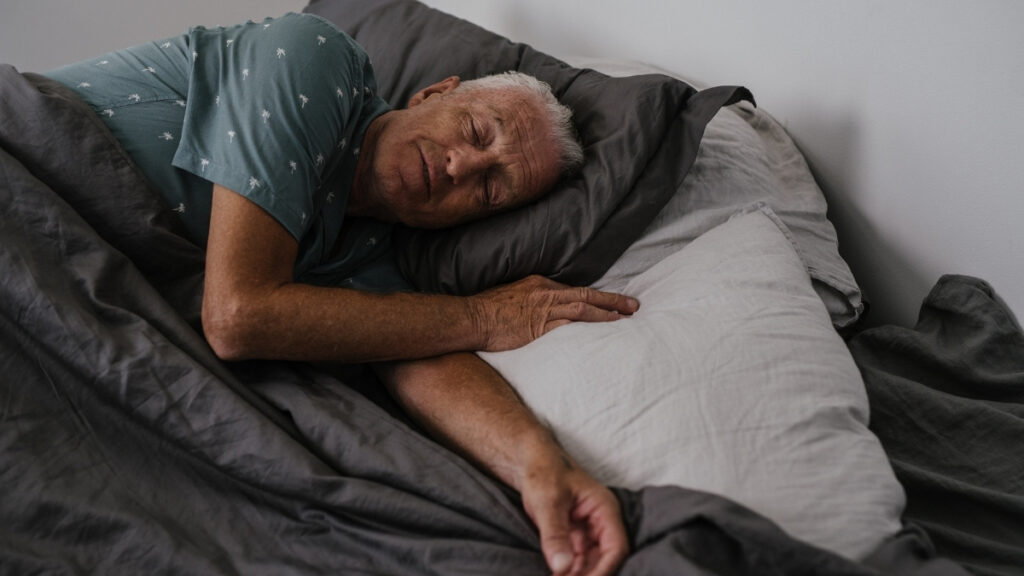
Melatonin production drops as the brain’s pineal gland shrinks with age, and that single change explains a lot about why sleep gets lighter and more broken after 60.
Up to half of adults over 60 report insomnia symptoms, and the deep sleep they’re losing does more than rest the body, it triggers growth hormone release, immune repair, and the brain’s overnight cleanup of waste proteins linked to cognitive decline.
Food shifts this chemistry more than most sleep advice admits. Tart cherry juice contains actual melatonin. Kiwi delivers serotonin through the gut-brain connection.
Walnuts and Greek yogurt with banana supply the tryptophan, calcium, and magnesium that whole process depends on. Four specific snacks below work with that biology instead of against it.
Sleep Repair Simulator
Select exactly 4 snacks to build the perfect evening routine. Maximize your cellular repair and deep sleep potential!
Why Sleep Gets Harder After 60 (And Why What You Eat Before Bed Actually Matters)
It does not talk about biology. It tells you to put your phone down, keep your room cool, go to bed at the same time every night. And yes, those things help. But they do not explain why sleep changes so much as you get older. And they definitely do not tell you how much food plays a role.
Here is what most sleep advice skips.
If you are waking up more often than you used to, lying awake at 3 a.m. for no reason, or getting out of bed feeling like you barely rested, you are not imagining it. You are not doing something wrong. This is biology.
Your pineal gland, a small structure in your brain, produces melatonin. Melatonin is the hormone that tells your body it is time to sleep. As you get older, the pineal gland shrinks and produces less melatonin at night. Less melatonin means a weaker sleep signal.
And a weaker sleep signal means you fall asleep more slowly, wake up more easily, and spend less time in the deep stages of sleep that actually restore your body.
According to the National Council on Aging, up to 50% of adults over 60 report insomnia symptoms. A 2019 review cited by the American Academy of Sleep Medicine puts that number even higher for people 65 and older, as high as 75%. And roughly 30% of older adults sleep less than the recommended 7 hours per night, according to a 2022 BMC Public Health study.
Those are not small numbers. That is most people in your age group. Now here is the part that does not get talked about enough. The deep sleep you are losing is not just rest. It is repair.
Deep sleep, called slow-wave sleep or NREM Stage 3, is when your body releases human growth hormone. This hormone drives cellular repair, tissue recovery, and muscle maintenance overnight. Research published in Frontiers in Sleep in 2024 confirmed a strong link between slow-wave sleep and growth hormone secretion.
A 2025 paper in Frontiers in Aging added that deep NREM sleep actively drives immune function and cellular autophagy, which is your body’s built-in cleanup process. And a 2025 study published in Cell identified the specific neuroendocrine circuit connecting growth hormone release to the moment slow-wave sleep begins.
There is also something called the glymphatic system. Think of it as your brain’s overnight cleaning crew. It runs primarily during deep sleep and flushes out metabolic waste, including proteins like tau and amyloid-beta that are linked to cognitive decline. When your sleep is shallow or broken, that crew barely shows up.
Certain nutrients directly affect how much melatonin, serotonin, and tryptophan your brain can access at night. Tryptophan is an amino acid your body uses to make serotonin, and serotonin is what eventually becomes melatonin. When you eat the right foods one to two hours before bed, you are changing the chemical environment your brain works in when it tries to shift into sleep mode.
That is not a small thing. And it is something you can actually do something about starting tonight. The good news is that you can give your brain and body a better starting point each night. And it starts about 60 to 90 minutes before you turn off the lights.
Snack 1: Tart Cherry Juice
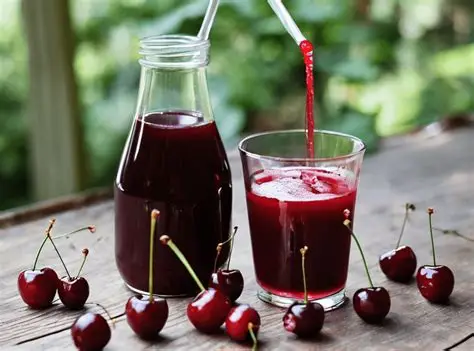
The One Drink That Actually Contains Melatonin
Most foods do not contain melatonin. Your body makes it, using raw materials from what you eat. But tart cherries, specifically the Montmorency variety, are one of the very few natural foods that contain measurable amounts of melatonin on their own. That makes them genuinely different from most other sleep advice you will come across.
A randomized, double-blind, placebo-controlled crossover study tested tart cherry juice on older adults with insomnia. The results were meaningful. Participants who drank tart cherry juice gained an average of 84 extra minutes of total sleep per night. Their sleep efficiency improved from 77% to 84%.
On top of that, tart cherries contain tryptophan, which feeds your melatonin production from the inside, and anti-inflammatory compounds that may reduce the background inflammation that makes sleep harder.
And the scientific community is still actively studying this. As of January 2025, a clinical trial called CherryZZZ (NCT06786494) is currently recruiting adults 65 and older who report insomnia in the Boston area. The trial uses 240 ml of tart cherry juice twice daily. When researchers are still running trials on a food, it tells you they believe the signal is real.
How to use it:
Drink 8 ounces (240 ml) of 100% tart cherry juice about one hour before bed. Choose unsweetened juice, not from concentrate. Look for labels that say “Montmorency tart cherry” and “no added sugar.” If you buy a concentrate, mix one ounce of concentrate with seven ounces of water.
Do not pair it with sugary snacks. Sugar can blunt the melatonin effect you are trying to get.
One honest note: Tart cherry juice contains natural sugars. If you are managing blood sugar, stick to the 8-ounce portion and choose unsweetened varieties. It is not a problem for most people in this amount. But it is worth knowing.
Snack 2: Two Kiwis an Hour Before Bed
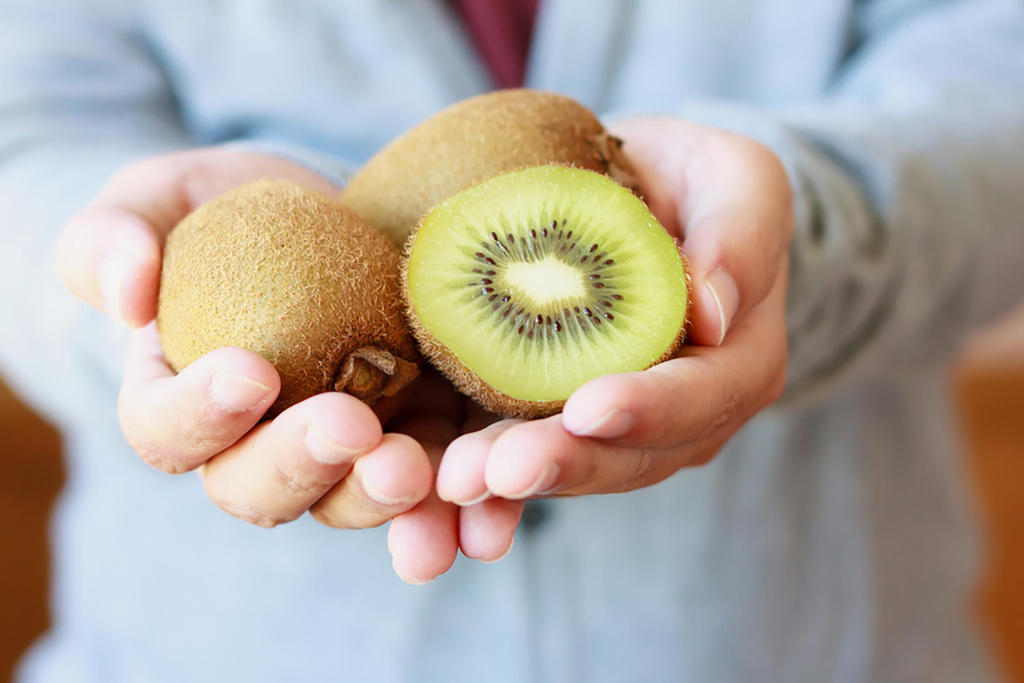
The Small Fruit With a Surprisingly Direct Path to Better Sleep
This one surprises people. Kiwi does not sound like a sleep food. But the research on kiwi and sleep is some of the most specific you will find for any whole fruit.
A peer-reviewed study out of Taiwan, published in the Asia Pacific Journal of Clinical Nutrition, had participants eat two kiwis one hour before bedtime every night for four weeks. At the end of the study, participants fell asleep faster, slept longer, and slept more efficiently. This was a small study, but it used a concrete and repeatable protocol. And the results were consistent.
Kiwi contains serotonin. Serotonin is the chemical your brain uses to produce melatonin. Most foods that contain serotonin cannot get it directly into your brain because of something called the blood-brain barrier.
But kiwi appears to work through the gut-brain axis, the connection between your digestive system and your nervous system, which gives the serotonin in kiwi a plausible path to actually influence your brain chemistry at night.
A follow-up crossover study published in Frontiers in Nutrition in March 2023 tested this more directly. Researchers measured urinary serotonin and melatonin metabolites after participants ate kiwi. They found measurable changes in sleep-related hormones. That kind of biological confirmation matters.
Kiwi also gives you vitamin C and folate. Both support immune function, which ties back to the immune benefits of deep sleep mentioned earlier. And for older adults who may have dental issues or difficulty chewing harder foods, kiwi is easy to eat. Soft, easy to digest, and not hard on your stomach before bed.
How to use it:
Eat two medium green kiwis with the skin removed, either whole or sliced, 60 minutes before bed. Not right before lying down. Give your digestion a head start. You can add them to a small serving of plain Greek yogurt if you want a more filling snack.
One thing worth knowing: The protocol in the published research is specific. Two kiwis. One hour before bed. Every night. Consistency matters more than quantity here. It is not a one-night fix. Give it at least two weeks to see what it does for you.
Snack 3: A Small Handful of Walnuts
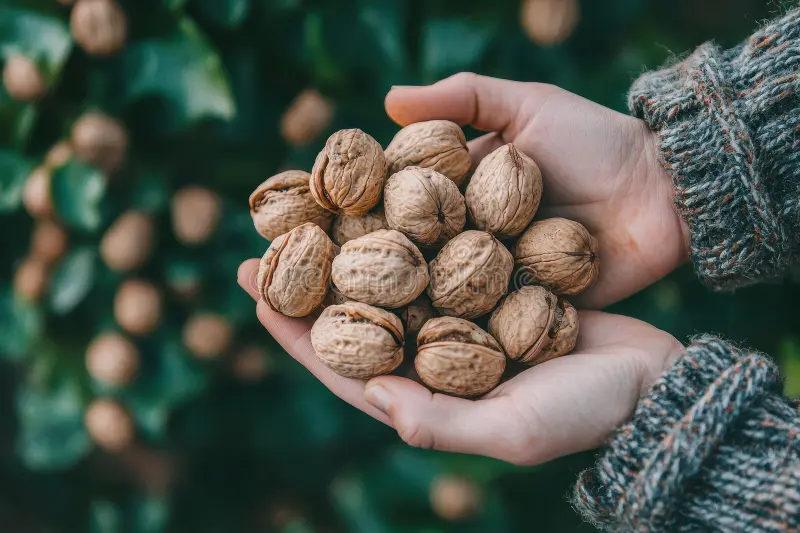
One of the Only Whole Foods With Multiple Sleep Pathways Working at Once
Walnuts are not just a snack. They are one of the most nutrient-dense sleep-supportive foods that exist. And the reason they work is not one single thing. It is several things working at the same time.
Walnuts contain melatonin. They also contain tryptophan, magnesium, and omega-3 fatty acids. That combination, in one small handful of food, covers several different angles of sleep support simultaneously.
A randomized crossover trial published in Food and Function in September 2025, supported by the California Walnuts research team, tested walnut consumption on sleep. Researchers measured urinary 6-sulfatoxymelatonin, which is a direct biomarker that shows melatonin activity in your body. Participants who ate walnuts daily showed increased levels of this marker. They also reported improved sleep quality.
One specific detail from the research stands out. The tryptophan-to-competing amino acid ratio in walnuts is 0.058. That number matters because tryptophan has to compete with other amino acids to cross the blood-brain barrier. A higher ratio means tryptophan has a better chance of actually getting through and converting into melatonin. Walnuts have a favorable ratio compared to many other tryptophan-containing foods.
The magnesium in walnuts does something separate. A 2025 randomized, double-blind, placebo-controlled trial run out of Leibniz University Hannover and published in Natural Science of Sleep in August 2025 tested magnesium bisglycinate in 155 adults with poor sleep.
After four weeks, those taking magnesium showed significantly improved insomnia scores compared to the placebo group. Walnuts are a real dietary source of magnesium, not a supplement, but a food that delivers it naturally.
An ongoing clinical trial (NCT06430086) is currently enrolling middle-aged and older adults with sleep complaints. Researchers are testing walnuts against a high-carbohydrate, high-sugar control food over four-day periods and measuring EEG sleep data alongside melatonin biomarkers. That is current, serious science.
How to use it:
Eat about one ounce of walnuts, which is roughly 14 walnut halves, one to one-and-a-half hours before bed. Choose raw or lightly roasted, unsalted walnuts. Skip the trail mix versions with added salt, sugar, or candy coating. Those additions work against what you are trying to do.
Pair your walnuts with a small piece of fruit or a spoonful of plain yogurt. The carbohydrates help tryptophan move across the blood-brain barrier more effectively than protein alone.
Snack 4: Greek Yogurt With a Banana
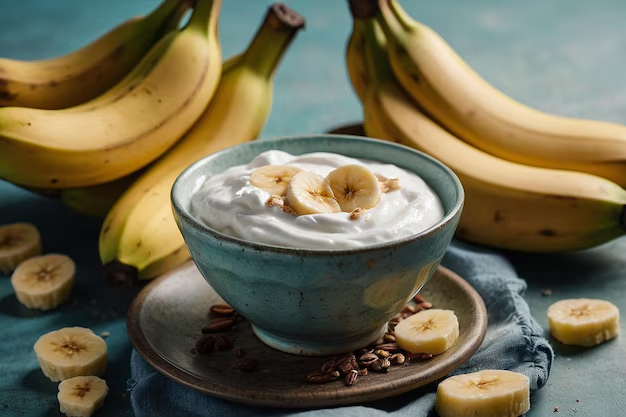
The Overnight Repair Combo That Does More Than Help You Sleep
This one earns its place at the end of the list because it does the most. It is not just one mechanism working. It is four or five happening at the same time, which makes it especially worth knowing about for older adults who care about what is happening in their body while they sleep.
Greek yogurt is high in protein, calcium, and tryptophan. The calcium matters in a specific way that most people do not know about. Your brain needs calcium to convert tryptophan into melatonin.
Without enough calcium, the whole chain from tryptophan to serotonin to melatonin becomes less efficient. Greek yogurt gives you the tryptophan and the calcium together in one food.
The protein matters too. A study published in August 2025 and cited by MedBox found that older men who consumed a protein-rich dairy snack before bedtime showed significant increases in muscle protein synthesis overnight.
That connects directly to what your body is supposed to do during deep sleep. It uses protein as raw material for overnight tissue repair. Giving your body that material just before sleep means the repair work has something to work with.
Banana brings tryptophan, vitamin B6, potassium, and magnesium. Vitamin B6 is necessary for converting tryptophan into serotonin. Without it, the conversion is less efficient. Potassium and magnesium together relax muscles and may reduce nighttime leg cramps, which is a specific, common problem in older adults that wakes people up in the middle of the night.
The carbohydrates in a banana also do something specific. When you eat carbohydrates, your body releases insulin. Insulin clears competing amino acids from your bloodstream. That clears the path for tryptophan to reach your brain more easily. Sleep nutrition researchers at Columbia University have explained this mechanism clearly. It is not a guess. It is how the chemistry works.
There is one more piece. Greek yogurt contains probiotics. And emerging gut-brain research in 2025 makes this relevant in a new way. About 90% of your body’s serotonin is produced in your gut. A healthy gut microbiome supports better neurotransmitter production overnight. Probiotic-rich yogurt feeds that system.
How to use it:
Half a cup of plain full-fat or 2% Greek yogurt with one medium banana, sliced on top. Add a teaspoon of honey if you want something slightly sweet. Eat it one to one-and-a-half hours before bed. Avoid flavored yogurts with added sugar. Those can spike your blood sugar and disrupt sleep architecture, the opposite of what you want.
If you want to go one step further: Add a small sprinkle of walnuts on top. Now you have tryptophan, calcium, magnesium, potassium, vitamin B6, melatonin, protein, and probiotics in one small bowl. That is about as close to a food-based sleep support stack as current research allows.
Timing, Portions, and What to Avoid

A Few Simple Rules That Make These Snacks Actually Work
Getting the snack right is only half of it. When you eat and how much you eat matters just as much.
Eat your snack 60 to 90 minutes before bed. Not right before you lie down. Your body needs a head start on digestion. The research protocols for tart cherry juice, kiwi, and walnuts all used roughly 60 minutes before bed as their standard timing. That timing exists for a reason.
Keep the portions small. These are snacks, not meals. A 2025 preprint study from Preprints.org noted that heavy evening meals eaten close to bedtime are significantly linked to poor sleep quality. You are looking for light nourishment, not a full second dinner. A little food in the right window is better than a lot of food at the wrong time.
Here is what to skip:
Alcohol is one to watch. It may help you fall asleep faster, but it disrupts your sleep architecture later in the night. You wake up in lighter stages. You miss the deep sleep your body needs. High-sugar snacks cause blood glucose spikes and crashes that pull you out of sleep.
Caffeine in any form, including chocolate, is worth cutting off after early afternoon. And spicy foods can trigger acid reflux, which raises cortisol and makes restful sleep harder.
Give it time. Food-based sleep support does not work in a single night. The tart cherry juice study ran for two weeks. The kiwi study ran for four. These foods change your body chemistry gradually, not immediately. Pick one snack from this list, stick with it for at least two weeks, and then decide whether it is working. Track how you feel in the morning, not just whether you fell asleep.
The Bottom Line
Poor sleep after 60 is common. But it is not something you just have to accept.
Four foods with real published research behind them, tart cherry juice, kiwi, walnuts, and Greek yogurt with banana, can shift the chemical environment in your body before bed in ways that support deeper, more restorative sleep. And while you sleep, they give your cells better raw material to repair overnight.
Pick one tonight. Start with whichever one sounds easiest to add to your evening. Give it two weeks. Pay attention not just to whether you fell asleep, but to whether you wake up feeling less foggy.
Making evening snacks for better sleep in older adults a daily habit is one of the smallest, lowest-risk changes you can make. And it might be the one that actually helps.
