

At 55, your muscles don’t respond to protein the same way they did at 30, and most people have no idea that is happening at breakfast every single morning. After 50, muscle mass drops 1 to 2 percent every year, and strength falls roughly 3 percent annually.
You could be eating fine and still losing ground, because the biology changed and nobody updated the rulebook. Sarcopenia is quiet, gradual, and deeply connected to how your body handles morning protein for muscle loss after 50.
This guide explains why protein timing matters more than you think, what anabolic resistance actually means for your muscles, how much protein your first meal needs to trigger real muscle protein synthesis, which everyday foods hit that mark, and a simple framework you can start tomorrow.
Morning Protein Builder
Build a meal that meets the 3-part morning rule.
Why Your Morning Protein Habits Are Causing Muscle Loss After 50 (And the Fix Is Simpler Than You Think)

You work out. You eat reasonably well. But somewhere in your 50s, something shifted. Your arms feel softer. Getting up from the floor takes more effort. Your strength just is not what it used to be.
Here is the thing most people do not hear from their doctor: this is not just aging. A big part of it is a protein problem. And the biggest piece of that problem happens before 10 AM.
This article breaks down exactly what is happening inside your muscles, why your current diet is probably not cutting it, and what you can do starting tomorrow morning.
Your Muscles Changed the Rules Without Telling You

Around age 50, something measurable happens inside your muscle cells. They stop responding to protein the same way they did at 30. Scientists call this anabolic resistance. It is not a buzzword. It is a real, documented shift in how your body handles the protein you eat.
Think of it this way. When you were younger, your muscles were like a light switch. A small amount of protein flipped the switch and turned on muscle repair. Now, that same small amount barely moves the dial. Your muscles need a stronger signal to get the same job done.
This is not your fault. It happens to almost everyone. But most standard nutrition advice does not account for it at all.
The old recommendation of 0.8 grams of protein per kilogram of body weight per day? That number was designed to prevent deficiency, not to maintain muscle. For people over 50, it is simply not enough.
The numbers behind this are serious. Research published in PubMed Central reports that between the ages of 40 and 80, people can lose 30 to 50 percent of their muscle mass. That is not a small dip. That is a significant change that affects how you move, how strong you feel, and how independent you stay as you get older.
The condition this leads to has a name: sarcopenia. It is the medical term for age-related muscle loss. And it is far more common than most people realize. In women aged 50 to 59, sarcopenia affects 32.4 percent of the population. By the 60 to 69 range, that number climbs to 45.2 percent.
Dr. Stuart Phillips, a professor of kinesiology at McMaster University and one of the world’s leading researchers in protein metabolism, has spent decades studying this problem.
His research confirms what the data shows: older adults have a reduced muscle protein synthesis response to eating protein. The older you get, the more protein it takes to trigger the same muscle-building effect that used to happen automatically.
This is not a reason to give up. It is a reason to change strategy. And here is the part most people miss entirely: the issue is not just how much total protein you eat in a day. It is how much you eat at one time, and when you eat it.
The Real Problem Is Your Breakfast

If your answer involves cereal, toast, a banana, or black coffee, your muscles spent the first several hours of your day in a catabolic state. That is a scientific way of saying your body was breaking down muscle tissue for fuel instead of building it up.
Most people over 50 eat the majority of their protein at dinner. A small breakfast, a light lunch, and a big evening meal. It feels normal because it is common. But from a muscle-health perspective, it is backwards.
A 12-week randomized controlled trial published in Frontiers in Nutrition found something clear and practical. The higher the ratio of protein eaten in the morning relative to total daily protein, the better the outcomes for muscle mass and handgrip strength.
Participants who ate milk protein in the morning, rather than in the evening, saw better muscle results. Same protein. Different timing. It comes down to something called the leucine threshold.
Leucine is an amino acid. It is the main trigger for muscle protein synthesis. Your body needs roughly 2.5 to 3 grams of leucine at a single meal to flip the switch and start building muscle. For adults over 50, that threshold is even higher, around 3 to 4 grams per meal, because aging muscles need a stronger signal.
If your breakfast does not hit that threshold, those morning hours are essentially wasted from a muscle standpoint. Not neutral. Wasted.
Here is a concrete way to see this. Imagine two people each eating 100 grams of protein per day. One person eats 15 grams at breakfast and 85 grams at dinner. The other spreads 25 to 30 grams across four meals throughout the day. Both hit the same daily total. But the person spreading protein out across leucine-threshold-crossing meals will have meaningfully better muscle outcomes.
Skipping protein at breakfast does not just mean missing an opportunity. It actively extends the overnight fast, which is already catabolic by nature. Your body wakes up having burned through glycogen while you slept. Without a protein signal early in the day, it keeps pulling from muscle tissue for energy.
The fix is not extreme. You do not need to overhaul your entire diet. You need to move protein earlier in your day and make sure that first meal actually counts.
The Exact Number You Have Been Missing
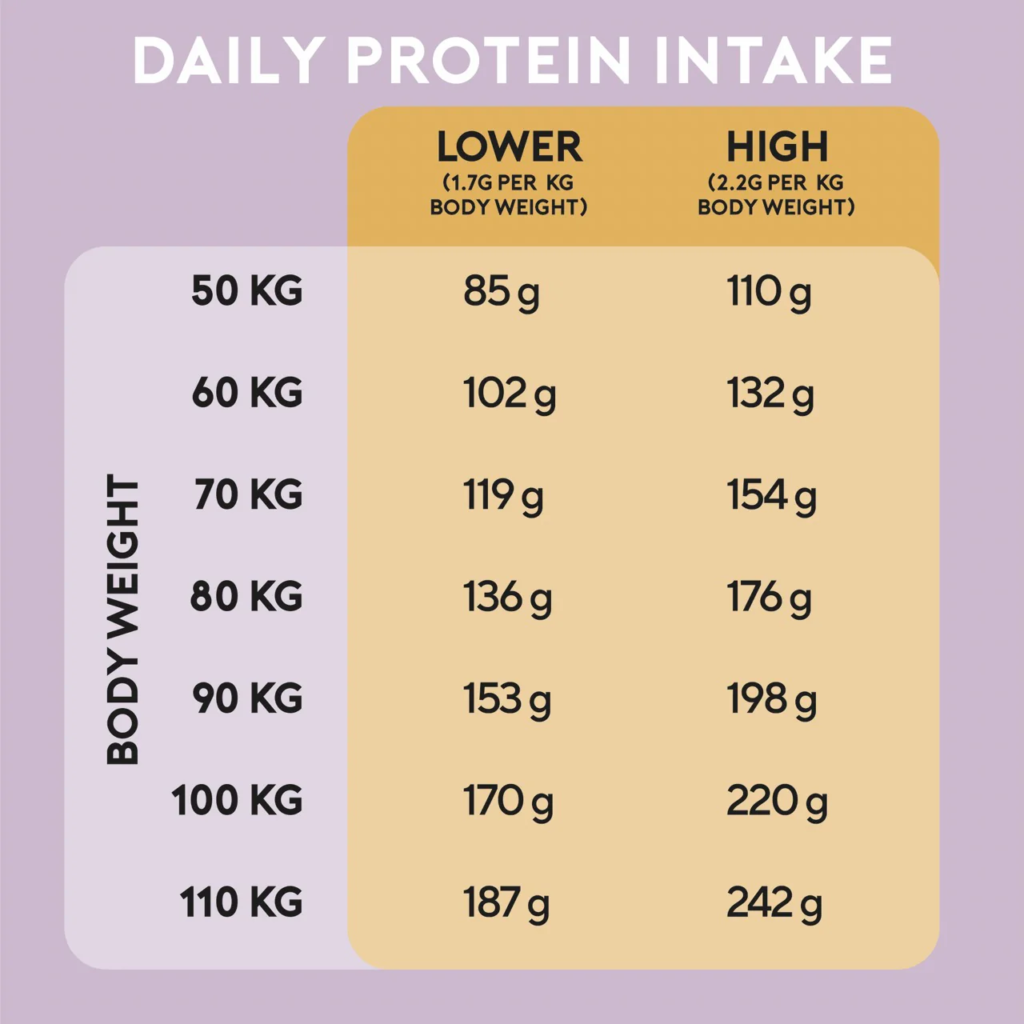
You do not need a vague range. Research gives us something more specific to work with.
Current gerontology research points to 1.2 to 1.6 grams of protein per kilogram of body weight per day for adults over 50. That is meaningfully higher than the old 0.8 gram recommendation. But the daily total is only part of the picture. The real target is per meal.
Research from Dr. Stuart Phillips and Dr. Don Layman, a protein researcher at the University of Illinois whose work on leucine and mTOR signaling has shaped how clinicians now think about protein for older adults, shows that you need at least 25 to 30 grams of high-quality protein per meal to maximally stimulate muscle protein synthesis in older adults.
The leucine side of this is equally specific. Adults over 50 need approximately 3 to 4 grams of leucine per meal to overcome anabolic resistance and trigger real muscle building. That is roughly what you get from 30 grams of a high-quality animal protein source.
There is also a ceiling worth knowing. Most evidence suggests that 20 to 30 grams of high-quality protein per meal is the sweet spot. Eating more than that in a single sitting does not increase muscle-building benefits further. It just adds calories and may increase metabolic stress without any added payoff.
Here is what this looks like in practical terms for real people:
If you weigh 140 pounds: Aim for 76 to 102 grams of protein per day. Spread across 3 to 4 meals, that means 25 to 34 grams per meal. Your morning meal alone should hit at least 30 grams.
If you weigh 165 pounds: Aim for 90 to 120 grams per day. That breaks down to 30 to 40 grams per meal across 3 to 4 meals.
The morning number is the one to protect. You can be flexible at other meals. But breakfast is where most people are leaving the most on the table.
One more thing worth saying clearly: these numbers are for preserving and building muscle, not just surviving. The 0.8 gram recommendation keeps you from being deficient. These higher numbers are what actually support muscle health in a body that has become more resistant to protein’s effects.
The Best Morning Protein Foods That Actually Hit the Mark
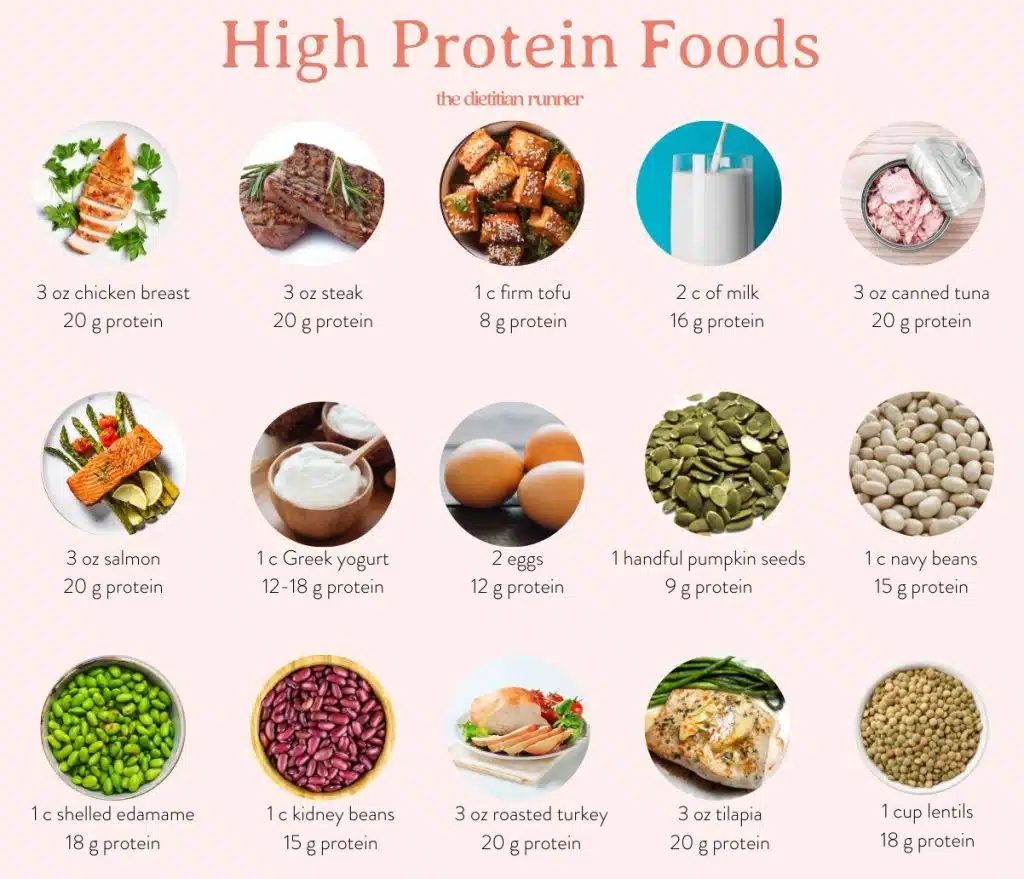
Knowing the number is one thing. Getting there at breakfast is another. Not all morning foods are equal when it comes to protein quality and leucine content. Here are the ones that actually work, written for real people, not nutrition scientists.
| Food | Serving Size | Approx. Protein |
|---|---|---|
| Whole eggs | 3 large | 18 to 19g |
| Plain Greek yogurt | 1 cup | 15 to 20g |
| Cottage cheese | 1/2 cup | 14g |
| Whey protein powder | 1 scoop | 20 to 25g |
| Smoked salmon | 3 oz | 16g |
| Lean ground turkey | 3 oz cooked | 22g |
Three eggs give you around 18 grams of protein and all nine essential amino acids. That is a solid start, but it does not hit 30 grams on its own. Add a cup of plain Greek yogurt and you are at 33 to 38 grams in one simple meal.
Combinations that work without a complicated recipe:
- Eggs scrambled with cottage cheese mixed in
- Greek yogurt with a scoop of whey protein stirred in
- Smoked salmon with two or three eggs on the side
These are not fancy. They take five to ten minutes. And they hit the threshold that actually matters.
A note on plant-based eating: it is absolutely possible to get there, but you need to scale up. The same 20 grams of whey protein that produces strong muscle protein synthesis results produces a weaker response from plant sources alone in adults over 50.
This is partly because plant proteins tend to be lower in leucine. If you eat mostly plant-based foods, aim for 35 to 40 grams of total plant protein at breakfast and consider pairing different sources together, like pea protein with hemp, to get a more complete amino acid profile.
The goal is not perfection. The goal is hitting 30 grams of quality protein before the morning is over.
A Simple Morning Protein Framework You Can Start Tomorrow
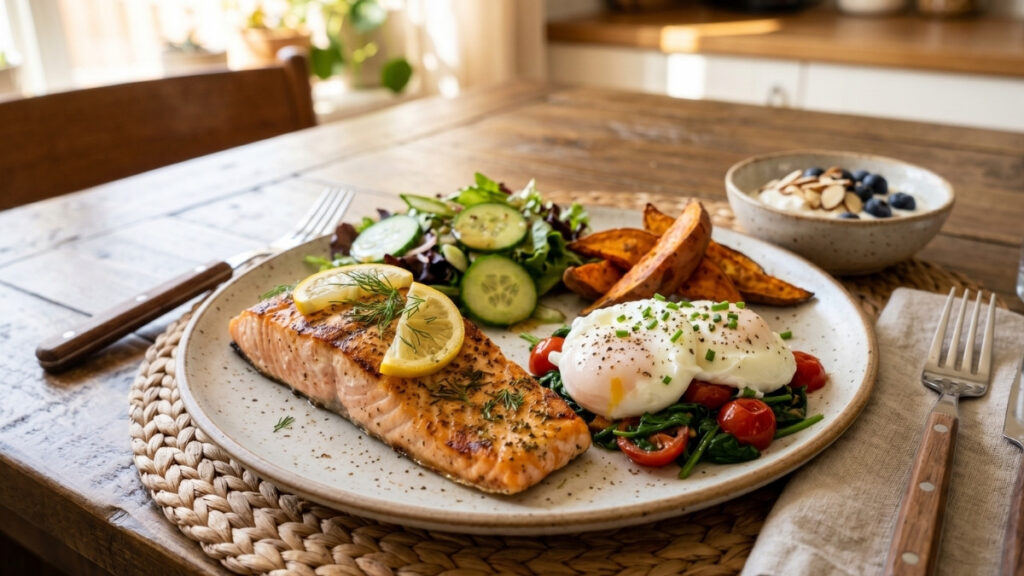
No more theory. Here is a structure you can actually use.
The Three-Part Morning Protein Rule
- Hit 30 grams of complete protein before 10 AM.
- Make sure at least two of your protein sources are leucine-rich, meaning eggs, dairy, fish, or poultry.
- Pair your protein with some carbohydrate. This helps blunt morning cortisol and supports the insulin response that carries amino acids into muscle tissue.
That is it. Three things.
Two options you can use starting tomorrow:
Option A: Three whole eggs scrambled with 1/2 cup of cottage cheese mixed in, served with a slice of whole grain toast. This gets you approximately 33 to 35 grams of protein. It takes about 10 minutes.
Option B: One cup of plain Greek yogurt with one scoop of whey protein stirred in, topped with berries. This gets you approximately 38 to 42 grams of protein. No cooking required.
Research published in Frontiers in Nutrition backs this up. Participants who followed a moderately high protein diet of 1.2 grams per kilogram of body weight showed significant improvements in both muscle mass preservation and physical function compared to those eating the standard 0.8 gram recommendation.
What to do when you are not hungry in the morning:
A protein smoothie counts. Blend one cup of Greek yogurt, one scoop of protein powder, a banana, and some almond milk. Drink it on the way to work if you have to. It takes three minutes, it is easy to get down even without an appetite, and it hits the numbers that matter.
Some mornings will not be perfect. That is fine. The point is consistency over time, not a flawless streak.
The Bottom Line
Muscle loss after 50 is real. It is measurable. And it is driven by a biology that most standard nutrition advice simply ignores.
Your morning protein window is the most powerful lever you have not been using. The number is 30 grams of high-quality, leucine-rich protein at your first meal. That is not an extreme target. It is just an intentional one.
Start with one change: tomorrow morning, build your breakfast around 30 grams of protein before anything else. Within a few weeks, with consistency and even light resistance training alongside it, the difference becomes something you feel, not just something you read about.
Reversing muscle loss after 50 does not require a gym obsession. It requires knowing what your muscles actually need at the start of the day, and giving it to them.
