
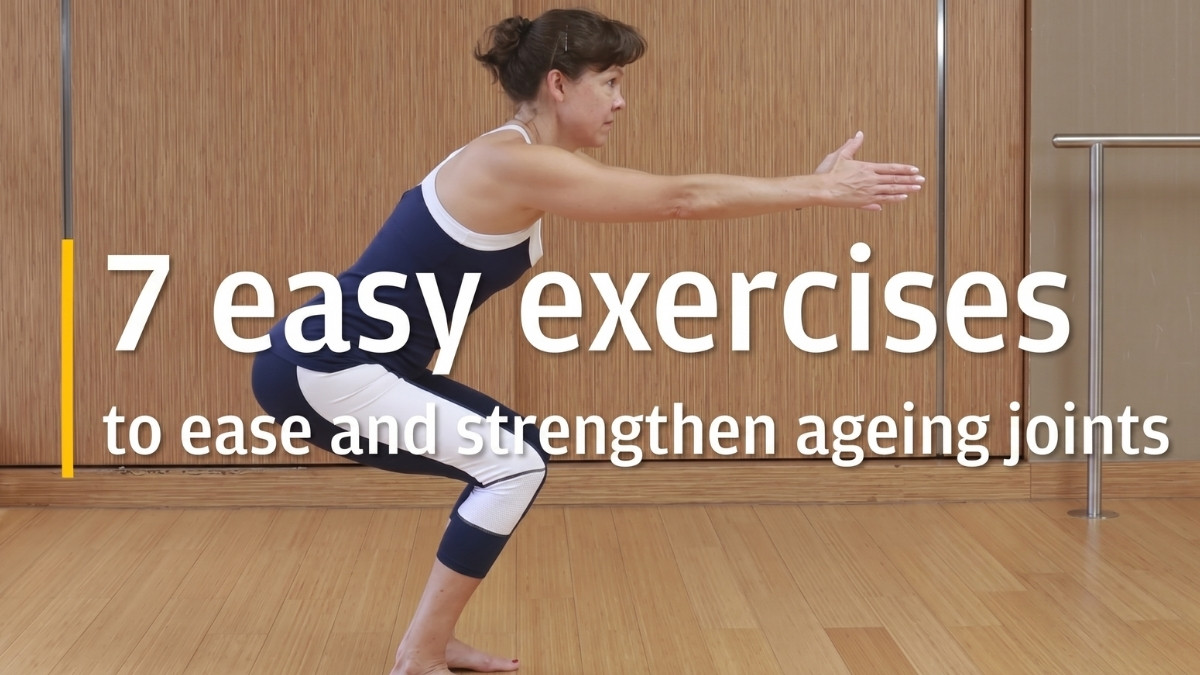
You roll out of bed, and before your feet even hit the floor, your knees are already talking to you. That stiffness, that ache, that slow creaking start to every morning feels like your body announcing its age.
Most people accept it. They chalk it up to getting older, reach for a pill, and move on. But nearly half of adults over 50 say joint pain is actively limiting what they can do every single day, and the majority were never shown a real alternative.
That changes here. These seven stretches, recommended by physical therapists and backed by current clinical research, take under 15 minutes, need zero equipment, and you can start today.
Daily Joint Lubricator
Use it or lose it. 7 Stretches. 30 Seconds each.
Complete stretches to generate synovial fluid and lubricate your joints.
7 Stretches That Keep Your Joints Moving Past 50
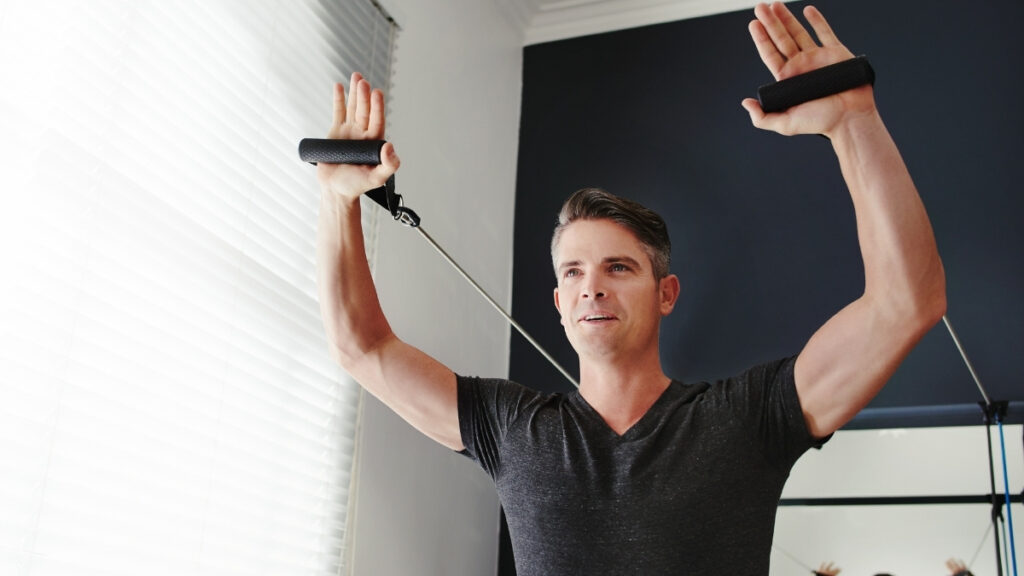
Your joints are not falling apart. They just stopped getting asked to move. These seven stretches take 12 minutes. Physical therapists recommend every single one. 12 min readNo equipment neededBacked by clinical research
You wake up, and before your feet even touch the floor, something already aches. Maybe it is your hips. Maybe your knees feel stiff and loud on the stairs. Maybe your lower back takes the first 20 minutes of the morning to warm up.
This is not just aging. It is what happens when joints stop moving. And here is the good news: it is something you can actually fix.
The seven stretches in this article are not new ideas. Physical therapists have been using these for years. What makes them worth reading is that they are organized around your real problems, not just anatomy. Each one targets something specific that people over 50 complain about the most.
Why Your Joints Start Complaining After 50 (And What Stretching Actually Does)
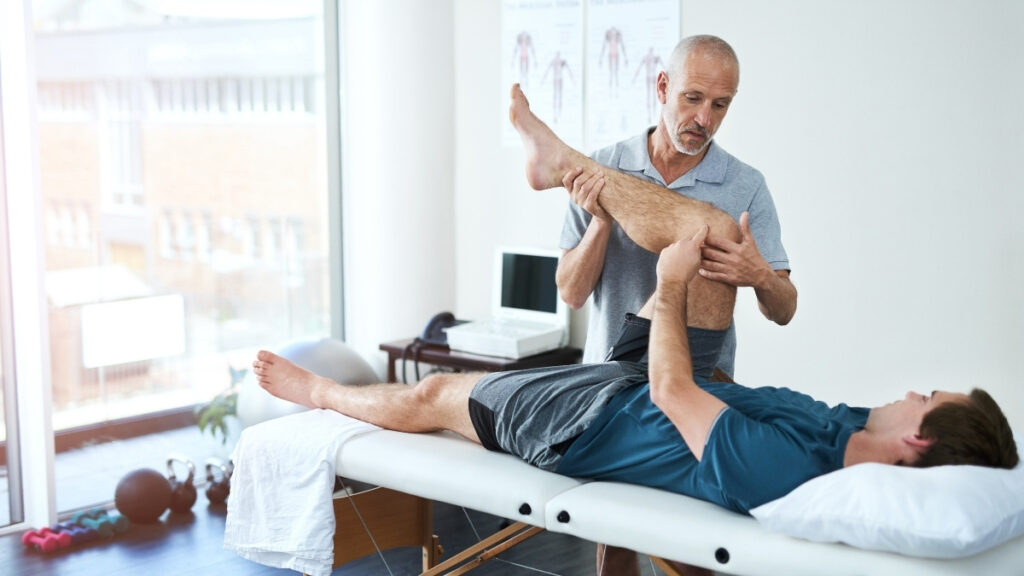
Here is what is actually happening inside your body. As joints age, the cartilage gets a little thinner and the connective tissue loses some of its give. This is not a disease in most cases. It is just biology. But biology is something you can influence.
Inside every major joint is something called synovial fluid. Think of it as your body’s built-in oil. Its whole job is to keep the joint moving smoothly so bones and cartilage do not grind against each other. The critical part most people miss: this fluid only circulates when you move. According to the Cleveland Clinic, stillness stops the lubrication. Movement keeps it going.
Kristin Vinci, PT, DPT of Hinge Health puts it simply. As you age, your joints get a little stiffer and your muscles lose some flexibility. If you stop moving because of that stiffness, your mobility drops even faster. It becomes a cycle. Vinci calls it exactly what it is: use it or lose it.
The research backs this up. Exercise has been shown to improve function and reduce pain in people with arthritis, and stretching is a strong first step in that direction. Stiffness and limited movement also put you at risk of losing your balance, and falls after 50 are rarely accidents. They are often what happens when joints stopped being asked to do their job.
Clinical guidelines suggest structured flexibility work two to three times per week for maintaining function. But daily is better for managing stiffness. The good news is that even a short routine counts.
The bottom line: Your joints need movement to stay lubricated. Stretching is not just about flexibility. It is how you keep the whole system running.
Standing Hip Flexor Stretch
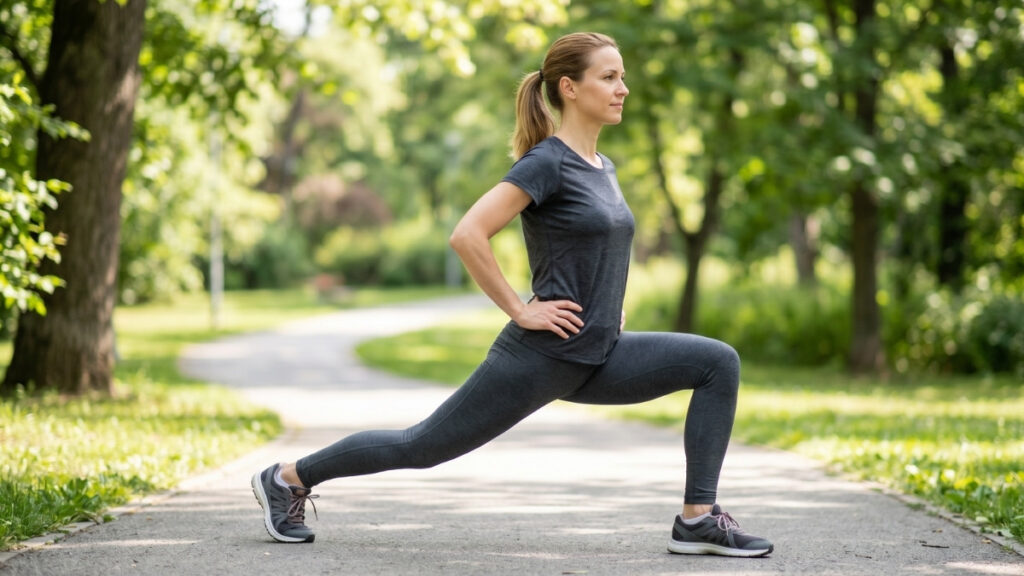
If a physical therapist could give every person over 50 just one stretch, this would be it. Ask around. The hip flexors are the muscles at the front of your hip that connect your thigh to your trunk. They shorten when you sit. And most of us sit for hours every day.
“The older we get, the more sedentary we become. Taking some time to stretch and get the muscles in a different position can work wonders over the long haul.” Dr. Dan Ginader, PT, DPT, author of The Pain-Free Body
When the hip flexors get tight, they pull your pelvis forward and throw off your posture. Walking becomes less efficient. Stairs become harder. That forward-lean a lot of people develop after 50? Tight hip flexors are often the reason.
People who do this stretch daily tend to walk more comfortably and climb stairs with less effort. It counteracts what sitting does to your body all day long.
Hold: 30 seconds each side, 2 rounds
How to do it:
- Step one foot forward and lower your back knee toward the floor, like a half-kneel.
- Squeeze the glute on your back leg before you go anywhere. This is the key step most people skip.
- Gently push your hips forward until you feel a stretch at the front of your back hip.
- Hold 30 seconds. Switch sides. Do two rounds.
Common mistake: Arching your lower back to get a bigger stretch. That puts the strain in your spine, not your hip. Squeeze your glute first, then push forward. The glute squeeze is what keeps the stretch where it belongs.
2. Seated Hamstring Stretch
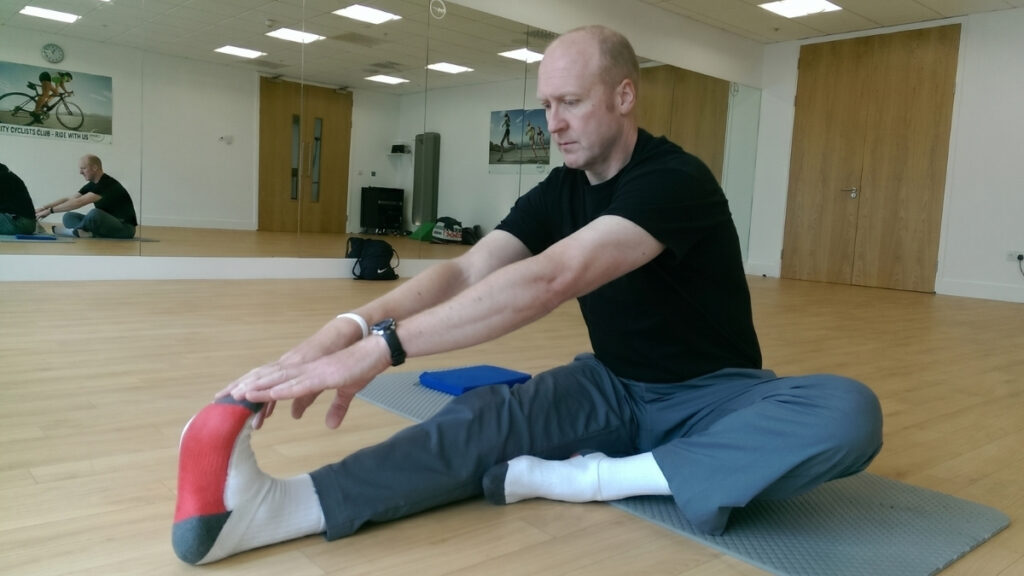
Tight hamstrings are one of the most overlooked causes of knee and lower back pain after 50. When the hamstrings shorten, they pull on the pelvis. That pulls it backward. That flattens the lumbar curve in your lower back. And a flattened lumbar curve puts constant stress on the discs and joints back there.
It sounds like a chain reaction because it is one. This stretch breaks that chain.
Sitting on the edge of a chair and straightening one leg forward is one of the most comfortable hamstring variations out there, according to Hinge Health. It keeps you supported, removes any balance concern, and lets you control exactly how deep the stretch goes.
Hold: 30 seconds each side, 2 rounds
How to do it:
- Sit at the very edge of your chair with a tall back, not slumped.
- Straighten your right leg and rest your heel on the floor in front of you.
- Keep your back straight. This part matters. Do not round your spine.
- Hinge forward from your hips, not your waist. Think about bringing your chest toward your knee, not your nose toward your shin.
- Hold 30 seconds. Switch legs. Repeat twice.
You should feel a gentle pull along the back of the straight leg. If you feel nothing, lean forward a little more. If you feel sharp pain, ease back. Mild tension is the target.
3. Standing Quad Stretch
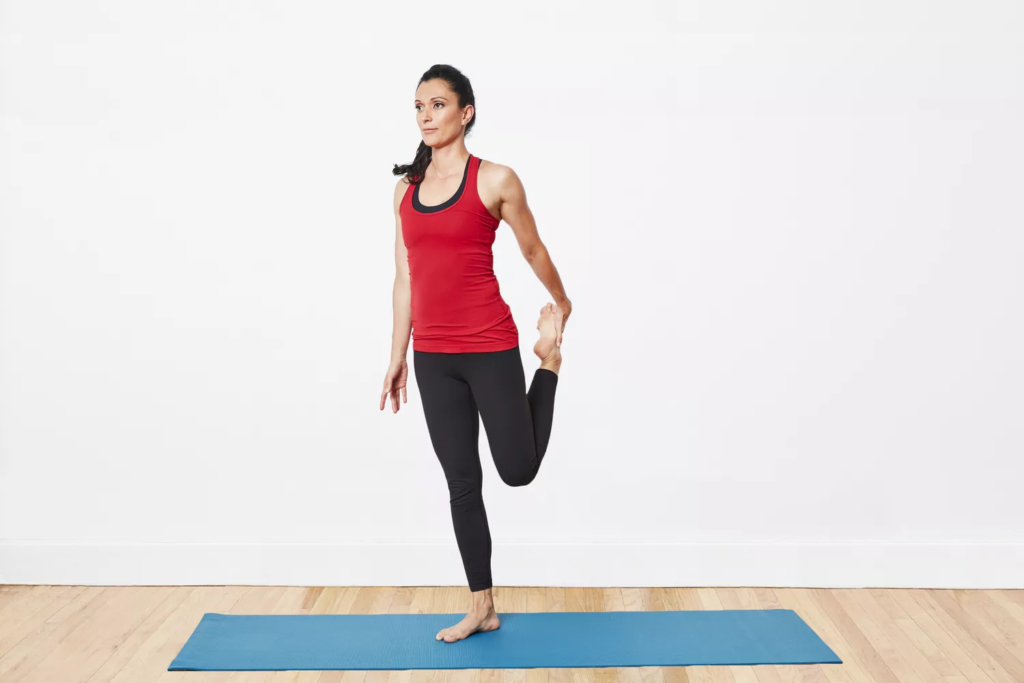
The quadriceps run along the front of your thigh. They are essential for knee stability, especially going up and down stairs. When they get tight, the knee joint takes more force with every step. That is what causes that grinding, achy feeling in the front of your knee.
Stretching the quads regularly helps reduce that pressure and keeps the knee joint moving the way it should, according to Results Physiotherapy.
Hold: 30 seconds each side, 2 rounds
How to do it:
- Stand near a wall or counter and rest one hand on it for support. Use the support. There is no award for doing this without it.
- Bend one knee and bring your heel up toward your seat.
- Hold your ankle with your free hand. If reaching your ankle is hard, loop a resistance band or a towel around your foot and hold that instead.
- Keep both knees close together. Do not let the bent knee swing out to the side.
- Hold 30 seconds. Switch sides. Two rounds.
“Stretching is not a no-pain, no-gain situation. You do not need to push into a deep stretch or feel pain for it to be working.” Dr. Kristin Vinci, PT, DPT, Hinge Health
This one is worth repeating. You do not need to feel pain for a stretch to be working. A mild pull means it is doing its job. A sharp pain means stop.
4. Calf Stretch and Ankle Circles
Ankles are the most ignored joint in every conversation about joint pain after 50. And that is a problem. Stiff ankles change your entire walking pattern. When an ankle cannot move freely, the knee and hip above it have to compensate. And that compensation often comes with pain.
Theresa Barry, PT, knee rehabilitation coordinator at UR Medicine, explains it clearly: if you cannot move well because your knees are sore, your hips and ankles pick up the slack. Stretching helps bring everything back into alignment.
Research from Frontiers found that a 10-week static stretching program produced significant improvements in joint range of motion in older adults, including ankle dorsiflexion, which is the ability to flex the ankle upward. That matters for every step you take.
Two moves, 30 seconds each
Move 1: Calf Stretch
- Stand facing a wall and place both hands on it at shoulder height.
- Step one foot back, keeping that back leg straight and pressing the heel into the floor.
- Lean gently into the wall until you feel the stretch in the calf of the back leg.
- Hold 30 seconds. Switch sides.
Move 2: Ankle Circles
- Sit in a chair and lift one foot off the floor.
- Trace slow, smooth circles with your foot, going clockwise 10 times.
- Reverse direction for 10 more circles.
- Switch feet and repeat.
5. Doorway Chest Opener
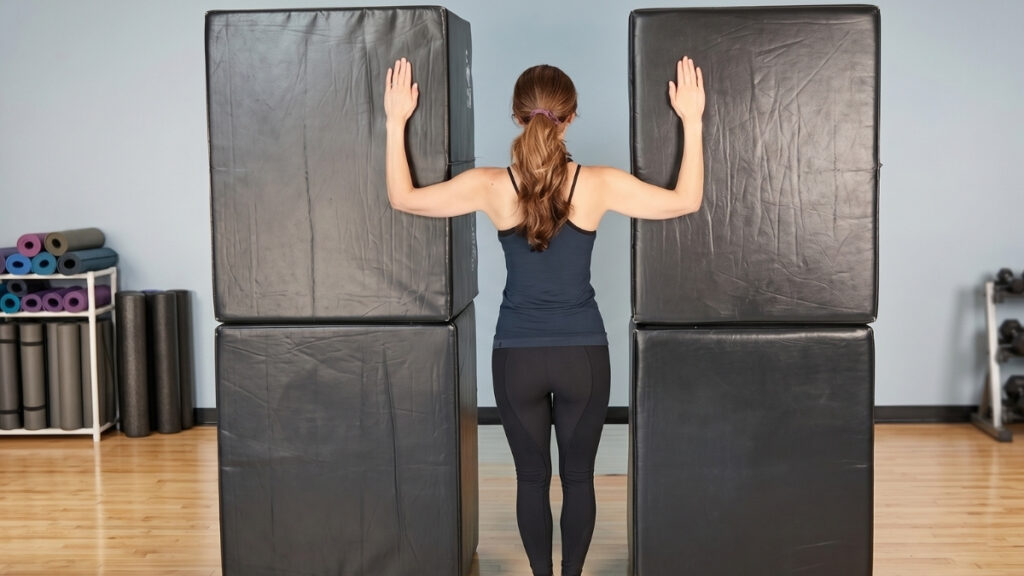
Undo hours of sitting in 30 seconds
Years of sitting at a desk, driving, and looking at a phone create a pattern. The chest tightens. The shoulders roll forward. The head drifts in front of the body. This posture puts pressure on the cervical spine and stresses the shoulder joints in ways most people do not feel until later.
This stretch pulls all of that in the opposite direction.
WebMD describes the doorway version as a simple and effective way to loosen the joints of the upper body. According to Results Physiotherapy, even a basic shoulder stretch can meaningfully reduce tension and improve mobility in the shoulder joint, which is especially important for anyone with stiffness or arthritis in that area.
Hold: 30 seconds, 2 rounds
How to do it:
- Stand in a doorframe and place both forearms along the sides of the frame, arms bent at about 90 degrees.
- Stand roughly two feet away from the frame.
- Gently lean your chest forward through the opening until you feel a stretch across your chest and the fronts of your shoulders.
- Breathe slowly. Do not push hard. Let the stretch open up on its own.
- Hold 30 seconds. Come back to center. Repeat twice.
Good to know: You can adjust how high you place your arms to change where you feel it. Arms higher stretches more of the upper chest. Arms lower hits the middle chest more.
6. Knee-to-Chest Stretch
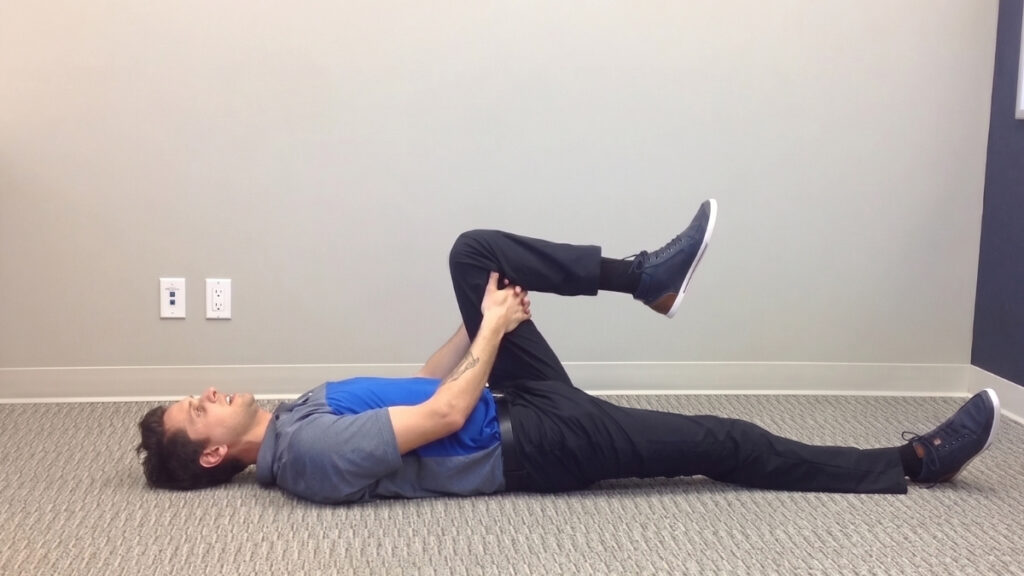
The one you can do without getting out of bed
This stretch hits three things at once: the hip joint, the glutes, and the lower back. And you do it lying down, which means no balance required and no fear of falling.
That is why it is one of the most practical stretches for the over-50 population. Harvard Health confirms that stretching improves the flexibility of muscles, helping joints move through their full range of motion and reducing pain and stiffness over time.
But here is the practical reason it belongs in your morning routine. Do it before your feet hit the floor. Your body has been still for hours. This stretch tells your joints that movement is coming. Think of it as the pre-flight check.
Hold: 30 seconds each side, 2 rounds
How to do it:
- Lie on your back on a firm surface. A yoga mat on the floor works well. Your bed also works if it is firm enough.
- Bring one knee gently toward your chest, using both hands to guide it.
- Hold 30 seconds. You should feel a release in the hip and lower back.
- For a deeper stretch in the outer glute, pull the knee slightly across your body toward the opposite shoulder.
- Switch sides. Two rounds each side.
Note: If pulling the knee creates pain in the knee joint itself, try cupping your hands behind the thigh instead of around the knee. This takes the pressure off the knee joint while still giving the hip and lower back the stretch they need.
7. Seated Figure-Four Stretch
For the hip pain that wakes you at night
That deep, nagging ache in the outer hip that makes sitting for long periods almost unbearable is often the piriformis muscle, a small but powerful muscle that sits deep in the glute. When it tightens, it creates pressure that can radiate down the leg or just sit there and throb.
This stretch targets it directly.
According to research published in PubMed, stretching exercises can meaningfully reduce pain, stiffness, and physical function disability in older adults when incorporated consistently into a routine.
If you can get to the floor: Sit with both legs in front of you, bring the soles of your feet together, and let your knees fall apart to the sides. Place your hands on your ankles and hinge forward from the hips until you feel a stretch in the inner thighs and hips. Keep your spine neutral. Hold for 20 to 30 seconds.
If the floor is not an option, use the chair version:
Hold: 30 seconds each side, 2 rounds
- Sit tall in a chair with both feet flat on the floor.
- Cross your right ankle over your left knee so your leg forms a number four shape.
- Sit up as straight as you can. Then gently press down on the raised knee with your hand.
- Hinge slightly forward from the hips until you feel a pull in the outer right hip or glute.
- Hold 30 seconds. Switch sides. Two rounds each.
This is the one that often produces the biggest “oh, that is where it is” reaction. Go slowly. The stretch is effective even when it is mild.
How to Build This Into a Routine Without Willpower
Most people do not fail at stretching because they are lazy. They fail because the routine has no anchor. Here is how to make these stretches happen without having to think about it every day.
Morning beats evening for stiffness.
Do three or four of these stretches before breakfast, while your body is still warm from sleep and before the demands of the day take over. Save the rest for after a walk or a warm shower when muscles are naturally more pliable.
Short and often beats long and rare.
Most experts recommend 20 to 30 minutes of mobility work three to five times per week. But daily gentle stretching, even in shorter sessions, is often more effective than saving it for one long weekend session. Consistency is what produces results over time, according to Massive Bio.
Use the warm shower trick.
Stretching after a warm shower makes a noticeable difference, especially in winter. Warm muscles have more give. WebMD recommends this specifically for people who find stretching difficult in the morning. Try it once and you will understand why.
Know when to stop.
A stretch should produce mild tension. That is normal. Sharp pain is not. If something feels wrong during any of these stretches, stop and rest. Appropriate, gentle movement is beneficial. Pushing through real pain is not, according to Massive Bio. Your body gives you signals. Learn to listen to them.
Final Word
Your Joints Are Not Broken
They are just asking for something you have not been giving them: movement. The seven stretches above take 12 to 15 minutes. They need nothing but a floor, a chair, and a doorframe. And they are backed by physical therapists and clinical research, not social media trends.
Pick two stretches from this list. Do them tomorrow morning before coffee. Come back the day after and do two more. Build it slowly. You do not need to feel committed to the whole routine on day one. You just need to start somewhere.
The joints you have at 75 will reflect what you choose to do this week. That is not a threat. It is an opportunity.
These stretches for joint pain after 50 are not a cure. They are something better. They are a daily practice that returns your body to a place it already knows how to be.
