Sleep problems ranked second only to smoking as the biggest life-shortener. Not a bad diet. Not sitting too much. Not being lonely. Sleep. That finding alone should stop you in your tracks.
Here is the hard truth. Most of us know we should “live healthier.” But that phrase means nothing without a plan. So we try the latest diet. We buy a fitness tracker. We download a meditation app and forget about it in three days. Nothing sticks because no one told us what actually works, and why.
This article is different. Every habit below comes from peer-reviewed research published between 2024 and 2026. Not influencer advice. Not wellness trends. Real science, translated into steps you can start today.
The good news: you do not need a medical degree, a personal trainer, or an expensive supplement. You need the right habits. And most of them cost nothing at all.
9 Habits Lifespan Calculator
Select your daily habits to see your potential life extension.
Habit 1: Get 7 to 8 Hours of Sleep Every Night

Picture the last time you stayed up past midnight scrolling your phone. The next morning felt foggy. Your mood was off. You reached for coffee before you even felt hungry. Now imagine that feeling stretched across years. That is what chronic sleep deprivation does to your body.
Oregon researchers ran the largest county-level analysis of its kind in 2025. They expected exercise or diet to top the list. Sleep deprivation came in second, right behind smoking, as the most life-shortening behavior a person can change. It outranked poor diet, lack of exercise, and social isolation combined.
This is not just about feeling tired. When you sleep, your brain actively clears out toxic proteins. Your body regulates hormones like cortisol and insulin. Memory consolidates. Cells repair. Sleep is not rest. It is maintenance.
A meta-analysis of 79 studies found that sleeping under 7 hours per night raises your risk of dying from any cause by 14 percent. But here is the part most people miss: too much sleep is also a problem.
Sleeping over 9 hours regularly is linked to higher mortality too. The sweet spot is 7 to 8 hours, and hitting it consistently matters more than any single night of perfect rest.
The National Sleep Foundation found in 2025 that 60 percent of American adults are not getting enough sleep. That is not a personal failure. That is a system problem. Phones in bed. Late-night screens. No clear wind-down routine.
Start here: Put your phone charger outside the bedroom tonight. Research shows this single move adds 20 to 30 minutes of sleep for most adults. Set one consistent wake-up time and stick to it, even on weekends. Your body will find the right bedtime naturally.
Habit 2: Move Your Body Every Day, Even for Just 5 Minutes

You do not need to run marathons. You do not need a gym membership. A five-minute walk does more than most people think.
A 2026 analysis published in Scientific American found that adding just five minutes of brisk walking to your daily routine can cut your risk of dying by up to 10 percent. That is not a typo. Five minutes.
The research gets even more specific. A UK Biobank study found that combining a small increase in sleep, just 1.6 minutes of moderate activity per day, and half a serving of vegetables reduced all-cause mortality risk by 10 percent. The point is simple: the minimum effective dose for longevity is much smaller than most people assume.
Both cardio and strength training help, and they work independently. A 2024 meta-analysis found that about 60 minutes of resistance training per week was linked to a 15 percent lower risk of dying from any cause. That is two 30-minute sessions a week, or three 20-minute sessions. Not a major time commitment.
You can also make progress without a single gym visit. Walking 8,000 or more steps even just one or two days per week showed measurable mortality benefits in large population studies.
Think of movement as a spectrum. Good is a 10-minute walk after dinner. Better is 150 minutes of moderate cardio per week. Best is adding two short strength sessions on top of that.
Start here: Go for a 10-minute walk after your next meal. That is it. One habit, one meal, one decision.
But what you eat during that meal? That is Habit 3, and it adds more years than most people expect.
Habit 3: Eat a Mediterranean-Style Diet

There is no perfect diet. But there is one that consistently adds years to real people’s lives, in real studies, over real decades.
Harvard researchers followed 25,315 women for 25 years. The women who closely followed a Mediterranean-style diet were up to 23 percent less likely to die during the study period. That is a massive effect size for a dietary pattern.
A separate UK Biobank study from 2025 found that eating in the top quality tier was linked to 1.9 to 3.0 additional years of life in men by age 45. Women gained 1.5 to 2.3 years. That is not abstract. That is years of life, tied directly to food choices.
So what does this diet actually look like? Mostly vegetables, legumes, whole grains, fish, nuts, and olive oil. It replaces ultra-processed food. It is not strict. It is not expensive. It is not a temporary cleanse.
The reason it works comes down to biology. The Mediterranean diet reduces chronic inflammation, improves your metabolic markers, and has been linked to longer telomeres, the protective caps on your DNA that shrink as you age. Dr. Samia Mora, a Harvard cardiologist who led the 25-year study, noted that benefits showed up for both cancer and cardiovascular mortality, not just one or the other.
You do not need to be perfect. Adherence, not absolutism, is what drives the benefit. Eating well most of the time beats eating perfectly for two weeks and quitting.
Start here: Swap your cooking oil for extra-virgin olive oil. Add one legume meal this week, lentils, chickpeas, or black beans. Replace one processed snack with a handful of nuts. Those three moves alone shift your dietary pattern in the right direction.
Habit 4: Build Real Social Connections

This one surprises people. Social connection sounds like a lifestyle preference. It is actually a biological need, and ignoring it shortens your life in measurable ways.
A 2025 Harvard report found that loneliness raises the risk of premature death by 26 percent. Social isolation raises it by 29 percent. An even larger meta-analysis published in European Psychiatry in August 2025, looking at 86 studies, found that social isolation was linked to a 35 percent increase in all-cause mortality risk in older adults.
These are not small effects. They are comparable to smoking and obesity in terms of impact on lifespan.
Here is why: social connection regulates your stress hormones. It lowers blood pressure. It strengthens immune function. When you have real relationships, your body operates differently at a cellular level. When you do not, your nervous system stays in a low-grade state of threat. Over years, that wears you down.
You do not need to be extroverted to benefit. Introverts get the same protection from deep, meaningful relationships. Quality matters more than quantity. Two or three real friendships do more for your health than a large but shallow social network.
Dr. Julianne Holt-Lunstad, whose 2024 paper in World Psychiatry called social isolation a rising global health crisis, estimates it affects about 25 percent of the global population. This is not a small or rare problem.
Start here: Schedule one non-digital social interaction this week. Coffee. A walk with a friend. A phone call where you are not simultaneously scrolling. One interaction, done with your full attention, is worth more than a hundred passive likes on someone’s photo.
Habit 5: Manage Stress Like Your Life Depends on It (Because It Does)

Stress is implicated in 9 of the 10 leading causes of death in developed countries. That sentence is worth reading twice.
Not all stress is bad. Acute stress, the kind you feel before a big presentation or when you nearly miss a car in traffic, is normal and useful. It sharpens your focus. It helps you respond fast. It passes.
Chronic stress is different. It is the kind that never fully turns off. The job that feels like it follows you to bed. The financial worry that wakes you at 3 a.m. The relationship that leaves you tense even in quiet moments. That kind of stress keeps your cortisol elevated day and night. And cortisol, at high sustained levels, ages you from the inside.
Research published in ScienceDirect found that chronic stress accelerates biological aging by shortening telomeres and driving systemic inflammation. A 20-year follow-up study found that people with stronger negative emotional reactions to daily stressors had significantly higher mortality risk over time. It is not just the big disasters that kill you. It is how you respond to ordinary daily friction.
The most evidence-backed tools for managing stress: mindfulness-based stress reduction (MBSR), regular physical activity, and breathing techniques. Breathing is the most accessible because you can do it anywhere, it costs nothing, and the effect is measurable.
Box breathing works like this: inhale for 4 counts, hold for 4, exhale for 4, hold for 4. Research shows that a single session of this technique measurably lowers cortisol. You do not need to believe in meditation to benefit. You just need to do it.
Start here: Try 5 minutes of box breathing once today. Set a timer. Sit somewhere quiet. Breathe. That is a smaller time investment than scrolling your phone, and the return is measurably better.
Habit 6: Quit Smoking, Or Never Start

This habit is not about judgment. Smoking is an addiction. Quitting is genuinely hard. But the data on what stopping does for your body is so striking that it belongs in this conversation, no matter how many times you have heard it.
A 50-year study of British doctors found that quitting at age 30 can recover nearly a full decade of life. Quitting at 40 adds about 9 years. Quitting at 50 still adds 6. Even quitting at 60 adds roughly 3 years. There is no age at which stopping becomes too late.
The body starts repairing almost immediately. Within 20 minutes of your last cigarette, blood pressure drops. Within a year, your heart disease risk is cut in half. Within 10 years, your lung cancer risk drops to near that of a non-smoker.
A 2024 review in BMJ Evidence-Based Medicine identified tobacco as the single biggest modifiable lifestyle factor reducing human lifespan across multiple large cohort studies. Not diet. Not exercise. Not alcohol. Smoking.
If you smoke, this is the highest-leverage thing you can change.
Start here: Set a quit date two weeks from today. Tell one person about it. Research shows that social accountability doubles quit success rates. Talk to your doctor about nicotine replacement therapy or prescription options like varenicline. The NCI’s Smokefree.gov is a free, research-backed resource with a quit plan, a texting program, and a helpline.
Habit 7: Take Your Weight Seriously, Without Shame
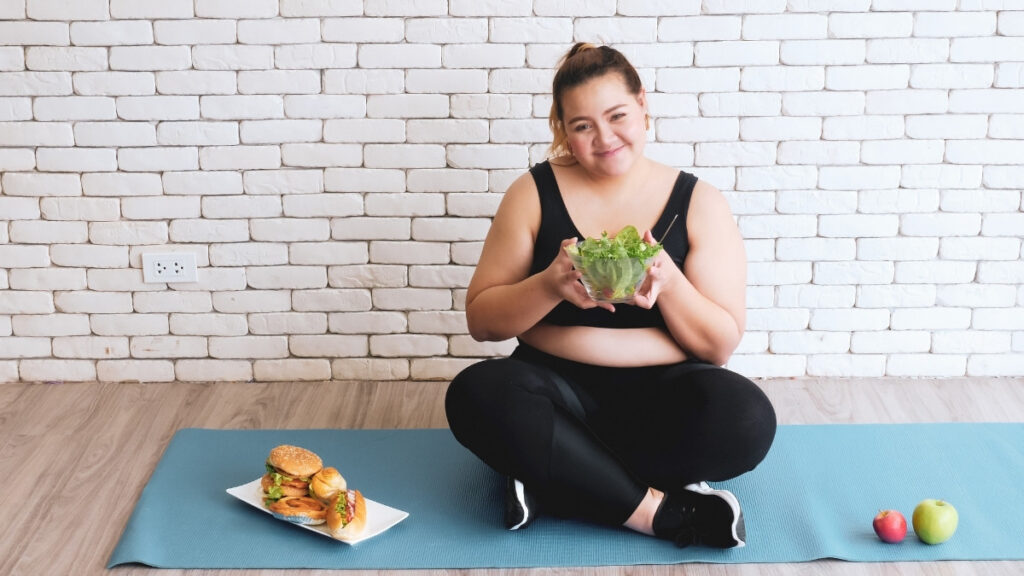
This topic gets tangled up in appearance and judgment. It should not be. This is about biology.
Excess body weight, especially visceral fat around your midsection, drives chronic inflammation. It raises insulin resistance. It increases your risk of heart disease, type 2 diabetes, and several cancers, all of which are major life-shorteners.
NIH and JAMA data show that obesity is linked to 5 to 8 fewer years of life expectancy. Severe obesity is linked to up to 14 fewer years. These are population-level estimates, not individual predictions, but the pattern across dozens of large studies is consistent.
Here is something more useful than BMI: your waist circumference. A waist above 88 centimeters in women or 102 centimeters in men is a stronger predictor of cardiovascular risk than BMI alone. And a waist-to-height ratio above 0.5 is a practical red flag worth knowing about.
The goal is not thinness. The goal is metabolic health. Those are different things. You can work toward reducing abdominal fat through the same habits already on this list: better sleep, daily movement, a Mediterranean-style diet, and lower stress. These habits compound.
Start here: Measure your waist once a week, not your daily weight. The scale fluctuates based on water, salt, and hormones. Waist circumference is a steadier signal of real metabolic progress.
Habit 8: Keep Learning Something New

Your brain is not finished developing when you leave school. It keeps changing in response to what you ask of it, for your entire life. That process is called neuroplasticity, and you can either use it or lose it.
A long-running study from Rush University Medical Center found that people who regularly engage in cognitively stimulating activities have a 52 percent lower risk of developing Alzheimer’s disease. A
separate analysis published in Neurology and updated in BMC Medicine in 2024 found that higher cognitive reserve, essentially the brain’s ability to adapt and work around damage, is linked to lower all-cause mortality and slower physical aging.
There is an important nuance here. Brain training apps have limited evidence for real-world benefit. What actually builds cognitive reserve is genuinely novel learning: picking up a language, learning an instrument, trying a new craft, or mastering a complex skill you have never attempted before.
These activities force your brain to form new connections. Passive repetition does not.
Even better: learn socially. Group classes, book clubs, and community education combine cognitive and social longevity benefits at the same time. You get two habits for the price of one.
Start here: Commit to learning one new skill this month. Start with 15 minutes a day. YouTube, a library book, a free Coursera course. The topic does not matter nearly as much as the novelty and the consistency.
Habit 9: Find a Reason to Wake Up
This last habit does not get enough attention. It is also one of the most well-supported in the literature.
A study published in JAMA Network Open found that people with a strong sense of purpose had a 15 percent lower risk of dying from any cause. That finding has been replicated in multiple studies since. It is not a coincidence.
Dan Buettner, who spent years studying the world’s longest-lived communities for National Geographic’s Blue Zones project, found that every centenarian culture he documented had a recognized concept of life purpose. In Okinawa, they call it “Ikigai,” a reason to get out of bed. In Nicoya, Costa Rica, they call it “Plan de Vida,” a life plan. Different words, same idea. People who know why they are here live longer.
The biology supports this. People with strong purpose scores have lower cortisol levels, better sleep quality, and lower inflammation markers. These are the same biological pathways tied to longevity in every other habit on this list.
Purpose is not the same as ambition or career success. For some people, purpose is raising children. For others, it is tending a garden, making music, volunteering, or building something with their hands. The source does not matter. The sense of mattering does.
Viktor Frankl wrote in Man’s Search for Meaning that purpose is a survival mechanism. Decades of data now back that up.
Start here: Write three answers to this question: “What do I want to contribute to the world before I leave it?” Your sense of purpose is usually hiding somewhere in that answer. Read it back to yourself. It is worth knowing.
Start With One Habit. Just One.
You do not need to adopt all ten at once. Research on habit formation is clear: stacking too many changes at the same time leads to failure, not transformation.
Pick one habit from this list. Give it 30 days. Do not move to the next one until the first feels natural.
Longevity is not luck. It is not genetics, at least not mostly. And it is definitely not wealth. It is daily behavior, repeated over time. The science on these 10 habits is stronger than it has ever been. You may not control every outcome. But you can shift the odds in your favor, starting today.
Which habit are you starting with? Drop it in the comments.
