

Cereal and toast feel harmless enough at breakfast, and you’ve probably eaten that way for decades without a second thought. Something shifts after 50 though.
Muscle starts disappearing faster than you’d expect, insulin sensitivity drops, and your morning cortisol spike works against you instead of for you. Skipping breakfast or loading up on carbs makes every one of these problems worse.
Protein changes that equation. Eating 30 grams of protein within an hour of waking gives your body what it needs to protect muscle and keep blood sugar steady. One meal, timed right, resets the whole system.
Metabolism Breakfast Builder
Select up to 3 items to build your plate. Will your choices ignite your over-50 metabolism or trigger a fat-storing sugar crash?
Tap foods to add. Tap items on plate to remove.The Breakfast Mistake That’s Wrecking Your Metabolism After 50

You wake up. You feel fine. You grab a bowl of cereal, maybe some toast, maybe just a cup of coffee. You’ve been doing this for years. Nothing feels wrong.
But here’s the thing. That breakfast, or the lack of one, could be quietly working against your body every single day.
After 50, your metabolism does not work the same way it did at 35. The rules change. What your body needs in the morning changes. And most people have no idea.
This is not about eating less. It is not about some trendy diet. It is about one specific thing you can fix tomorrow morning that could change how your body burns fat, holds onto muscle, and handles energy all day long.
Why Your Metabolism Works Differently After 50

Let’s start with what’s actually happening inside your body. From the age of 50 onward, you lose muscle. Not a little. Adults lose between 0.5 and 1 percent of their total skeletal muscle mass every single year. And muscle strength drops even faster, somewhere between 1.5 and 5 percent annually.
That comes from research published in 2024 through sources including Tandfonline and NIH. That sounds like a fitness problem. But it is actually a metabolism problem.
Muscle is your body’s engine. The more muscle you have, the more calories your body burns just sitting still, doing nothing. Less muscle means your resting metabolism slows down. You can eat the same food you ate at 35 and gain weight simply because your body is burning fewer calories around the clock.
It gets worse. A condition called sarcopenia, which is the medical term for significant muscle loss, affects 10 to 16 percent of adults aged 60 and older worldwide. And it does not start at 60. It starts in your 50s.
Insulin sensitivity is another issue. At 35, your body handles carbohydrates pretty efficiently. A bowl of pasta, a slice of bread, a bowl of cereal, your body deals with it. At 55, that process is much less efficient. Your cells do not respond to insulin as well. Blood sugar spikes more easily. Fat storage increases, especially around the belly.
Then there is cortisol. Between 50 and 60 percent of your daily cortisol is released within 30 to 40 minutes of waking up. Cortisol is a stress hormone, and in the morning, it is doing its job, getting your body ready for the day. But when you skip breakfast or eat mostly carbs in that window, you amplify that cortisol spike. The result is increased belly fat storage.
Add in declining estrogen and testosterone, and a thyroid that gradually slows down, and you have a system that is working against you unless you work with it. The fix starts at breakfast. Here is exactly why.
The Exact Breakfast Mistake and Why It Causes So Much Damage
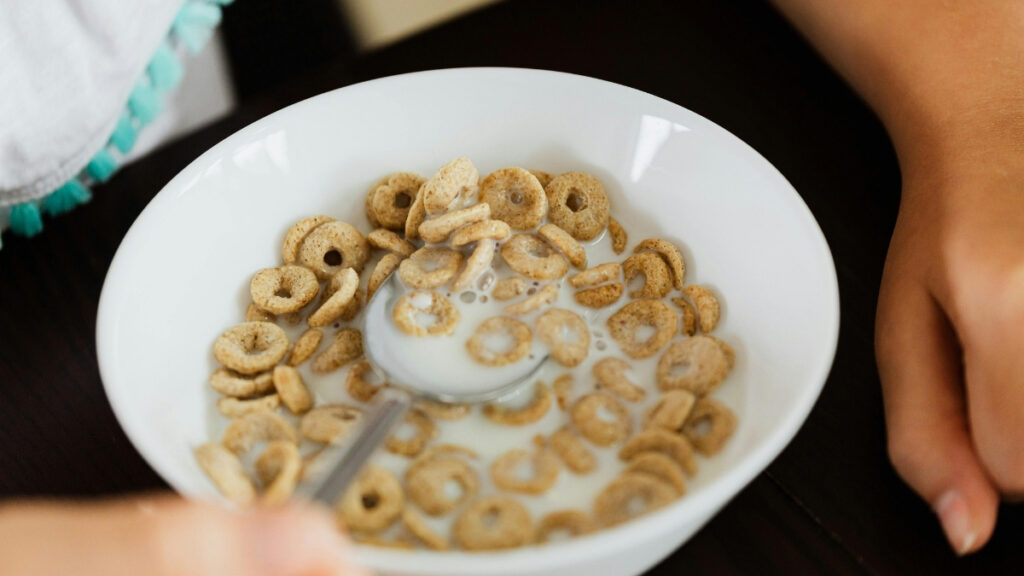
Picture the most common breakfasts in America. A bowl of cereal with skim milk. Toast with jam. A bagel with orange juice. Or nothing at all, just coffee, maybe two cups.
These are normal. They feel fine. But for someone over 50, they are genuinely harmful to your metabolism.
Here is what happens when you eat a high-carb, low-protein breakfast. Your blood sugar spikes fast. Your body releases insulin to manage it. Blood sugar drops. And within 90 minutes, you are hungry again. You snack. Blood sugar spikes again. This cycle repeats all day. Every spike, every crash, every snack is another insulin hit. Over time, this pattern makes your insulin sensitivity even worse.
Now add skipping breakfast into the picture. A 2025 systematic review of 66 studies found that skipping breakfast is linked to higher rates of obesity, gut microbiota disruption, and metabolic dysfunction.
Another review looking at nearly 200,000 participants found that people who skip breakfast have a 32 percent higher risk of all-cause mortality compared to people who eat breakfast consistently in the early part of the day.
And there is a timing issue that most people do not think about. A 2025 study following nearly 3,000 older adults found that as people age, they tend to push their first meal later and later in the day. This shift toward eating later correlates directly with increased metabolic risk.
So skipping breakfast or eating it at 11am is not just missing a meal. It is missing your body’s best metabolic window of the day.
There is also the gut connection. That same 2025 review found that skipping breakfast negatively affects the bacteria in your gut, which contributes to systemic inflammation throughout your body. Inflammation, especially chronic low-grade inflammation, makes insulin resistance worse and makes fat loss harder.
And here is one more thing that most people completely miss. Morning is when your body is most ready to build and repair muscle. After an overnight fast, your body is primed for something called muscle protein synthesis, which is the process your body uses to maintain and build muscle tissue. If you give it nothing, or just carbs, that window is gone. You cannot get it back by eating protein at dinner.
Why Protein at Breakfast Is the Real Fix

This is not a trend. The research on this is specific, and it applies directly to people over 50.
Your body needs amino acids to build and maintain muscle. Amino acids come from protein. And research shows that older adults need 30 to 40 grams of protein per meal to fully trigger muscle protein synthesis. Most people get somewhere between 5 and 10 grams at breakfast. That is not enough.
A study published in the Journal of Human Nutrition and Dietetics in 2021 confirmed this directly. For adults over 55, the threshold for triggering meaningful muscle protein synthesis is higher than it is for younger adults. You need more protein, not less.
And timing matters in a specific way. A study of 219 older adults published in 2022 found that people who ate more of their daily protein at breakfast rather than dinner had significantly better skeletal muscle mass. The researchers concluded that protein intake at breakfast had a stronger effect on skeletal muscle mass than at lunch or dinner.
Let that sink in. Not just that protein matters. But that protein in the morning matters more than protein at night.
Most Americans do the opposite. Data from the National Health and Nutrition Examination Survey shows that the average person eats around 65 percent of their daily protein at dinner. That means the morning window, the most important one for muscle, is mostly wasted.
There is also the blood sugar effect. Protein slows down how fast glucose enters your bloodstream. So instead of a spike and a crash, you get steady energy. Hunger stays controlled for three to four hours. You snack less. You eat less overall, without trying.
And there is the thermic effect. Your body burns 20 to 30 percent of the calories in protein just by digesting it. Carbohydrates only cost you 5 to 10 percent. So a high-protein breakfast is already working harder for you before you have even left the house.
One specific study looked at men and women with an average age of 54. Those who ate an egg-based breakfast showed significantly lower insulin resistance markers compared to those who ate a high-carb breakfast. Eggs specifically showed a measurable metabolic benefit in this age group.
What Meal Timing Has to Do With It
Protein matters. But when you eat also matters, and this is where a lot of people get it wrong.
Your body’s insulin sensitivity is highest in the morning. It declines steadily throughout the day. That means your body handles carbohydrates most efficiently early in the day, and least efficiently at night. Front-loading your eating, meaning eating more earlier and less later, works with your biology instead of against it.
Dr. Dorothy Sears, a professor at Arizona State University’s College of Health Solutions, puts it simply: think start early, end early.
Here is a practical piece of research to make this real. One study found that eating within two hours of bedtime is associated with consuming an average of 235 more calories per day compared to people who stop eating earlier. That adds up fast.
The target for metabolic health in older adults is a 13 to 14 hour overnight fast. That sounds complicated but it is not. If you eat breakfast at 7:30 in the morning and stop eating by 7 in the evening, you are done. No supplements, no tracking, no special products.
If you wake up at 7am, eat by 7:45am. Not 10am. Not 11am. The earlier you eat, the better your body uses that food.
Research comparing two different eating patterns in adults over 50 found that distributing meals earlier in the day produced significantly different fat-oxidation rates compared to a pattern that pushed eating into the late evening. Your body burns more fat when you eat earlier.
What a Metabolism-Supporting Breakfast Actually Looks Like

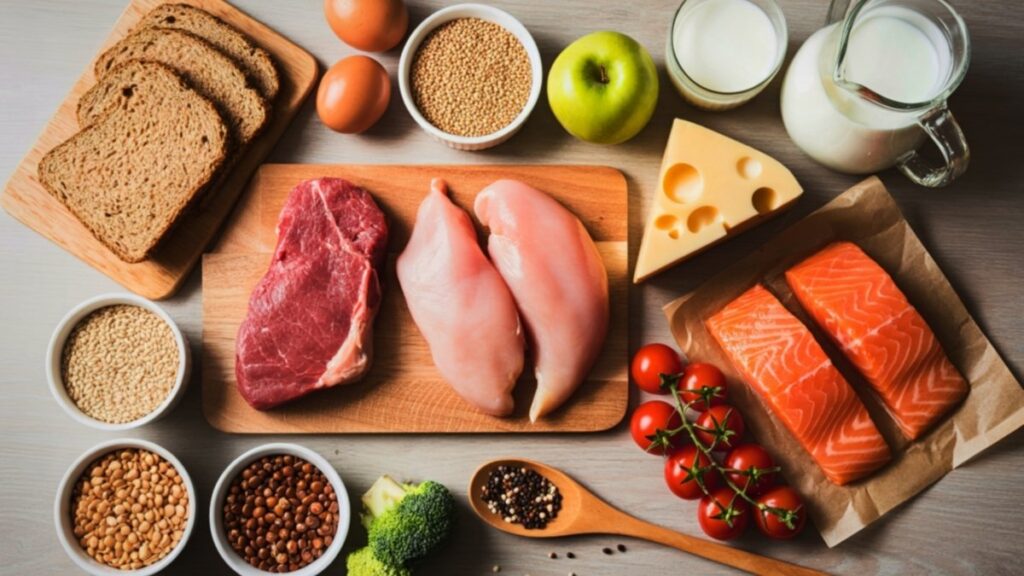
Here is the formula: 30 to 40 grams of protein, a fiber-rich complex carbohydrate, and a healthy fat. That is it.
You do not need a complicated meal. You need the right building blocks. Here are real examples that take under 10 minutes.
Option 1: Three-egg scramble with a handful of spinach, cooked in a small amount of olive oil, plus half an avocado on the side. Simple, filling, and hits the protein target when you add a slice of smoked salmon or a couple turkey slices.
Option 2: Full-fat plain Greek yogurt, 200 grams, mixed with a handful of berries and two tablespoons of ground flaxseed. Add a scoop of protein powder if you want to hit 35 grams cleanly.
Option 3: Cottage cheese bowl with sliced tomato, walnuts, and a drizzle of olive oil. Cottage cheese is one of the most underrated breakfast foods for this age group. High in protein, easy to digest, and very quick.
Batch prep option: Make five egg muffins on Sunday. Use a muffin tin, fill with whisked eggs, chopped vegetables, and whatever protein you like. Bake at 375 degrees for 20 minutes. Grab two each morning with a protein shake. Done.
If you genuinely cannot eat in the morning, start with a protein shake. Twenty-five to thirty grams of whey or plant protein, mixed in water or unsweetened almond milk, takes five minutes. Start there. Your appetite will adjust as your body gets used to eating earlier.
What to avoid: cereal, even the ones marketed as healthy. Granola is essentially dessert. Fruit-only smoothies spike blood sugar without providing protein. Toast and jam are mostly fast carbohydrates. Low-fat yogurt with added fruit flavoring often contains 20 to 30 grams of sugar and almost no protein.
The morning cortisol spike happens whether you eat or not. But when you eat protein within that first 30 to 40 minutes after waking, you give your body the tools to stabilize blood sugar and blunt the fat-storage effect of that cortisol.
Common Pushback, and What the Science Actually Says

Let’s be honest about the objections, because they are real.
“I do intermittent fasting and it works for me.”
Intermittent fasting can work. But the eating window matters. A noon-to-8pm window eliminates the morning metabolic advantage entirely. If you want the benefits of fasting while protecting your muscle and metabolism, try an 8am-to-6pm window instead. You still get a 14-hour fast. You just do it at the right time.
“I’ve heard breakfast doesn’t really matter.”
Most of the research behind that claim was done on younger adults. For people over 50 with declining insulin sensitivity and accelerating muscle loss, morning protein and meal timing matter significantly more. The biology is different at this age. The research on this age group specifically points in the opposite direction.
“I’m never hungry in the morning.”
This is worth paying attention to. Lack of morning hunger in adults over 50 is often a sign of dysregulated cortisol and blood sugar patterns, which is exactly the problem you are trying to fix.
Not being hungry is not a reason to skip breakfast. It is actually a signal that something is off. Start with a small protein shake. Give it two weeks. Most people find their morning appetite returns once their blood sugar stops spiking and crashing from the day before
Start Tomorrow Morning
Here is the short version of everything above.
After 50, your muscle is declining, your insulin sensitivity is lower, and your cortisol spike in the morning is real. A carb-heavy or skipped breakfast makes all three of these problems worse every single day. The fix is not a diet overhaul. It is one clear change: eat protein first, eat early, and eat enough.
Three things to do starting tomorrow:
- Eat within 45 minutes of waking up
- Hit 30 grams of protein at that meal
- Stop eating by 7pm
That is it. No special products. No expensive plans. Just a different breakfast.
If you want to go further, read up on resistance training after 50 and the best foods for rebuilding muscle as you age. Those two topics pair directly with what you just learned.
Fixing this one breakfast mistake is one of the most powerful things you can do for your metabolism over 50. The research is clear. The change is simple. The best time to start is tomorrow morning.
