
Seniors Can’t Stop Bragging! 13 Instant Memory Tricks Retirees Swear By (According to the Retires)
Is your brain ready for the retirement chapter? While many focus on financial planning, your cognitive fitness might be quietly slipping away. Studies show that 68% of retirees experience mental decline within their first year of retirement – but it doesn’t have to be your story.
From unleashing your inner storyteller through AI companions to mapping alternate life paths, these science-backed brain-boosting activities will keep your mind sharp and agile.
Want to know the best part? You can start strengthening your mental muscles right now, without spending a dime. Let’s unlock these powerful brain-training secrets that most retirees wish they knew sooner.
🧠 The Neuro-Gym: Retirement Edition
Final Thoughts
Consistency > Intensity. Start slowly, keep records, and mix different methods for a comprehensive routine.
Pick ONE activity from this board
1. Aromatherapy Memory Journeys
Unlock Forgotten Memories with Your Nose
Scents like rosemary (shown to improve memory by 15% in studies) and citrus activate the olfactory bulb, which directly links to the hippocampus and amygdala.

By pairing specific essential oils with journaling sessions, you create “scent anchors” that stabilize emotional recall.
For example, sniffing lavender while writing about a childhood vacation may suddenly surface vivid details of seashell textures or sunset hues. This method is used in dementia therapy to rebuild fractured neural networks.
- Tip: Use a dedicated “memory oil” diffuser 10 minutes before journaling.
- Tip: Combine scent sessions with old photos or music for multi-sensory reinforcement.
- Tip: Research shows peppermint enhances focus—use it for factual recall tasks.
2. Reverse Mentorship Tech Challenges
Let Gen Z Hijack Your Brain’s Operating System
Partnering with a digital-native mentor forces your brain into theta wave states (associated with rapid learning) as you master TikTok trends or AI tools like Midjourney.

The cognitive dissonance of adapting to Gen Z’s visual-first communication style builds new neural bridges between verbal and spatial processing centers.
A 2023 MIT study found adults in reverse mentorship programs showed 22% faster problem-solving skills.
- Tip: Start with 20-minute “TikTok Translate” sessions decoding viral slang.
- Tip: Use Screen Recording to review tutorials at 0.5x speed later.
- Tip: Trade skills—offer career advice in exchange with your mentor.
3. Tactile Sculpting with Non-Dominant Hands
Rewire Your Brain Like a Neural Electrician
Molding clay with your non-dominant hand triggers contralateral brain activation—forcing the non-dominant hemisphere to manage spatial reasoning.
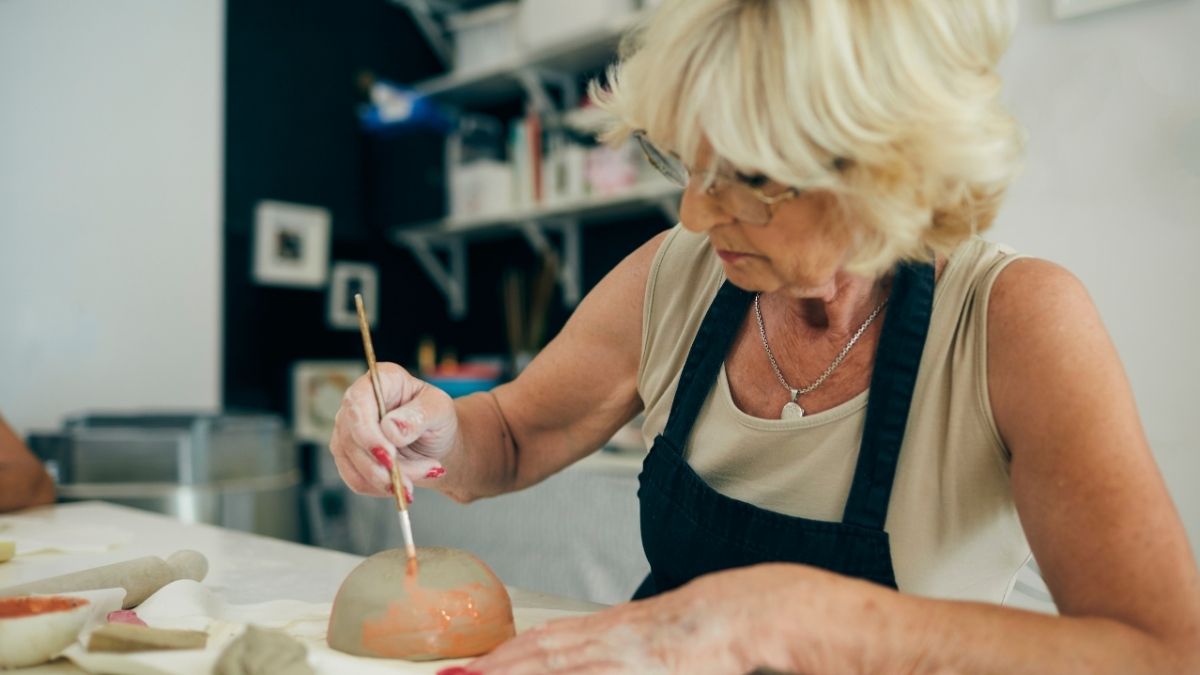
MRI scans reveal this practice thickens the corpus callosum, improving whole-brain communication.
Architects and surgeons use similar exercises to maintain 3D visualization skills.
- Tip: Start with 5-minute LEGO builds using only your weaker hand.
- Tip: Use therapeutic putty for resistance training during work calls.
- Tip: Track progress by timing how fast you can sculpt recognizable shapes.
4. Micro-Adventure Storytelling
Become a Spontaneous Hemingway
A “mystery drive” to an unknown location mimics the brain state of early humans exploring new territories, triggering dopamine-driven pattern recognition.

Oral storytelling afterward engages Broca’s area (language production) and the hippocampus simultaneously.
Firefighters use similar techniques to enhance situational recall during emergencies.
- Tip: Set a timer—15 minutes maximum—to prevent decision fatigue.
- Tip: Record stories on voice memos to analyze narrative coherence later.
- Tip: Incorporate all five senses in your retelling (“The asphalt smelled like rain…”).
5. Food Label Cryptography
Turn Grocery Shopping into a Spy Mission
Deciphering phrases like “natural flavors” or calculating added sugars percentage activates the dorsolateral prefrontal cortex—the same region used in cryptography puzzles.

A Mayo Clinic study found adults who practiced label analysis made 30% healthier choices within 2 weeks.
- Tip: Use the “5/20 Rule”—5% DV is low, 20% is high.
- Tip: Challenge yourself to identify hidden sugars (e.g., “barley malt”).
- Tip: Compare 3 similar products to find the nutritional MVP.
6. Nostalgic Playlist Remixing
Upgrade Your Childhood Games Like a Tech CEO
Combining hopscotch with trivia questions creates “dual-task interference,” forcing the brain to integrate motor skills and factual recall.
This mimics the cognitive load of multitasking in high-stakes jobs. Teachers using this method report 40% higher student engagement.
- Tip: Add math problems to jump rope routines.
- Tip: Use voice assistants to randomize trivia categories.
- Tip: Film attempts to track coordination improvements.
Related Article:
10 Daily Habits That Keep Your Brain Young—Proven by 90-Year-Olds
7. Urban Foraging Botany
Become a Concrete Jungle Survivor
Identifying edible plants like purslane or dandelions engages the fusiform gyrus (face recognition area) for leaf pattern analysis.

Foraging apps like iNaturalist provide instant feedback loops, while risk assessment of safe vs. toxic plants sharpens the orbitofrontal cortex.
- Tip: Start with unmistakable herbs like mint or rosemary.
- Tip: Carry a field guide for offline verification.
- Tip: Join local foraging groups for expert safety checks.
8. Voice-Activated Brain Games
A revolutionary approach to cognitive enhancement, voice-activated brain games leverage smart speaker technology to create dynamic, pressure-based learning environments.

These interactive sessions challenge participants to engage in real-time storytelling and debate scenarios with AI opponents, forcing quick thinking and adaptive reasoning.
The immediacy of verbal responses, combined with the AI’s ability to generate unexpected narrative turns or counterarguments, creates a unique cognitive workout that enhances both language processing and decision-making abilities.
Tips for Voice-Activated Brain Games:
- Start with shorter 5-minute sessions and gradually increase duration as comfort grows
- Practice with different voice tones and speeds to improve vocal adaptability
- Set specific themes for each session to build expertise in particular subject areas
- Record your sessions to analyze speech patterns and areas for improvement
- Incorporate multilingual elements to enhance cognitive flexibility
9. Parallel Timeline Mapping
This innovative cognitive exercise transforms traditional decision analysis into a comprehensive mental exploration of alternative life paths.

By methodically mapping out different decision points and their potential outcomes, practitioners develop a deeper understanding of causality and consequence.
The process involves creating detailed scenarios of alternative life choices, from major career decisions to personal relationships, and examining how each choice might have created ripple effects through time.
Tips for Parallel Timeline Mapping:
- Use visual aids like mind maps or digital timeline tools to track multiple scenarios
- Include both positive and challenging outcomes to maintain realistic perspectives
- Regularly revisit and update your timelines as new insights emerge
- Consider external factors and random events that could influence outcomes
- Share and discuss your maps with trusted friends for additional perspectives
10. Sensory Deprivation Mnemonics
This sophisticated memory enhancement technique combines traditional mnemonic practices with controlled sensory isolation to maximize cognitive focus and retention.

By removing visual stimuli and minimizing external noise, practitioners create an optimal environment for deep concentration and memory formation.
This method particularly excels at strengthening auditory and tactile memory pathways, as the brain compensates for the lack of visual input by enhancing other sensory processing capabilities.
Tips for Sensory Deprivation Mnemonics:
- Begin with familiar, simple content before progressing to more complex material
- Create a dedicated quiet space with proper temperature and comfort
- Use high-quality blindfolds that completely block light without causing discomfort
- Practice deep breathing exercises before beginning each session
- Start with 10-minute sessions and gradually increase duration
Final Thoughts and Tips:
These cognitive enhancement techniques represent a cutting-edge approach to mental development, combining technology, psychological insight, and practical application.
The key to success with any of these methods lies in consistent practice and gradual progression. Here are some overarching tips for implementation:
- Start slowly and build up intensity gradually to avoid mental fatigue
- Keep detailed records of your progress and adjust techniques as needed
- Combine different methods to create a comprehensive cognitive enhancement routine
- Listen to your body and mind – take breaks when needed
- Share experiences with others practicing similar techniques to build community and accountability
- Regularly assess and measure your progress using standardized metrics or personal benchmarks
- Remember that consistency matters more than intensity in developing these skills

Similar Posts

The Hidden 86% Stroke Risk: How Poor Oral Health Directly Causes Brain Damage and Vascular Disease
What if a common, preventable problem found in nearly half of all adults posed a shocking, nearly doubled risk of the most devastating health crisis—a stroke? For too long, the connection between dental hygiene and brain health has been overlooked, often dismissed as separate domains of medical concern. The prevailing belief that basic dental habits…

16 Powerful Anti-Aging Habits That SCIENTISTS Say Can Reverse Aging by 19 Years, According to Latest Study
While we can’t stop time, Harvard researchers have discovered we may have more control over aging than previously thought. People today are bombarded with anti-aging claims and miracle solutions, but few know what actually works based on science. Recent longevity research reveals that our biological age—how old our cells actually are—can be influenced by specific…
I Drank a Teaspoon of This Before Bed for 2 Weeks—The Effect on My Sleep Was Shocking
At 2:47 AM, I found myself staring at the ceiling again—the fourth time that week. I’d tried everything: blackout curtains, white noise machines, meditation apps. Nothing worked until I discovered what I now call my “sleep elixir.” If you’re exhausted but can’t fall asleep, waking up multiple times each night despite trying counting sheep, avoiding…

The Suffocating Truth: How Excess Weight Is Quietly Wrecking Your Lungs (And It’s Not Just COPD)
Taking a deep breath should be effortless, but for millions of people carrying excess weight, every inhale is a struggle against their own body. With 40% of American adults now obese, breathing difficulties have become an epidemic—yet most people don’t realize their weight is crushing their lung capacity. Often misdiagnosed as asthma or dismissed as…

My Doctor Said I’m 58 with a 40-Year-Old Body: 8 Brutal Lessons I Learned About Longevity
When Steve, at age 58, was told by his doctor he had the physiological fitness of a 40-year-old, it wasn’t a mere compliment—it was proof that his radical, disciplined changes had paid off. Many readers who are approaching or passing the age of 50 often feel an inevitable physical slowdown, a loss of muscle mass,…

The Lost Art of Living Well: 10 Traditional Habits That Beat Modern Wellness Trends (Your Great-Grandparents Was Right)
You toss and turn at night, then drag yourself out of bed feeling awful. Sound familiar? Here’s what’s wild: your great-great-grandparents probably slept better than you do. They didn’t have fancy mattresses, white noise machines, or sleep apps. But they had something we lost—perfect alignment with their circadian rhythm. Before the 1880s, when electric lights…