11 “Healthy” Morning Rituals I Swore By That Were Actually Destroying My Gut Health
Johnson spent three years waking up at 5:45 AM, squeezing lemon into warm water, blending a dark green smoothie, and skipping breakfast for intermittent fasting. Yet she was bloated before 9 AM every single day.
The wellness industry has built a $4.5 trillion business convincing people that certain morning rituals for gut health are non-negotiable. But recent gastroenterology research tells a different story.
Gut health affects 60 to 70 million Americans, and the gut microbiome, home to over 100 trillion bacteria, is disrupted daily by healthy morning habits people swear by.
By the end, readers will know exactly which rituals to drop, what science says about why they damage digestive health, and the simple swaps that actually work in 2026.
The 9 AM Bloat Simulator
Millions of people unknowingly destroy their gut microbiome before leaving the house. Can you build a science-backed morning routine without causing systemic inflammation?
Wake Up Call
The alarm rings.
Morning Complete
Let’s see how your gut handled that.
11 “Healthy” Morning Rituals That Were Actually Destroying Johnson’s Gut Health

Johnson woke up at 5:45 AM every day. She squeezed half a lemon into warm water. She blended a dark green smoothie packed with spinach and kale. She skipped breakfast for intermittent fasting. She even took a $60 probiotic with a glass of water before eating anything.
That question haunted her for three years. She tried more supplements. She cut gluten. She bought a better blender. Nothing worked.
Then she found out the truth. The habits she believed were protecting her gut were quietly wrecking it — one morning at a time.
This isn’t a rare story. The wellness industry is a $4.5 trillion business. It runs on selling people rituals that sound scientific. But real gut science tells a different story.
Over 60 million Americans live with some form of digestive disease, according to the National Institute of Diabetes and Digestive and Kidney Diseases. And the gut microbiome — home to over 100 trillion bacteria — gets disrupted every day by habits people think are healthy.
By the time you finish reading, you’ll know exactly which rituals to drop, why they cause gut damage, and what to do instead. No hype. Just what the science actually says.
1. Lemon Water on an Empty Stomach Every Single Morning

Johnson found this one on every “healthy morning routine” list on the internet. Influencers swore by it. Health coaches called it a non-negotiable. So she drank it every day for years.
Lemon juice has a pH of around 2. That’s as acidic as vinegar. And when you drink it on an empty stomach — before your gut lining has had any food to buffer it — you’re pouring acid directly onto irritated tissue. For people with sensitive stomachs, IBS, or acid reflux, this can make everything worse.
Dr. Megan Rossi, a gut health researcher at King’s College London, is clear about this. Lemon water gives your gut microbes zero fiber. And the popular claim that it “alkalizes” your body? That’s not how biology works. Your body regulates blood pH on its own. A lemon wedge can’t change that.
There’s also the “detox” promise. Dr. Raj, a gastroenterologist who spoke with Today.com in March 2026, puts it simply: lemon water doesn’t detox your body. That’s what your liver and kidneys are for.
Citrus is also one of the most reported triggers for heartburn. Drinking it before eating anything — when your stomach is completely empty — gives it nothing to work with except your gut lining.
What to do instead: Drink plain warm water first thing in the morning. That’s actually where the real benefit is. Water rehydrates you after sleep without the acid load. If you love lemon water, have it with food, not before it. And if you have IBS, gastritis, or acid reflux, skip it entirely. Try ginger herbal tea instead — it has real anti-inflammatory properties.
2. Skipping Breakfast in the Name of Intermittent Fasting

Johnson saw the before-and-afters online. She read the blog posts. She started pushing her first meal to noon every day, convinced she was optimizing her metabolism.
But Johnson’s version of intermittent fasting wasn’t the structured, research-backed approach scientists study. It was just skipping breakfast and hoping for the best.
Here’s something most IF content doesn’t mention. Your gut has a peak activity window in the morning. It’s called the gastrocolic reflex — the gut’s natural, most powerful movement cycle. Skipping breakfast disrupts that reflex. The result? Sluggish digestion and irregular bowel movements, according to gastroenterologist Dr. Sandeep Pal.
There’s also the cortisol problem. Cortisol levels are already high when you wake up. That’s normal — it helps you get going in the morning. But extending a fast deep into the day keeps cortisol elevated longer than it should be. And that directly stresses the gut-brain axis, the communication system that connects your brain and digestive system.
Harvard-trained gastroenterologist Dr. Saurabh Sethi calls skipping breakfast one of the most common and damaging morning mistakes people make.
What to do instead: If intermittent fasting works for you, try an earlier eating window — like 8 AM to 4 PM — instead of pushing the fast into the middle of your workday. Start with a small meal that has protein and fiber. That combination activates digestion without spiking blood sugar. And if you have IBS, GERD, or any history of disordered eating, talk to a dietitian before starting any fasting routine.
3. Drinking Coffee Before Eating Anything

Johnson couldn’t function without her morning coffee. Fair enough — most people can’t. The problem wasn’t the coffee. It was the timing. She drank it before eating anything. Every day. For two years.
Coffee on an empty stomach stimulates acid production in your gut. Over time, that can irritate the stomach lining, cause heartburn, and — for people who are already sensitive — worsen gastritis. Continental Hospitals flagged this in their 2025 gut health guidance.
But there’s another layer to this. Your cortisol is already at its highest point in the morning, during what’s called the Cortisol Awakening Response. Adding caffeine before eating amplifies that spike.
Dr. Yelena Deshko puts it clearly: elevated cortisol over time can interfere with immune function — including the immune activity that protects your gut lining.
Health coach Carolina Salazar, who has built a following of nearly 300,000 people on TikTok discussing this exact topic, describes it as a two-punch hit: caffeine on an empty stomach spikes cortisol, destabilizes blood sugar, and disrupts stress hormone balance — all before 8 AM.
Dr. Kim Barrett, a professor at UC Davis School of Medicine and a member of the American Gastroenterological Association, confirms that black coffee first thing in the morning is particularly hard on people with GERD, sensitive stomachs, or stomach erosion.
What to do instead: Wait 60 to 90 minutes after waking before having your first cup. By then, cortisol has naturally started to drop. Even better — eat something small first. A few nuts. A piece of bread. A banana. Give your stomach something to work with before the acid arrives. Adding a splash of oat milk or regular milk also buffers the acidity. Johnson still drinks coffee every morning. She just eats first now.
4. Blending a Giant Green Smoothie Every Morning
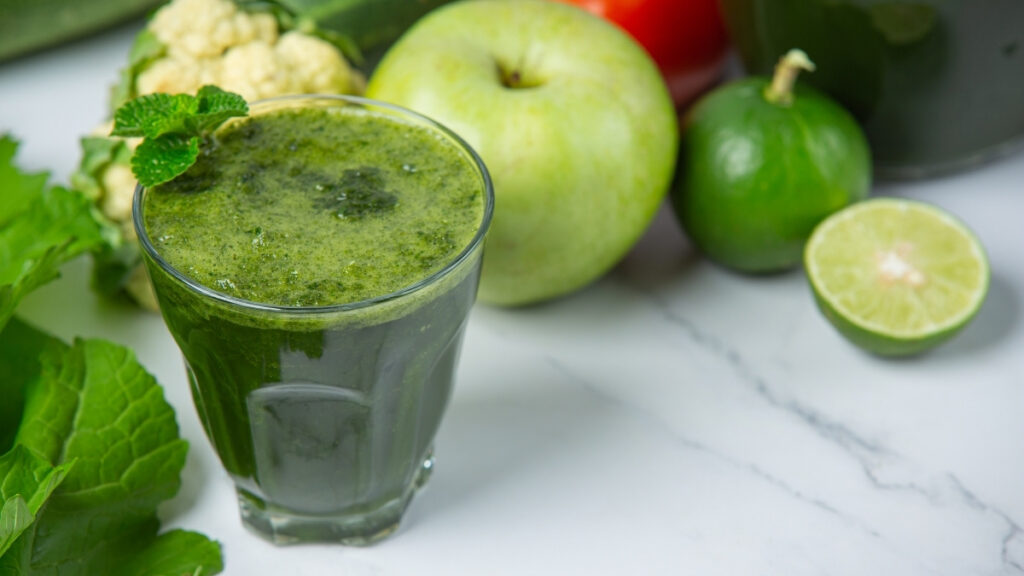
This was Johnson’s proudest habit. Two cups of spinach, a handful of kale, chia seeds, frozen berries, almond butter, and a banana. Blended perfectly. Consumed before 7 AM. It looked like health in a glass.
Spinach, kale, chard, and beet greens are packed with oxalic acid. One cup of raw spinach contains around 656 mg of oxalate. The daily amount generally considered safe? Around 40 to 50 mg. Johnson was drinking two cups of spinach every single morning.
Functional medicine practitioner Chris Kresser has written extensively about this. High oxalate consumption is linked to gut lining damage, brain fog, fatigue, joint pain, and — importantly — kidney stones. Oxalate crystals are responsible for 80% of kidney stone cases in the United States.
It gets worse. Oxalates bind to calcium and magnesium in your gut, blocking absorption of both. So even if your diet is rich in those minerals, daily high-oxalate smoothies can leave you deficient over time.
And here’s the part that really caught Johnson off guard: if you already have a damaged or permeable gut lining — which her other habits were actively causing — your body absorbs more oxalate, not less. The smoothie wasn’t healing her gut. It was making it harder for her gut to heal.
What to do instead: Rotate your greens. Romaine lettuce, watercress, and mustard greens are much lower in oxalates. Limit spinach-and-kale smoothies to three or four times a week instead of every day. Better yet, cook your leafy greens before eating — heat significantly reduces oxalate content. And if you do eat high-oxalate foods, pair them with a calcium-rich food like yogurt or milk. Calcium binds to oxalate in the gut before it gets absorbed.
5. Taking Probiotics on an Empty Stomach First Thing

Johnson had a $60-a-month probiotic habit. She bought the expensive bottle. She took it seriously. Every morning, first thing, with a glass of water. Most of those beneficial bacteria probably never made it past her stomach.
Here’s why. When your stomach is empty, its pH drops to between 1.5 and 3. That environment is deeply hostile to most probiotic strains. Live bacteria — the good kind in your supplement — get destroyed by that acid before they can reach your intestines, where they actually need to be.
Research shows that probiotics survive far better when taken with a meal that contains some fat. Food buffers stomach acid and slows gastric emptying, giving the bacteria a window to pass through safely. Taking probiotics 30 minutes before a meal or alongside one leads to significantly higher colonization in the gut than taking them fasted.
Strain choice also matters. Spore-forming strains like DE111 are far more resistant to stomach acid than standard Lactobacillus strains. But most probiotic marketing doesn’t tell you this.
The global probiotic market is projected to reach $105.7 billion by 2029. That’s a lot of money for products that millions of people are taking incorrectly.
What to do instead: Take your probiotic with breakfast or dinner — a meal with a little fat in it is ideal. Look for spore-forming strains if you’re buying a daily supplement.
Or skip the pills entirely and get your probiotics through food: kefir, kimchi, plain yogurt, or kombucha — consumed with a meal — are reliable and cheaper. And don’t assume that refrigerated probiotics are automatically better. Check the clinical survival data on the label before you buy.
6. Apple Cider Vinegar Shots Before Breakfast

The ACV shot trend swept through wellness culture a few years ago. Influencers credited it with clearing skin, aiding weight loss, and fixing digestion. Johnson started her 18-month ACV habit after watching three separate videos recommending it.
Apple cider vinegar has a pH of around 2 to 3. When you drink it neat, before eating, you’re sending a concentrated acid shot straight to an unprotected gut lining. Over time, this can erode tooth enamel and inflame the esophagus.
For people with normal or high stomach acid levels — which is most people — ACV doesn’t help. It adds unnecessary acid to a system that already has plenty. That makes GERD and gastritis symptoms worse, not better.
The claim that ACV “balances your pH” has the same problem as the lemon water myth. Your body controls blood pH independently. Your morning ritual cannot override that.
Dr. Raj made this point directly in his interview with Today.com in March 2026: certain morning drinks stimulate bile and gastric juices, but they cannot override organ-level processes. The liver does detoxing. The kidneys regulate acidity. No food or drink changes that.
There is limited quality clinical evidence that daily ACV consumption benefits gut health in healthy adults.
What to do instead: If you want to use ACV, dilute it — one to two teaspoons in eight ounces of water — and drink it with or after food, not before. Use a straw to protect your teeth. People with low stomach acid (a condition called hypochlorhydria) may actually benefit from ACV — but see a doctor to confirm that first. Fermented foods like kimchi and sauerkraut offer real gut benefits without the acidity risks.
7. Eating Breakfast While Scrolling or Rushing

Johnson was proud of her morning routine. She woke early. She prepared her food. She sat down to eat. What she didn’t account for was the phone in her hand while she did it.
Digestion is controlled by the parasympathetic nervous system — also called the rest-and-digest system. When you’re stressed, anxious, or mentally engaged with something else, your body switches to the sympathetic nervous system — fight-or-flight mode. Blood moves away from your gut and toward your muscles.
Checking emails and scrolling news while eating? That’s a psychological stress trigger, even if it doesn’t feel dramatic. Your gut doesn’t distinguish between a physical threat and a stressful inbox. It just diverts resources away from digestion.
Dr. Sandeep Pal explains that stress triggers gut-brain axis dysfunction — the breakdown of the two-way communication between your brain and gut — leading to indigestion, slower food transit, and increased intestinal permeability.
There’s also the chewing problem. When you’re distracted, you eat faster. You chew less. Larger food particles reach your intestines. Those larger pieces become food for harmful bacteria, which ferment them — producing gas, bloating, and discomfort. This is a mechanical issue, not a philosophical one.
Research consistently links psychological stress at mealtimes to IBS flares, reduced digestive enzyme activity, and impaired nutrient absorption.
What to do instead: Try a five-minute phone-free eating window. Just the first half of breakfast. Before you sit down to eat, take five slow, deep breaths — inhale through the nose, exhale slowly.
That’s enough to shift your nervous system toward rest-and-digest mode. Aim to chew each bite 20 to 30 times. It sounds extreme, but it activates salivary enzymes that break food down before it ever reaches your stomach.
8. Starting the Day with “Healthy” Granola or Breakfast Cereal
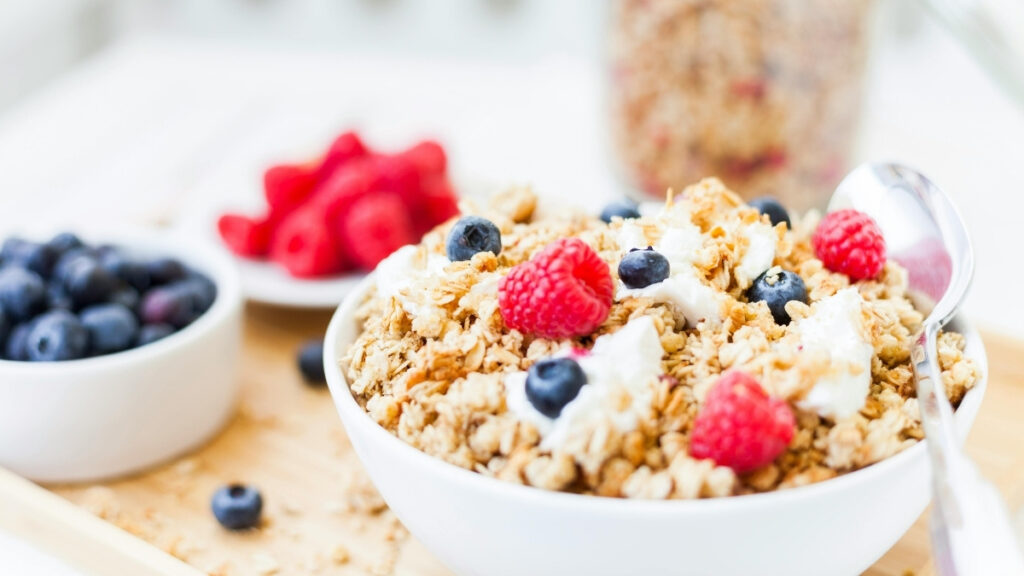
For years, Johnson bought granola with the words “organic,” “whole grain,” and “naturally sweetened” on the bag. She felt good about it. Then she started reading the nutrition labels.
Dr. Saurabh Sethi — the Harvard-trained gastroenterologist — identifies sugary breakfast foods as one of the four most damaging morning mistakes people make. The problem isn’t the grain. It’s the sugar hiding behind the health packaging.
Most commercial granolas contain 12 to 24 grams of sugar per serving. That’s the same as eating candy for breakfast, from your gut microbiome’s point of view.
High sugar consumption in the morning disrupts your gut bacteria balance quickly. It feeds Candida and harmful bacterial strains. At the same time, it starves the beneficial microbes in your gut, which need fiber — not sugar — to survive and thrive.
Repeated morning sugar spikes are linked to gut dysbiosis: a shift in microbial balance that’s associated with increased intestinal permeability, fatigue, and systemic inflammation. This isn’t a one-time damage. It builds quietly, meal after meal, morning after morning.
What to do instead: Switch to rolled oats, chia pudding, or eggs. All three are fiber-rich, low-glycemic, and genuinely supportive of a healthy gut microbiome. When shopping, check the ingredient list — if added sugar appears in the first five ingredients, it’s a dessert dressed up as breakfast. Add a small serving of plain kefir or live-culture yogurt on the side. That’s a real probiotic hit, taken with food, exactly as it should be.
9. Hitting Snooze Repeatedly and Waking at Different Times Every Day

Weekday Johnson woke at 6 AM. Weekend Johnson slept until 9. She never thought twice about it. She thought she was just catching up on sleep. But Monday was always the worst day for her digestion. She never connected the two.
Your digestive system runs on a circadian rhythm — a 24-hour biological clock. Gut motility, enzyme secretion, and microbiome composition all follow that rhythm precisely. The system works best when it’s supported by consistent cues: the same wake time, the same light exposure, meals at roughly the same windows each day.
When you hit snooze repeatedly, you disrupt the Cortisol Awakening Response — the natural hormonal rise that helps your body prepare for the day. That also affects the gastrocolic reflex, your gut’s natural peak morning movement cycle.
The research term for what Johnson was doing is “social jet lag” — the gap between sleep-wake times on weekdays versus weekends. Studies have linked this pattern to altered gut microbiota composition and reduced microbial diversity. A 2025 review published in Frontiers in Microbiology confirmed that the gut microbiome is directly shaped by lifestyle consistency.
The gut microbiome is most active and responsive to feeding cues in the morning. Irregular wake times confuse those signals. The bacteria don’t know when to be ready. Digestion suffers.
What to do instead: Keep your wake time consistent seven days a week — even staying within a 30-minute range is dramatically better than a three-hour swing. Get natural light exposure within 20 minutes of waking. Light is the strongest circadian signal your body gets. And eat breakfast within 60 to 90 minutes of waking. That feeds your microbiome during its peak activity window and sets your digestive rhythm for the rest of the day.
10. Doing Intense Fasted Cardio Every Morning

Johnson was up at 6 AM, laced up, and running. She’d read that fasted cardio burns more fat. She was proud of the discipline. She did it five mornings a week. What she hadn’t heard was what it was doing to her gut lining.
High-intensity exercise on an empty stomach massively spikes cortisol. This is the same hormone already peaking from the Cortisol Awakening Response. Now you’re stacking intense physical stress on top of a gut that’s already been hit with lemon water and hasn’t eaten since the night before.
Here’s the direct gut mechanism: intense exercise redirects blood flow to your working muscles. When you’re fasted, that creates what’s called ischemia-reperfusion stress in your gut lining — essentially, periods where blood flow is reduced and then restored. This is a known precursor to increased intestinal permeability. You’ve heard of “leaky gut.” This is one of the ways it actually develops.
And it didn’t stop there. After her run, Johnson drank lemon water and blended her green smoothie. That was three compounding gut stressors — fasted cortisol spike, then acid on an inflamed lining, then a 20x-oxalate-dose smoothie — all before 8 AM.
Light morning movement, on the other hand, is genuinely beneficial. A 10-minute walk stimulates peristalsis — the gut’s natural movement — without triggering a cortisol spike.
What to do instead: Eat something small 30 to 45 minutes before any intense morning workout. A banana, a few dates, or a couple of oat crackers — something easily digestible.
Reserve hard fasted training for occasional use, not daily routine. After your workout, eat within 30 minutes. That shuts down the cortisol response and starts the gut repair process. If you want a morning movement habit that actually helps your gut, a 10 to 15-minute walk is the most supportive option.
11. Over-Supplementing with Fiber Powders to “Fix” Digestion
When Johnson’s gut started feeling genuinely broken, she did what a lot of people do. She added more. Specifically, she added a daily fiber supplement to her already crowded morning supplement stack. More fiber meant better digestion, right?
Dr. Raj put it plainly in his March 2026 interview with Today.com: if you consume too much fiber too quickly, it causes bloating and pain. And if you take fiber without drinking enough water alongside it, it can congeal in your gut and slow things down instead of speeding them up.
Most people in the U.S. get far less than the recommended 30 grams of daily fiber. That’s a real problem. But the solution isn’t dumping 10 grams of psyllium husk powder into a gut that’s already inflamed from acidic drinks, sugar spikes, and exercise-induced cortisol. That combination doesn’t fix anything. It makes fermentation, gas production, and bloating worse.
One in five Americans who have tried “many things” to fix their gut issues say they feel like they’ve reached a dead end, according to a 2023 Ipsos/MDVIP survey. Two in five have tried over-the-counter gut health products like fiber supplements and probiotics — most without any guidance on proper use, timing, or dose.
What to do instead: Increase fiber gradually — by two to three grams per week, not all at once. Prioritize food-first fiber: rolled oats, chia seeds, flaxseeds, cooked lentils, and root vegetables.
When you do take a fiber supplement, always drink at least eight ounces of water with it. And before supplementing at all, track your daily fiber intake for one week using a free app like Cronometer. You might find the gap is smaller than you think — and easier to fill with food than a powder.
The Full Picture: What Johnson’s Old Morning Actually Looked Like
Stand back for a second and look at the full sequence.
Lemon water on an empty stomach → giant spinach-and-kale smoothie → fasted run → coffee with no food → probiotic on an empty stomach → rushed granola breakfast while scrolling the news.
Every single one of those steps had a reasonable story behind it. And every single one compounded the damage caused by the one before it.
The acid from the lemon water irritated a gut that was already fasting from overnight. The oxalates in the smoothie hit a lining that was already inflamed. The fasted run spiked cortisol into a system running on empty. The coffee added more acid and amplified the stress hormone spike.
The probiotic dissolved in stomach acid before reaching the intestines. And the sugary granola — eaten in a stressed, distracted state — fed the wrong bacteria and set the inflammatory tone for the rest of the day.
None of these rituals were random. They were all things Johnson had read about, researched, and genuinely believed in. The wellness industry didn’t lie to her exactly. It just left out a lot of biology.
What Actually Changed for Johnson
Johnson didn’t stop caring about her health when she dropped these rituals. She just started building her morning around how her digestive system actually works — not how it’s marketed.
She started drinking plain warm water first thing. She ate breakfast within 90 minutes of waking, something small with protein and fiber. She moved her coffee to after eating. She rotated her greens instead of loading every smoothie with spinach. She took her probiotic with dinner. She kept her wake time consistent across the week. She went for a 10-minute walk instead of a fasted run.
The bloating that had been her constant morning companion — the one she’d been trying to fix for three years — was gone within two weeks.
The gut microbiome isn’t impressed by trends. It responds to consistency, fiber diversity, low stress, adequate hydration, and timing. Most morning routines circulating on social media stack multiple stressors onto a system that wakes up fragile. The gut needs patience, not performance.
The next time you see a “non-negotiable morning habit” list, ask one question before adding anything to your routine: what does the gut science actually say about this?
Because what protects your gut isn’t a lemon wedge or a $60 supplement. It’s a morning routine built around how your digestive system actually works — not how it looks on a wellness feed.
Sources: National Institute of Diabetes and Digestive and Kidney Diseases (NIDDK); Frontiers in Nutrition, 2024 (DOI: 10.3389/fnut.2024.1342787); Frontiers in Microbiology, 2025 (DOI: 10.3389/fmicb.2025.1549160); Dr. Megan Rossi, King’s College London (theguthealthdoctor.com); Dr. Saurabh Sethi, gastroenterologist (SeniorsDiscountClub.com.au, 2025); Dr. Raj, gastroenterologist (Today.com, March 2026); Dr. Sandeep Pal (drsandeeppal.com, 2025); Chris Kresser, MS, LAc (chriskresser.com, 2023); Ipsos/MDVIP survey, 2023; NW Corporate Wellness, 2025.